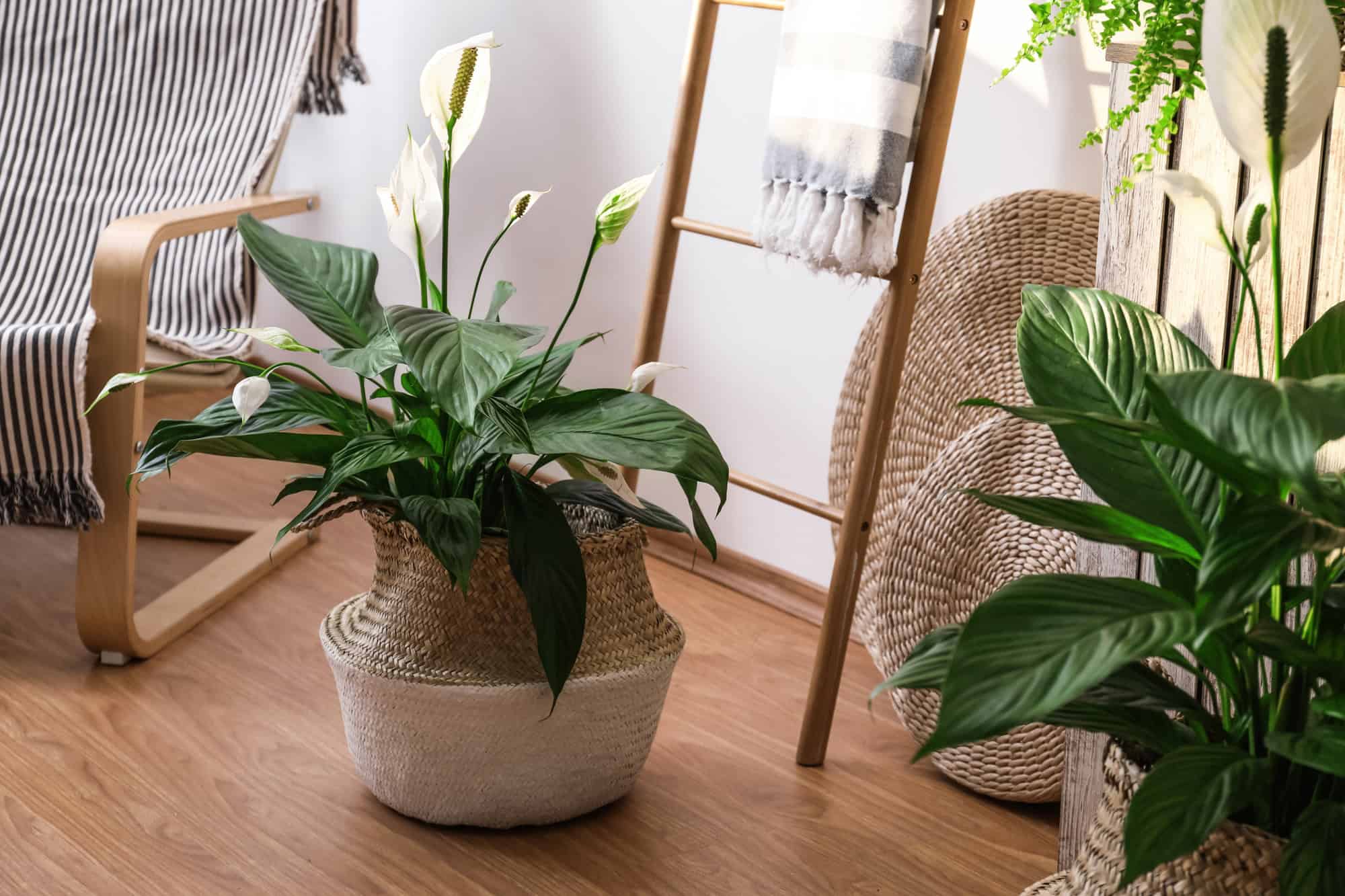
Peace lilies are among the most forgiving indoor plants you can grow, but where you put them makes a real difference to how well they perform. Get the placement right and you will have glossy, upright leaves and regular white blooms. Get it wrong and you will spend months wondering why the tips are brown and the flowers never come.
This guide covers every room in the house, the specific spots that work within each room, and the signs that tell you a move is overdue.
Ideal Environmental Conditions for Peace Lilies
Peace lilies come from the forest floors of Central and South America, where they grow beneath a dense canopy. That origin tells you everything you need to know about their preferences: filtered light, warmth, and moisture in the air.
Light Requirements
Peace lilies grow best in bright, indirect light. A spot two to four feet back from a north- or east-facing window is ideal. They will also cope in lower light than almost any other flowering houseplant, which is why they are often recommended for offices and hallways.
In low light, growth slows and flowers become less frequent, but the plant stays healthy. Direct sun is the real problem. Even an hour of unfiltered afternoon sun through a south- or west-facing window can scorch the leaves, leaving pale or brown patches that do not recover. If your only windows face south or west, move the plant back from the glass or hang a sheer curtain to diffuse the light.
If natural light is genuinely limited in your home, a full-spectrum grow light placed 12 to 18 inches above the plant for 12 hours a day will keep it in good health.
Humidity and Temperature Requirements
Peace lilies prefer humidity between 50% and 60%. Most homes sit between 30% and 50%, so some extra attention to moisture is worth the effort, especially in winter when central heating dries the air significantly.
Three practical ways to raise humidity around the plant:
- Set the pot on a wide tray filled with pebbles and water, keeping the base of the pot above the waterline
- Group the peace lily with other houseplants so their collective transpiration raises local humidity
- Run a small humidifier nearby during dry winter months
For temperature, keep the plant between 65°F and 80°F (18°C and 27°C). Peace lilies can tolerate brief dips to around 55°F, but sustained cold causes the leaves to yellow and the roots to suffer. Keep them away from draughty windows, air conditioning vents, and exterior doors that open frequently in winter.
Watering and Drainage
Water when the top inch of soil feels dry to the touch. Peace lilies will droop noticeably when they are thirsty, which acts as a reliable prompt. Use room-temperature water, as cold water from the tap can stress tropical root systems.
Good drainage is non-negotiable. Always use a pot with drainage holes and a well-draining potting mix. After each watering, empty any standing water from the saucer within an hour. Roots sitting in water will rot quickly, and root rot is the most common reason peace lilies decline.
During summer in a bright spot, you may need to water twice a week. In winter, or in a lower-light position, once a week or even less is usually enough. Let the plant guide you rather than sticking to a fixed schedule.
Peace Lily Placement by Room
The best room for a peace lily depends on the balance of light and humidity that room naturally provides.
Bathroom
A bathroom with a window is one of the best spots in the house for a peace lily. Steam from showers raises humidity naturally, and the typically diffused light suits the plant well. Even a small north-facing bathroom window provides enough light to keep the plant healthy and blooming.
If the bathroom has no window at all, the peace lily will survive for a while under artificial light, but it will not thrive long-term. Rotate it to a brighter room every few weeks to let it recover if you are set on a windowless bathroom placement.
Living Room
Living rooms work well as long as you can find a spot with indirect light. A corner three to five feet from a large east-facing window is a good target. Peace lilies look striking as floor plants in larger rooms, and a mature plant in a 10-inch pot can reach 18 to 24 inches tall.
Watch out for air conditioning units and ceiling fans in living rooms. Both can dry out the air and create temperature fluctuations that stress the plant. A position on an interior wall, away from vents and windows in direct sun, is usually the safest choice.
Bedroom
Bedrooms are a popular choice for peace lilies, largely because of their reputation for air-purifying qualities. NASA research included peace lilies in a study of plants that can absorb certain volatile compounds, and while the effect in a typical room is modest, many people find the presence of greenery in a bedroom calming.
A bedroom with a north- or east-facing window is a good fit. Keep the plant away from the bed if anyone in the household has pets or young children, as all parts of the peace lily are toxic if eaten.
Kitchen
Kitchens generate steam and humidity from cooking, which peace lilies appreciate. A spot on a counter or shelf near a window that does not receive direct midday sun works well. Just avoid placing the plant directly above a stove or next to an oven, where heat spikes would stress the roots and foliage.
Home Office
Peace lilies are one of the best plants for a home office precisely because they tolerate lower light than most flowering plants. A desk near a window is ideal, but even a shelf in a room with moderate natural light will keep the plant healthy. If you work under fluorescent or LED lighting for eight or more hours a day, the plant will absorb that artificial light as a supplement to whatever natural light reaches it.
Placement Tips
Selecting the Right Spot Within a Room
Placing a peace lily near a north or east-facing window gives the most consistent results across all seasons. South and west windows can work in winter when the sun is lower, but often need a sheer curtain in summer to prevent leaf scorch.
Avoid spots directly above radiators, even if they seem bright and warm. The heat from below dries the soil too quickly and raises the temperature of the root zone above what the plant tolerates comfortably.
If you have other indoor plants, grouping them together creates a small zone of elevated humidity that benefits all of them, peace lilies included.
Avoiding Common Pitfalls
Direct sunlight causes brown scorch patches on the leaves. These marks are permanent and do not recover once the cell damage is done.
Yellowing leaves most often signal too much direct light or overwatering. Brown leaf tips usually point to low humidity or the plant sitting too close to a heat source. Black or mushy stems at soil level almost always mean root rot from sitting in water.
Air conditioning vents, frequently opened exterior doors, and gaps around old window frames all create cold draughts. Peace lilies placed near any of these will develop dark, water-soaked patches on their leaves within a few weeks.
Peace lilies are toxic to cats, dogs, and humans if ingested. All parts of the plant contain calcium oxalate crystals, which cause mouth irritation, drooling, and vomiting. If you have pets or small children, place the plant on a high shelf or in a room they do not access.
Ongoing Care and Maintenance
Once you have found the right spot, consistent care keeps the plant looking its best year-round.
Regular Fertilization
Feed peace lilies with a balanced, water-soluble fertilizer diluted to half-strength once a month through spring and summer. Apply it after watering so the fertilizer does not contact dry roots directly. In autumn and winter, reduce feeding to once every six to eight weeks as growth slows.
Over-fertilizing is a common mistake that shows up as brown leaf tips and a white crust of mineral salts on the soil surface. If you see this, flush the pot thoroughly with plain water and skip a feeding cycle.
Periodic Pruning
Cut yellowing or browning leaves at the base with clean, sharp scissors. Remove spent flower spikes by cutting the stalk down to soil level once the white spathe turns green and fades. This keeps the plant looking tidy and redirects energy into new growth.
Divide overgrown plants every two to three years. Gently remove the root ball from the pot, separate it into sections, and repot each section in fresh, well-draining potting mix. This refreshes the soil and gives the plant room to grow. You can also learn more about general peace lily care to keep divided plants in good health after repotting.
Disease Prevention
Check the leaves weekly for spider mites, mealybugs, and fungal spots. Spider mites leave fine webbing on the undersides of leaves; mealybugs look like small cotton tufts at the leaf joints. Both can be treated by wiping the leaves with a damp cloth or applying insecticidal soap.
Keep the leaves clean by wiping them with a damp cloth once a month. Dust buildup blocks light absorption and creates conditions that encourage pests. Good air circulation around the plant also helps prevent the damp, stagnant conditions that fungal infections prefer.
If you are dealing with persistent peace lily problems, the cause is almost always one of three things: wrong light, wrong watering, or low humidity. Correcting the placement usually resolves all three at once.
Signs Your Peace Lily Needs to Move
Even with careful initial placement, a peace lily will tell you when something is off. Pale or yellowing leaves with crispy edges usually mean too much direct light combined with low humidity. Dark, soft patches on the leaves point to cold draughts or overwatering. A plant that has not flowered in over a year despite regular care is almost always getting too little light.
If the plant has been in the same spot for more than two years and seems to have stopped growing, check whether it has become root-bound. Gently tip it out of the pot. If roots are circling the base or pushing out of the drainage holes, it is time to repot into a container one size larger.
For a broader look at how peace lilies compare to other low-maintenance options, see our guide on the disadvantages of the peace lily, which covers the cases where a different plant might be a better fit for your home.
Frequently Asked Questions
Can a peace lily survive in a room with no windows?
A peace lily can survive under fluorescent or LED lighting alone, provided the light runs for at least 12 hours a day and is positioned 12 to 18 inches above the plant. It will not flower as reliably as it would near a window, but the foliage stays healthy. Rotate it to a brighter spot every few weeks if possible.
Is a peace lily good for a bedroom?
Yes. Peace lilies do well in bedrooms with indirect light, and they are one of the few flowering houseplants that cope with the lower light levels typical of most bedrooms. Keep them out of reach of pets and children, as all parts of the plant are toxic if ingested.
How far should a peace lily be from a window?
For a north- or east-facing window, two to four feet is a good starting point. For south- or west-facing windows, push the plant further back, to at least four to six feet, or use a sheer curtain to block direct rays. Adjust based on how the leaves respond over the first few weeks.
Why are the tips of my peace lily turning brown?
Brown tips are almost always caused by low humidity, fluoride in tap water, or the plant sitting too close to a heat source. Try moving it away from any vents or radiators, switching to filtered or rain water, and placing it on a pebble tray to raise the humidity around the foliage.