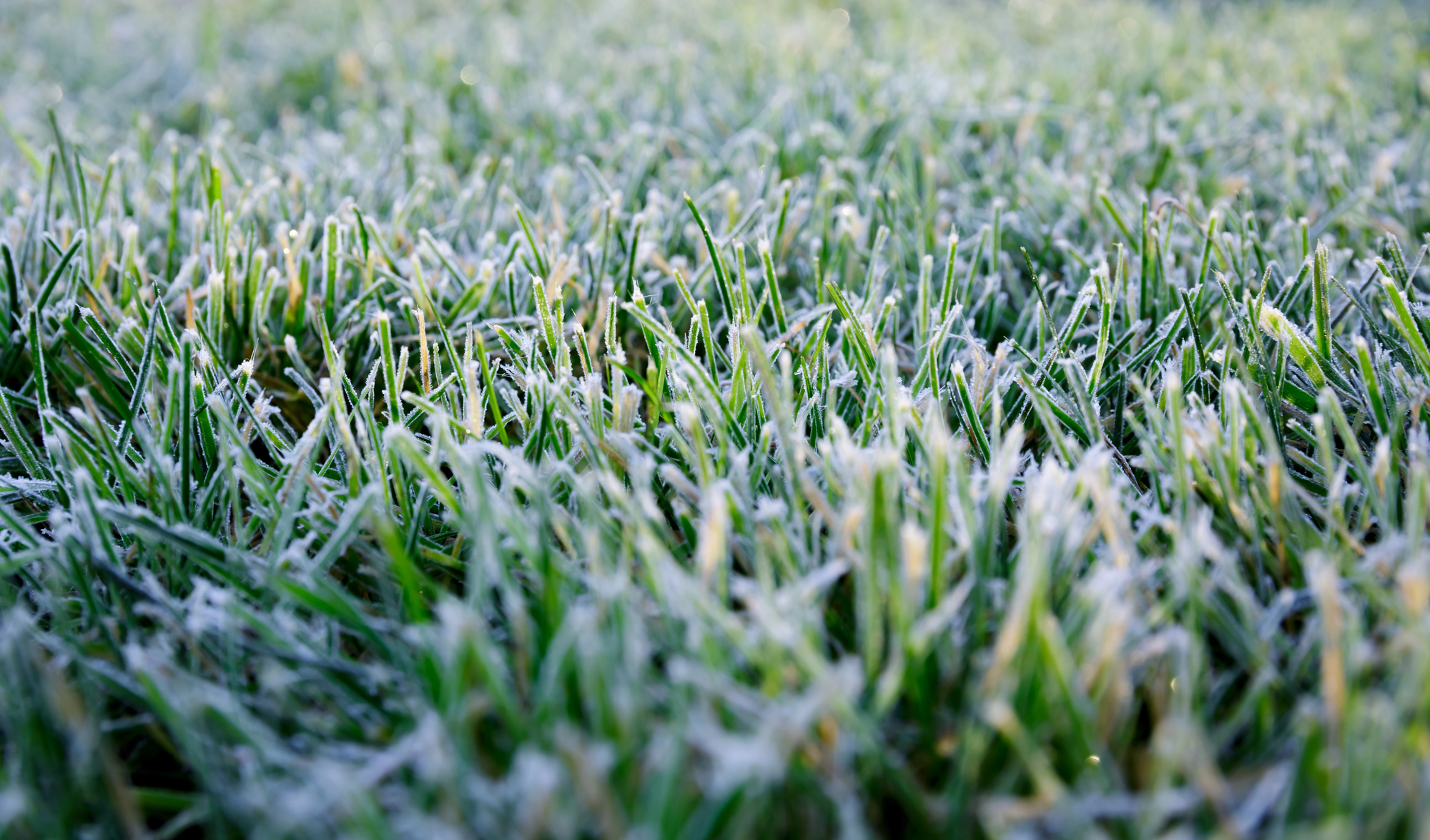
To prevent frost damage on grass, avoid walking on it, use a potassium-rich autumn/winter fertiliser for strength, keep it hydrated by watering before a frost, and ensure it’s not mown too short, while clearing leaves to prevent smothering.
Creating windbreaks also reduces moisture loss, and if frost sets in, wait for the sun to melt it or use sprinklers with warm water to help thaw it gently.
Before a Frost
Create Windbreaks: Hedges or low walls can shield your lawn from drying winter winds.
Feed Appropriately: Apply a winter or autumn fertiliser high in potassium (and iron) to harden the grass against cold and disease, avoiding high-nitrogen feeds that encourage weak growth.
Water Deeply: Water the lawn the evening before a frost; the evaporating moisture creates warmth, protecting blades.
Mow Correctly: Keep grass slightly longer in autumn for better resilience and use sharp blades for clean cuts.
Clear Debris: Remove fallen leaves and moss to prevent smothering and allow air circulation.
When Frost is Present
- Stay Off: The most crucial step; walking on frozen grass breaks the brittle blades, causing damage.
- Melt Gently: If you must, use a sprinkler with warm water to melt the frost quickly, or wait until the sun thaws it naturally.
- Don’t Fertilise: Avoid applying products to frosted grass as they can freeze and kill the blades.
Long-Term Health
- Aerate: Aerate compacted areas in autumn to improve drainage and allow frost to penetrate the soil, which is beneficial.
- Overseed: In spring, overseed thin patches for a thicker, healthier lawn.
Prevent frost damage on grass: Simple Steps
Frost damage on grass is usually self inflicted. The turf plant can tolerate cold nights, yet the leaf becomes brittle once ice forms inside the blade. Foot traffic, mowing, and mechanical work then turn a light frost into brown scuffs, broken leaves, and patchy recovery.
What frost does to turfgrass
Ice inside the leaf blade
Frost forms when water in and on the leaf freezes. Ice expansion can rupture cell walls, leaving tissue that looks bleached, straw coloured, or bruised once it thaws.
Brittle leaves plus pressure equals cell damage
A frozen leaf does not bend well. A footprint or wheel track forces a sharp bend, then the blade fractures. The brown “footprint” pattern later is a mechanical injury pattern, not a nutrient issue.
Soil heave can lift the surface
Freeze and thaw cycles expand water in the soil and can create surface swelling, called heave. Heave often settles once temperatures rise, yet repeated cycles can disrupt surface levels and root contact in soft ground.
Damp winter disease pressure rises
Cold, wet turf with poor airflow can favour fusarium patch and snow mould. Dense thatch, shade, and slow drying surfaces increase risk. Better aeration, drainage, and airflow reduce that risk.
The core rules that prevent frost damage
Stay off the grass until it fully thaws
This is the single highest value action. Keep people, pets, and vehicles off frosted turf. If access is unavoidable, use a hard route such as paving, or place boards to spread load across a wider area.
Do not mow on frost, and do not mow frozen turf
Mowing on a frosted lawn shatters leaf tissue and can scalp high points in a heaved surface. Wait for full thaw and a dry leaf surface.
Pause feeding once frost becomes a regular pattern
High nitrogen feeding late in the year can drive soft growth that struggles in cold, wet conditions. A lower nitrogen approach later in the season, with a focus on steady hardening, aligns better with winter stress and disease pressure.
Keep the canopy open, clean, and dry
Remove leaves and debris so the surface dries faster after dew, rain, and thaw. A wet mat blocks light and traps moisture at the crown, which raises disease risk.
Turf setup work that reduces frost impact
Improve drainage before winter settles in
Waterlogged soil freezes into a harder surface and heaves more readily. Good drainage keeps oxygen moving through the root zone and shortens surface wetness after a thaw. Practical options include relieving compaction and improving surface levels so water moves off the lawn rather than pooling.
Aeration and scarification for airflow through the sward
A tighter thatch layer holds moisture at the surface. Scarification reduces thatch. Aeration improves gas exchange and water movement. These steps help the turf dry faster and reduce the conditions that favour snow mould and fusarium patch.
Reduce shade and raise airflow across the lawn
Cold air sits longer in shaded pockets, and shaded grass dries slower. Pruning back overhanging shrubs and low branches helps the surface warm and dry sooner after a frost.
Wind exposure management
Dry winter winds can pull moisture from leaf tissue and soil. A simple windbreak, such as a hedge line or low barrier, reduces wind speed across the turf surface and cuts the drying stress on exposed lawns.
Snow and ice habits that create avoidable damage
Avoid piling snow onto turf
Dense piles melt slowly and keep the surface wet for longer. They also create the classic snow mould setup, long moisture retention and low light under compacted snow.
Avoid compacting snow with play or repeated walking
Compaction forms an insulated slab that slows thaw, then leaves saturated ground underneath. Use hard standing areas for play where possible, keep lawn routes narrow and controlled, and keep the rest untouched.
What to do after a frost morning
Let the frost melt naturally, then assess
Wait for full thaw. The lawn often looks worse at first thaw, then improves as tissue rehydrates and recovers. Foot traffic before thaw converts cosmetic frosting into mechanical injury.
Check for disease patterns
Snow mould and fusarium patch often show as bleached, pinkish, or straw coloured patches with matted grass. If patches appear in the same damp zones each winter, focus first on drying speed via aeration, scarification, and airflow.
Handle heave in spring, not on frozen ground
If the surface stays uneven after the cold spell season ends, a light roll in spring can help level the surface. Avoid heavy rolling on soft soils, which can re compact the root zone and worsen drainage.
Quick prevention checklist
- Keep off frosted turf until full thaw.
- No mowing or feeding on frost.
- Clear leaves so the surface dries faster.
- Improve airflow and drainage before winter settles in.
- Avoid snow piles and compacted snow on the lawn.