Browntop bent (Agrostis capillaris) is the grass behind every fine ornamental lawn in the UK. It is the species on bowling greens, golf putting surfaces, and the formal striped lawns that define British garden aesthetics at their most demanding. Where perennial ryegrass is built for utility and creeping red fescue handles adversity, browntop bent is chosen for quality. Its very fine leaf, tolerance of close mowing, and capacity to form a dense, even sward at heights as low as 5mm make it the reference standard for amenity turf in Britain. The Sports Turf Research Institute (STRI), which publishes annual variety trial results on UK amenity grasses, has tested browntop bent cultivars continuously since the 1930s; no other fine grass species has a longer history of documented performance in the UK.
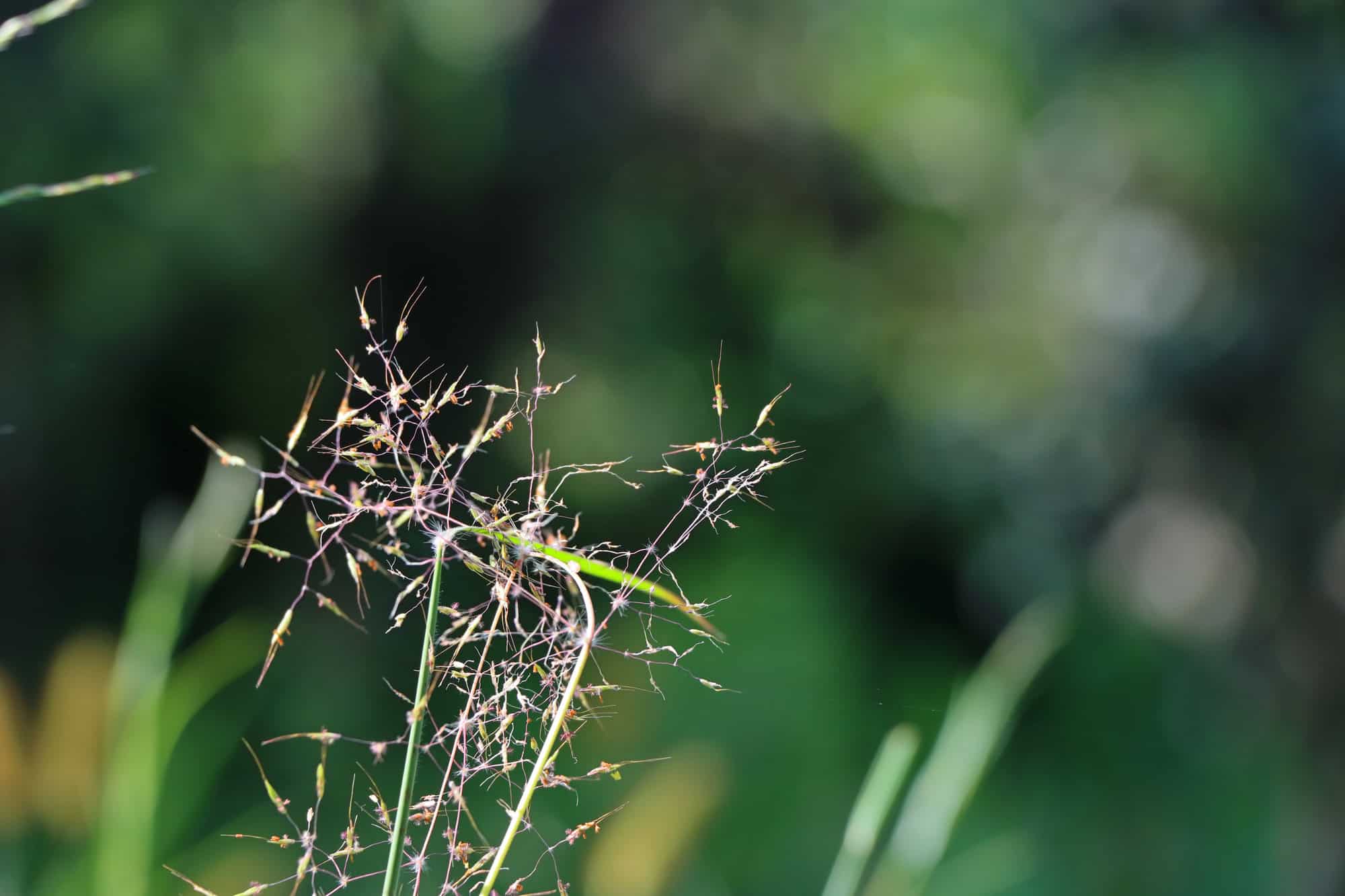
The common name “browntop bent” refers to the brownish-purple tint of the seed heads, which appear from June through August on unmown plants. It is also called common bent or colonial bent in older horticultural literature. In commercial seed mixes, it is typically listed as Agrostis capillaris or Agrostis tenuis, the latter being a now-superseded synonym still found on older seed packaging. It is a member of the Agrostis genus, which also includes creeping bent (Agrostis stolonifera), the dominant species on golf putting greens managed at extreme close-mow heights of 3 to 5mm.
In the UK, browntop bent is native across grasslands, heathlands, and moorlands from Cornwall to Shetland. It is one of the most common grasses in upland Britain and thrives in the cool, wet conditions of the British maritime climate. In managed lawn situations, it is used either as a dominant species in fine ornamental seed mixes alongside Chewings fescue, or as a minority component in standard utility mixes where its fine leaf improves the sward texture.
Botanical Profile and Identification
The leaf blade of browntop bent is 1 to 3mm wide, flat or slightly inrolled, and produces a characteristically fine, soft texture underfoot. The plant is a loosely tufted perennial that spreads by short stolons and rhizomes, giving it a degree of lateral spread that distinguishes it from strictly bunch-forming fine grasses. This spread is moderate rather than aggressive; browntop bent extends its territory gradually rather than colonising open ground rapidly in the manner of creeping bent or creeping red fescue.
The ligule, a membranous projection where the leaf blade meets the sheath, is relatively long and pointed in browntop bent compared with the short, blunt ligule of fine fescues. Ligule inspection is the most reliable way to separate browntop bent from fine fescues in a mixed sward; a hand lens makes this straightforward. Browntop bent also lacks the auricles found on perennial ryegrass, making it easily distinguishable from ryegrass by leaf base alone.
At plant level, browntop bent forms a low-growing, spreading mat in mown situations. The shoot density is high relative to other fine grasses, which is what produces the velvet-like surface quality associated with fine ornamental lawns. In an unmown state, the plant reaches 20 to 40cm before producing its distinctive panicle-type seed heads, which are open and feathery with a brownish-purple colouration at maturity.
Why Browntop Bent Is Used in Fine Lawns
The primary reason browntop bent dominates fine ornamental seed mixes is its response to close mowing. The species produces a high shoot density at very low cutting heights, a trait that is rare among cool-season grasses. At 10 to 15mm, a well-managed browntop bent lawn has a uniform, fine surface that no ryegrass-dominant lawn can replicate. At 5 to 10mm, maintained with a cylinder mower, it produces the bowling-green quality finish that demands the species regardless of the maintenance input required.
Shade tolerance is the second factor. The STRI consistently ranks browntop bent alongside creeping red fescue as one of the two most shade-tolerant species for managed UK turf. In gardens where a formal fine lawn must occupy a partially shaded position, browntop bent is one of the very few species capable of maintaining sward quality below four hours of direct sunlight per day.
Modern cultivar development has extended the species’ practical range. STRI variety trials recognise cultivars including Tracenta, Hector, and Greenmaster, which show improved disease resistance and shoot density compared with older amenity varieties. The Institute of Biological, Environmental and Rural Sciences (IBERS) at Aberystwyth University, which has run UK grass breeding programmes since 1919, has contributed to browntop bent improvement through long-term trials on fine amenity grass performance.
When and How to Sow Browntop Bent
Best Sowing Windows
The best time to sow browntop bent in the UK is late August through September. Soil temperatures in late August typically range from 14 to 18 degrees Celsius across most of England and Wales, providing strong germination conditions while weed pressure begins to decline. The combination of warm soil, increasing rainfall, and lower weed competition gives browntop bent the establishment window it needs, as the species is slower to cover ground than ryegrass and more vulnerable to being outcompeted by annual meadow grass and other opportunist weeds in the first weeks after sowing.
Spring sowing from April through mid-May is the second-best option. Soil temperatures reaching 8 to 10 degrees Celsius in April provide adequate germination conditions. Spring-sown browntop bent benefits from long days and warming temperatures through May and June, but faces stronger weed competition than an autumn sowing. A post-emergent selective herbicide applied once the new grass has been mown three or four times addresses most broadleaf competition without harming the established bent.
Summer sowing is unreliable. Browntop bent seed is very fine and the seedlings are small and fragile in their first weeks; irregular rainfall and heat stress in June and July cause uneven establishment. Avoid sowing between mid-June and late August unless irrigation is available to maintain consistent surface moisture. Winter sowing below 5 degrees Celsius stalls germination entirely and is not productive.
Soil Preparation and Sowing Rates
Browntop bent performs best on slightly acidic soils with a pH of 5.5 to 6.5. It tolerates low-fertility, free-draining, and sandy soils well, which is consistent with its native habitat in upland British grasslands and heathlands. On fertile, moisture-retentive clay soils, it grows adequately but requires more attention to drainage and disease management.
For a new lawn, prepare the seedbed to a fine tilth, removing stones, debris, and existing vegetation. Apply a low-nitrogen pre-seeding fertiliser with an NPK ratio around 6-9-6; high-nitrogen pre-seeding products promote soft early growth that is prone to fungal infection on fine bent grass. Browntop bent seed is very fine and light, requiring a well-prepared, firm seedbed to achieve good seed-to-soil contact. Roll or firm the surface before sowing.
Sow at a rate of 5 to 7 grams per square metre for a new pure browntop bent lawn. In a fine lawn mix alongside Chewings fescue or creeping red fescue, it typically forms 10 to 30 per cent of the blend by weight, with the fescue making up the remainder. For overseeding into an existing fine sward, 2 to 3 grams per square metre of browntop bent is sufficient. These are substantially lower rates than ryegrass or fescue because the individual seed is smaller and lighter. Sow on a calm day; browntop bent seed is prone to wind drift during application, which causes patchiness in the establishing lawn.
Germination and Early Establishment
At optimal soil temperatures of 15 to 18 degrees Celsius, browntop bent germinates within 7 to 14 days of sowing. At lower spring temperatures of 8 to 10 degrees Celsius, germination takes 14 to 21 days. This places it between perennial ryegrass, which emerges in 5 to 10 days at the same temperatures, and creeping red fescue, which takes 10 to 21 days. The seedlings are small and fine, and the establishing lawn appears thin and fragile for longer than a ryegrass sowing; this is normal rather than a sign of failure.
The first cut should be given when the grass reaches approximately 30 to 40mm, set the mower at its highest setting and remove no more than one-third of the blade length. A cylinder mower is preferred for browntop bent lawns at this stage; rotary mowers at high settings are acceptable for early cuts but can uproot the fine seedlings if the soil is soft. Do not walk on the new lawn beyond what mowing requires for the first 10 to 12 weeks.
A new browntop bent lawn sown in September is typically ready for light regular use by the following May. The dense, fine sward that defines the species at its best takes a full growing season to develop from seed. Progression from a thin, fragile seedling lawn to a mature fine sward is gradual; reducing mowing height incrementally through the first season, lowering by 5mm every four to six weeks, is the standard approach for developing the surface quality the species is capable of producing.
Mowing Browntop Bent
Recommended Cutting Heights
The appropriate mowing height for browntop bent depends entirely on the type of lawn and the management input available. For a domestic ornamental fine lawn, 10 to 20mm is a practical and achievable range with a well-set rotary or cylinder mower. At this height, the fine-leaved texture of the bent is clearly expressed and the surface develops the density that sets a fine lawn apart from a utility sward. For a formal lawn managed to the highest standard with a cylinder mower, 5 to 10mm is achievable and produces a surface quality comparable to a bowling green.
For professional sports surfaces such as golf putting greens and bowling greens, browntop bent and creeping bent are maintained at 3 to 5mm with daily cylinder mowing. This level of intensity is impractical for domestic use, requiring specialist equipment and daily attention during the growing season. The STRI notes that fine bent grasses maintained below 5mm require double-cutting, brushing, and rolling as part of the standard daily maintenance routine on elite surfaces.
Never remove more than one-third of the blade length in a single mow. Scalping browntop bent stresses the plant severely, depletes root reserves, and opens the sward to weed ingress and disease. The fine-leaved bent recovers from scalping more slowly than ryegrass, and the visual damage to a fine lawn surface can take several weeks to correct. If the lawn has grown tall between sessions, reduce the height gradually over three or four cuts rather than a single aggressive pass.
Mowing Frequency and Equipment
At a domestic mowing height of 15 to 20mm, browntop bent requires mowing once or twice a week during peak growth from April through June. The growing season runs from March through October in most UK locations, with peak growth in spring. At lower heights of 5 to 10mm, daily or every-other-day mowing is required during peak growth to maintain surface quality without removing more than one-third of the blade at each cut.
Cylinder mowers produce a better finish on browntop bent lawns than rotary mowers at comparable heights. The scissor-like cutting action of the cylinder produces a clean cut at low heights that rotary mowers cannot replicate. Below 15mm, a cylinder mower is effectively required; rotary mowers at this height produce torn rather than cut grass, leaving white tips and a ragged finish that diminishes the appearance of the lawn. Keeping cylinder blades sharp and correctly set, with the bottom blade contact tested regularly, is the single maintenance task that has the most direct impact on surface quality.
Keep clippings collected on a fine bent lawn. Leaving clippings on the surface at close mowing heights leads to thatch accumulation, which reduces surface drainage, promotes fusarium patch, and eventually lifts the sward away from the soil. On a domestic fine lawn managed at 15 to 20mm, weekly collection of clippings is sufficient. On a lawn managed at 5 to 10mm, clippings must be collected at every cut.
Feeding Browntop Bent
Low Nitrogen Requirements
Browntop bent, like the fine fescues, is adapted to low-fertility soils and requires significantly less nitrogen than perennial ryegrass. Over-feeding is one of the most common mistakes on browntop bent lawns: excess nitrogen produces soft, lush growth that compromises the fine-leaved texture, thickens thatch accumulation, and dramatically increases susceptibility to fusarium patch. The RHS recommends minimal nitrogen input on fine bent lawns, with no more than two applications per year.
A spring application in April or May of a balanced fertiliser with an NPK ratio around 9-3-7 or 12-4-8 at approximately 20 grams per square metre is the standard approach for a domestic browntop bent lawn. Do not apply a second nitrogen-rich feed later than early July. Nitrogen applied from August onwards on a fine bent lawn is one of the most reliable ways to trigger a serious fusarium patch outbreak in autumn.
Iron sulphate is a more useful routine product on browntop bent lawns than nitrogen-heavy fertilisers. Applied at 35 grams per square metre diluted in water in late spring and early autumn, iron sulphate hardens the grass against disease, suppresses moss, and deepens the green colour without the soft growth associated with nitrogen. Many fine lawn managers rely on iron sulphate as the primary in-season product and reserve nitrogen for a single spring application only.
Autumn Feed and Thatch Management
Apply an autumn fertiliser in September with an NPK ratio around 3-0-8 or 4-0-14. The high potassium content strengthens cell walls and improves frost and disease resistance through the winter months. Avoid any nitrogen in this autumn application on browntop bent; the consequences of autumn nitrogen on a fine bent sward are more severe than on ryegrass or fescue, because the bent is more susceptible to fusarium patch at this time of year.
Thatch management is a specific ongoing requirement for browntop bent lawns. The species produces a relatively high volume of organic matter at the base of the sward, and thatch accumulates faster on a well-fed bent lawn than on a fescue lawn. Scarify in September, after the main growing season, using a scarifying rake or mechanical scarifier set to remove thatch without tearing out the stolon network. Follow with overseeding bare patches at 2 to 3 grams per square metre of browntop bent seed and keep the surface moist for three to four weeks. This annual scarifying and overseeding routine is the primary maintenance task that determines the long-term quality of a fine browntop bent lawn.
Watering Browntop Bent
Water Requirements and Drought Tolerance
Browntop bent has moderate drought tolerance. It is more drought-resistant than perennial ryegrass but less so than creeping red fescue. In a typical British summer, a browntop bent lawn managed at 15 to 20mm does not require supplementary irrigation on most soil types. The species goes dormant in extended drought, turning buff-brown before recovering when rainfall returns.
On free-draining, sandy soils in south-east England, supplementary irrigation may be required to maintain colour and surface quality during prolonged dry spells, particularly on a fine lawn managed at close mowing heights where root depth is limited by the cutting regime. Apply 20 to 25mm of water per week where irrigation is used, early in the morning to allow the leaf surface to dry before nightfall.
Browntop bent does not tolerate waterlogging. On clay soils or low-lying areas with poor drainage, the species thins progressively and dies back. Hollow-tine aeration in autumn followed by top-dressing with a sandy compost mix is the standard approach for improving drainage on an established bent lawn. Regular aeration, once or twice per year, also reduces compaction and improves rootzone depth, both of which benefit drought tolerance in summer and disease resistance in autumn.
Common Diseases That Affect Browntop Bent
Fusarium Patch
Fusarium patch (Microdochium nivale) is the primary disease concern on browntop bent lawns in the UK. The species is more susceptible to fusarium than either perennial ryegrass or creeping red fescue, particularly from October through March when cool, damp conditions favour the pathogen. The disease presents as water-soaked, orange-brown patches expanding from 2cm to 30cm or more in diameter; in severe outbreaks on a fine bent lawn, the damage can be extensive and the grass does not always recover without reseeding.
Prevention is the only reliable management strategy. Avoid all nitrogen after September, apply the autumn potassium feed on schedule, remove fallen leaves and debris promptly, water only in the morning, and maintain good air circulation by keeping grass edges from overhanging the lawn surface. Annual scarifying to remove thatch is the single most effective cultural control for fusarium on browntop bent, as thatch retains moisture at the soil surface and provides the ideal microclimate for Microdochium nivale to proliferate. Research published in the Journal of Turfgrass Management identifies thatch depth as one of the strongest predictors of fusarium patch severity on fine bent grass swards.
Where outbreaks occur despite preventive measures, a systemic fungicide containing trifloxystrobin or iprodione provides control. Apply at the first sign of disease rather than waiting for the patch to enlarge; early treatment limits the area of dead grass requiring overseeding. On high-value ornamental lawns, a preventive fungicide programme in October and November may be warranted if fusarium has caused significant damage in previous years.
Take-All Patch
Take-all patch (Gaeumannomyces graminis var. graminis) is a soil-borne fungal disease that affects fine bent grasses more severely than other lawn species. It produces circular, bronze to straw-coloured patches, typically 10 to 50cm in diameter, which appear from late summer through autumn. Unlike fusarium patch, take-all patch affects the roots and stolons rather than the leaf tissue, making it more difficult to detect early and more damaging to the plant’s ability to recover.
The pathogen is favoured by alkaline soil conditions and becomes more active as soil pH rises above 6.5. On browntop bent lawns on chalk or limestone soils, or on lawns where lime has been applied to correct over-acidification, take-all patch is a recurring risk. Maintaining soil pH between 5.5 and 6.5 through the use of acidifying fertilisers, iron sulphate applications, and avoidance of lime is the primary preventive measure.
There are no fungicides currently registered in the UK specifically for take-all patch on amenity turf. Cultural management is the only available response: improve drainage, correct soil pH, avoid thatch accumulation, and overseed affected patches with browntop bent in September. Affected lawns often show partial natural recovery as conditions become less favourable for the pathogen in spring.
Browntop Bent Strengths and Limitations
Where Browntop Bent Excels
Fine surface quality at low mowing heights is the defining strength. No other mainstream UK lawn grass produces the sward density and uniformity of browntop bent when managed at 5 to 20mm with a cylinder mower. For homeowners who want a formal, high-quality lawn appearance, this characteristic alone justifies the additional management requirements compared with a ryegrass-dominant lawn.
Shade tolerance is the second major strength. Browntop bent is one of only two species, alongside creeping red fescue, that maintains reasonable performance in partially shaded positions receiving fewer than four hours of direct sunlight per day. This makes it a viable choice for formal lawns in gardens where tree canopy or walls limit sun exposure for part of the lawn area.
Longevity in an established fine lawn is the third advantage. A browntop bent lawn managed well develops a mature, dense sward over three to five years that becomes increasingly self-sustaining. The stolon network fills minor bare patches, the sward develops a resilience to modest wear, and the surface quality improves with each season of correct management. A browntop bent lawn rewards long-term commitment in a way that a ryegrass utility lawn, which requires regular overseeding to maintain density, does not.
Where It Struggles
Management intensity is the most significant limitation. A browntop bent lawn requires more frequent mowing, more careful fertiliser management, annual scarifying, and greater attention to disease than a ryegrass or fescue lawn. The rewards are proportional to the input, but the species is unforgiving of neglect. A browntop bent lawn that receives irregular mowing, excess nitrogen, or inadequate thatch management deteriorates faster than a utility grass lawn under the same treatment.
Wear tolerance is moderate. Browntop bent handles light to moderate foot traffic adequately in an established sward, but does not recover from heavy or concentrated wear at the speed ryegrass does. It is not suitable as the sole species on a lawn that handles children, dogs, or regular entertaining. On high-traffic lawns, the correct approach is to use browntop bent only in the areas that receive the lightest use, with ryegrass or a ryegrass-fescue blend in the higher-traffic zones.
Establishment is the slowest of the three main UK fine lawn species. Browntop bent takes longer than both ryegrass and creeping red fescue to produce a fully functional sward from seed, and the fine seedlings are vulnerable to weed competition in the first season. The species is not a good choice where ground cover is needed quickly or where weed pressure cannot be managed in the establishing phase.
Browntop Bent Frequently Asked Questions
Does browntop bent creep?
Browntop bent has a degree of lateral spread via short stolons and rhizomes but is not a strongly creeping species. It extends its territory gradually, which gives an established sward some capacity to fill minor bare patches without overseeding. This spread is moderate compared with creeping bent (Agrostis stolonifera), which produces prominent above-ground stolons and colonises bare ground far more aggressively. In practice, browntop bent is better described as a loosely tufted grass with limited spread, rather than a creeping grass in the full sense of the term.
What is browntop bentgrass?
Browntop bentgrass is the common name for Agrostis capillaris, a fine-leaved perennial grass native to Europe and widely used in UK fine lawn, golf, and bowling green seed mixes. The name comes from the brownish-purple tint of the plant’s seed heads at maturity. It is the dominant species in most UK fine ornamental lawn mixes and is one of the two grass species the STRI identifies as most tolerant of shade and suitable for close mowing in the British climate. It is also sold under the older synonym Agrostis tenuis on some seed packaging.
What are the downsides of bentgrass?
The main downsides of browntop bent are its susceptibility to fusarium patch disease, its requirement for regular scarifying to control thatch, and the management intensity needed to maintain a quality surface. It does not tolerate heavy foot traffic as well as perennial ryegrass and is slower to establish from seed. The species also suffers from take-all patch on alkaline soils, a soil-borne disease for which no registered fungicide treatment currently exists in the UK. For homeowners who want a low-maintenance lawn, these factors make browntop bent a demanding choice compared with ryegrass or fine fescue.
Does bentgrass make a good lawn?
Browntop bent makes a very good lawn in the right conditions with the right management. It produces the finest-leaved, densest sward of any mainstream UK lawn grass and tolerates close mowing heights that ryegrass and fescue cannot achieve. On a lightly shaded or dry site where a formal appearance is the objective, it is the best-performing species available. It is not, however, a low-maintenance option; the trade-off for its fine surface quality is a management regime that includes frequent mowing, careful feeding, annual scarifying, and active disease monitoring. For a family utility lawn handling regular wear, ryegrass is a more forgiving choice.
How long does it take for browntop bent grass to germinate?
At optimal soil temperatures of 15 to 18 degrees Celsius, browntop bent germinates within 7 to 14 days of sowing. At lower temperatures of 8 to 10 degrees Celsius typical of early spring in the UK, germination takes 14 to 21 days. The seedlings are fine and small, and the establishing lawn appears thinner and more fragile than a ryegrass sowing at the same stage; this is normal. Full germination across the sown area should be visible within three weeks under good conditions. The new lawn is ready for its first light cut when the grass reaches approximately 30 to 40mm, typically four to five weeks after sowing in autumn.
Sources
- Royal Horticultural Society. “Agrostis capillaris.” rhs.org.uk
- Royal Horticultural Society. “Fusarium Patch and Snow Mould.” rhs.org.uk
- Sports Turf Research Institute. “Turfgrass Seed: STRI Species and Variety Descriptions.” stri.co.uk
- Journal of Turfgrass Management. “Fusarium Patch Disease on Winter Sports Turf in the UK.” tandfonline.com
- Aberystwyth University IBERS. “Amenity Grass Breeding at IBERS.” aber.ac.uk
- Natural England. “Upland Heathland: Habitat Management.” gov.uk
- British Society of Plant Breeders. “UK Recommended Lists for Amenity Grass.” bspb.co.uk
- BBC Gardeners’ World. “Lawn Grasses: Choosing the Right Species.” gardenersworld.com