Every year, as soon as the weather warms up, the same question comes back: salt, vinegar, or boiling water for driveway weeds? Search online and you will find thousands of people swearing by each method, often with contradictory advice and very little science behind the claims. Some say table salt kills weeds permanently. Others insist white vinegar is the only natural solution you need. And there is always someone in the comments saying a kettle of boiling water solves everything.
The truth is that all three methods work to some degree, but none of them work the way most people think, and each one comes with trade-offs that rarely get mentioned. This article puts salt, vinegar, and boiling water to the test, explains the science behind each, and gives you a clear answer on which method is worth your time for killing driveway weeds…
Why Weeds Grow in Driveways
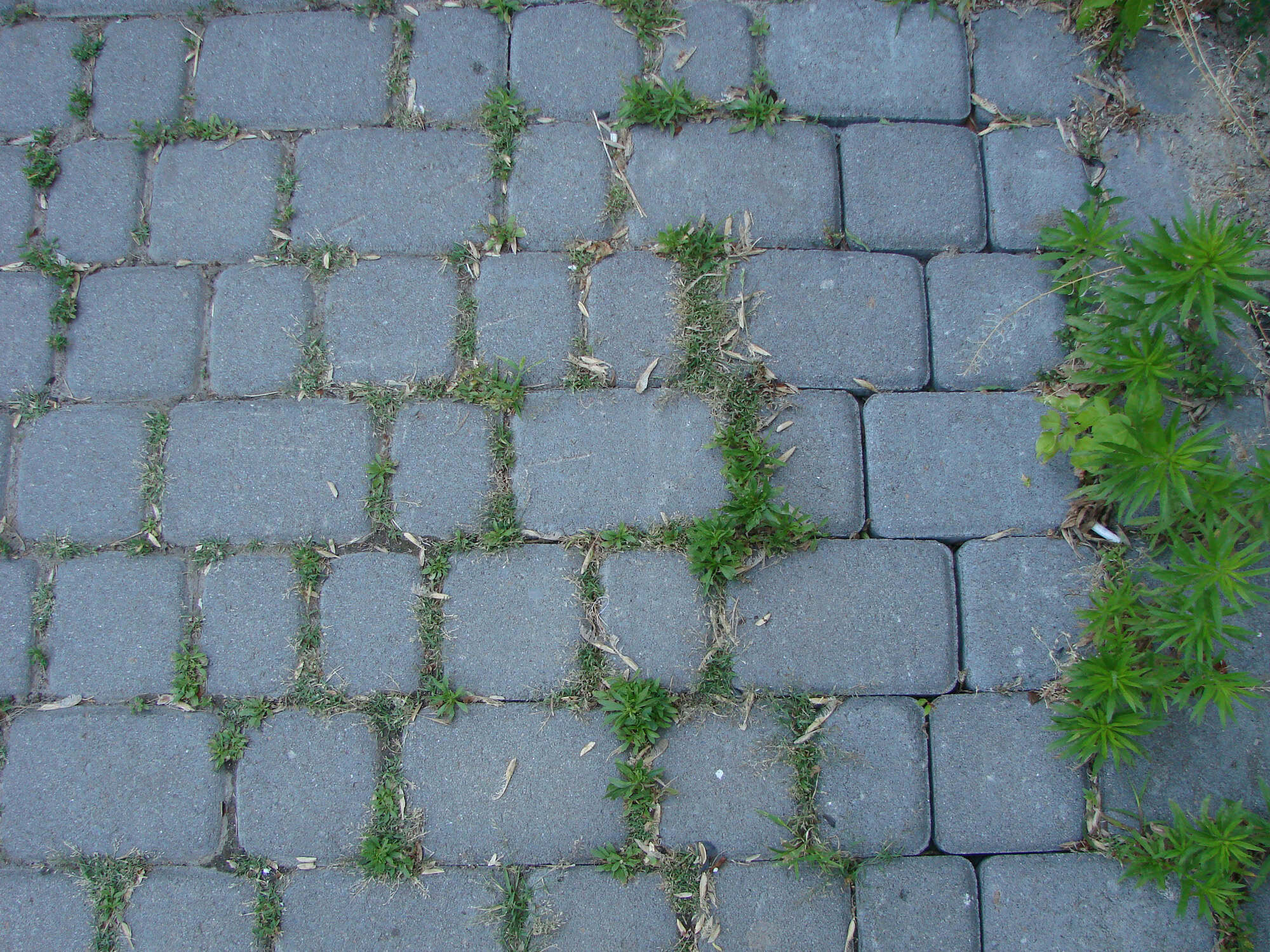
Before looking at how to kill driveway weeds, it helps to know why they appear in the first place. Weeds do not grow through the paving. They grow in the joints, cracks, and gaps where windblown soil, dust, and organic debris have accumulated over months and years. That thin layer of grit and decomposed matter is enough for a seed to germinate in, and once the root finds its way down into the sub-base or a crack in the surface, the weed has a reliable water supply and is surprisingly difficult to pull out cleanly.
The species you see most often in UK driveways are annual meadow grass (Poa annua), dandelions, willowherb, bittercress, and various types of spurge. Some of these are annuals that die off each winter and return from seed. Others are perennials with deep taproots that will regrow from the root even if you remove everything above the surface. Some, like dandelions, are among the most persistent lawn and garden weeds in the country. The method you choose needs to account for this, because killing the top growth without destroying the root system just buys you a few weeks before the weed comes back.
Salt for Driveway Weeds: Does It Work?
The Claim
Table salt or rock salt dissolved in water and applied to driveway weeds will kill them and prevent regrowth. Some versions of the advice suggest mixing salt with vinegar and washing-up liquid for a more potent spray.
The Science
Salt kills plants through osmotic stress. When you apply a strong salt solution to a weed, the high concentration of sodium chloride outside the plant draws water out of the cells through osmosis. The plant dehydrates at a cellular level and the foliage dies. At high enough concentrations, salt in the soil also prevents seeds from germinating, because the osmotic pressure of the soil water is too high for seedlings to take up moisture through their roots.
This is real science and it does work. The problem is what happens next.
The Trade-offs
Salt does not break down. Unlike organic herbicides or boiling water, sodium chloride persists in the soil for months or years, depending on rainfall and drainage. Every time you apply salt to a driveway joint, some of it washes sideways and downwards with the rain. If your driveway borders a lawn, flower bed, or hedge, the salt will gradually migrate into the root zone of those plants and damage or kill them too.
Salt also damages the driveway itself. Sodium chloride is corrosive to concrete, morite, and the jointing sand or polymeric sand between block paving. Over time, repeated salt applications will break down the pointing, loosen blocks, and cause the surface to deteriorate. In areas with natural stone paving, salt can cause spalling and discolouration that is impossible to reverse.
There is also the environmental angle. Salt runoff entering garden soil, ponds, or watercourses is toxic to a wide range of organisms. The Royal Horticultural Society advises against using salt as a weedkiller for exactly this reason.
The Verdict
Salt kills weeds, but the collateral damage makes it a poor choice for driveways. It harms adjacent plants, degrades paving materials, and contaminates soil for a long time. There are better options.
Vinegar for Driveway Weeds: Does It Work?
The Claim
White vinegar sprayed directly onto driveway weeds will kill them naturally and safely. Some people recommend standard household vinegar at 5 percent acetic acid, while others suggest horticultural vinegar at 10 to 20 percent concentration for tougher weeds.
The Science
Acetic acid strips the waxy coating from plant leaves, causing rapid desiccation. Within hours of application, the foliage turns brown and dies. This is a contact burn, similar in principle to a chemical herbicide, and it is genuinely effective at killing top growth. The speed is impressive. Most small weeds treated with vinegar on a sunny morning will be visibly dead by the afternoon.
The limitation is that vinegar is a foliar contact killer only. It does not travel through the plant to the roots. For annual weeds like bittercress and annual meadow grass, this is not a problem because destroying the foliage kills the entire plant. For perennial weeds with established root systems, such as dandelions and dock, the roots survive and the weed regrows within a few weeks.
The Trade-offs
Standard 5 percent household vinegar is weak enough that it struggles to kill anything with a thick leaf or a waxy surface. It works on young seedlings and small annual weeds but is often disappointing on established growth. You will need multiple applications, sometimes three or four, before a larger weed finally gives up.
Horticultural vinegar at 10 to 20 percent acetic acid is much more effective but also much more hazardous. At those concentrations, acetic acid will burn skin on contact, cause serious eye damage, and corrode metal fittings, tools, and some paving surfaces. It requires gloves, eye protection, and careful handling, which rather undermines the “safe natural alternative” selling point.
Vinegar will also kill any plant it touches, not just weeds. Overspray onto lawn edges or border plants will damage them just as readily as it damages the weeds. Apply on a still day with a targeted spray rather than a broad mist.
On the positive side, acetic acid breaks down quickly in the soil and does not persist the way salt does. It will not cause long-term damage to your paving or contaminate adjacent ground for months. It is also cheap and widely available.
The Verdict
Vinegar is a reasonable option for killing young annual weeds in driveway joints, but it is not the miracle cure the internet suggests. It will not kill deep-rooted perennials in one application, and the stronger concentrations needed for tougher weeds come with genuine safety risks. Think of it as a quick knockdown for small weeds rather than a permanent solution.
Boiling Water for Driveway Weeds: Does It Work?
The Claim
Pouring boiling water from a kettle directly onto driveway weeds will kill them instantly with no chemicals and no residue.
The Science
Boiling water at 100 degrees Celsius destroys plant cells on contact. The heat ruptures cell walls and denatures the proteins that keep the plant alive. The effect is immediate and total on any tissue the water reaches. Within minutes, the treated foliage will wilt and darken, and within a day it will be brown and dead.
The key phrase is “any tissue the water reaches.” Boiling water poured onto a weed in a driveway crack will kill everything above the surface and will also penetrate a short distance into the soil, scalding the upper portion of the root. For shallow-rooted annual weeds, this is usually enough to kill the plant outright. For deeper-rooted perennials, the boiling water cools as it travels down through the soil and often fails to reach the bottom of the taproot, meaning the weed regrows from whatever survives below.
The Trade-offs
The biggest advantage of boiling water is that it leaves absolutely no chemical residue. Once it cools, it is just water. It will not damage paving, contaminate soil, or harm nearby plants that it does not directly touch. It is free, available in every kitchen, and completely safe for the environment.
The biggest disadvantage is the personal safety risk. Carrying a full kettle of boiling water from the kitchen to the driveway and pouring it accurately into narrow cracks is an accident waiting to happen. Splashback, tripping, and spills can cause serious scalds. If you have a large driveway, you will need multiple kettle loads, and the process becomes time-consuming and tedious.
The other drawback is that boiling water is non-selective and non-persistent. It kills whatever it hits in the moment but offers zero residual protection against new weeds germinating in the same spot a week later. You will need to repeat the treatment every few weeks throughout the growing season to keep the driveway clear.
The Verdict
Boiling water is the safest option for the environment and for your driveway surface, and it is surprisingly effective on small annual weeds. It is less effective on deep-rooted perennials and offers no lasting protection. Best suited to small driveways or targeted spot treatment rather than large-scale weed control.
Driveway Weeds: Head-to-Head Comparison
Putting the three methods side by side makes the strengths and weaknesses clearer.
For killing annual weeds such as bittercress, annual meadow grass, and young spurge, all three methods work. Boiling water is the fastest, vinegar is the most convenient for larger areas, and salt is the most persistent but the most damaging.
For killing perennial weeds such as dandelions, dock, and bindweed, none of the three is reliably effective in a single application. Vinegar kills the top growth but not the root. Boiling water scalds the upper root but rarely reaches deep enough. Salt can eventually kill even deep roots if applied in sufficient quantity, but the amount needed would cause serious damage to the surrounding area.
For protecting the driveway surface, boiling water is the clear winner. It causes no damage to concrete, block paving, resin, or natural stone. Vinegar is mostly safe but can etch polished stone and corrode metal edging at higher concentrations. Salt is the worst offender, actively degrading concrete and loosening jointing compounds over time.
For environmental safety, boiling water wins again. It leaves no residue at all. Vinegar breaks down quickly and causes minimal environmental harm. Salt persists for months and can contaminate soil and waterways.
What Actually Works Best for Driveway Weeds
The honest answer is that no single household remedy will keep a driveway weed-free on its own. The most effective approach combines a fast-acting treatment to kill existing weeds with a prevention strategy to stop new ones appearing.
For killing existing weeds, the best household method is boiling water for small areas or a targeted vinegar spray for larger ones. Use boiling water on individual weeds growing in cracks and joints, and standard white vinegar on young annual weeds across a wider area. For established perennial weeds with deep taproots, neither method will give a permanent kill. In those cases, a glyphosate-based weedkiller applied carefully with a spot sprayer is the most effective option. Glyphosate is a systemic herbicide that travels from the leaf to the root, killing the entire plant. It breaks down in the soil within days and does not persist. Our guide on when to apply weed killer covers timing and application in more detail.
For preventing new weeds, the single most effective step is to keep the joints and cracks filled. Repointing block paving with polymeric sand, sealing cracks in concrete, and keeping gravel driveways topped up all reduce the opportunities for seeds to germinate. Brushing the driveway every few weeks in spring and summer removes the wind-blown soil and debris that weeds need to get started. A stiff broom and 10 minutes of effort will do more for long-term weed prevention than any amount of salt, vinegar, or boiling water.
Methods That Do Not Work
A few other home remedies circulate online that are worth addressing, because they waste time and sometimes cause harm.
Washing-up liquid on its own does not kill weeds. It is sometimes added to vinegar or salt mixtures as a surfactant to help the solution stick to the leaf surface, and it does perform that role, but on its own it has no herbicidal effect.
Bleach will kill weeds but it also stains paving, kills soil organisms, and is toxic to aquatic life. It is not a sensible choice for outdoor use and most local councils advise against pouring it down drains or onto open ground.
Coca-Cola and other fizzy drinks are sometimes recommended as weed killers. The small amount of phosphoric acid they contain is not concentrated enough to have any meaningful effect on a weed. You will attract ants and wasps without killing anything.
Covering weeds with newspaper or cardboard can smother them over time on open ground, but it is not practical in driveway cracks and joints where the material cannot be held in place or covered with mulch.
When to Treat Driveway Weeds
Timing is more important than most people realise. The best time to treat driveway weeds in the UK is from late March through to the end of September, when weeds are actively growing and most susceptible to treatment. Applying any method to dormant winter weeds will have little effect because the plants are not metabolising and the roots are in their most resilient state.
Within that window, the ideal conditions are a dry, still, warm day. Rain within a few hours of applying vinegar will wash it off before it has time to work. Wind will carry spray onto plants you did not intend to treat. Cold temperatures slow the desiccation process and give the weed more time to recover.
For boiling water, weather conditions are less important because the kill mechanism is thermal rather than chemical. You can pour boiling water on a weed in the rain and it will still work, though you will lose heat faster in cold or wet conditions, so a second application the following day is a good idea.
For prevention, the best time to repoint joints and seal cracks is in late winter or very early spring, before the first flush of weed growth. Getting ahead of the germination window means fewer weeds to deal with later. If you combine pre-emergent weed control on adjacent lawn areas with joint maintenance on the driveway, you can reduce weed pressure across the entire front of the property in one go.
Looking After the Lawn Next to Your Driveway
Many UK driveways border a front lawn, and whatever you use on the driveway can affect the grass. Salt runoff is the biggest risk. Even a small amount of salt solution running off the edge of the driveway onto the lawn will brown the grass in that strip, and repeated applications can kill it outright. If you do choose to use salt despite the drawbacks, keep it well away from the lawn edge and apply only on dry days when there is no risk of rain washing it sideways.
Vinegar overspray is less damaging in the long term because it breaks down quickly, but it will still burn any grass it touches. If you do accidentally damage the lawn edge, our guide on how to fix bare spots in lawn covers the repair process. Use a targeted spray bottle rather than a pump sprayer, and shield the lawn edge with a piece of cardboard held vertically as a barrier while you spray.
A healthy, dense lawn is also the best defence against weeds creeping from the driveway into the grass. Keeping the lawn well fed, mown at the right height, and properly aerated creates a thick sward that weeds struggle to penetrate. An organic lawn care approach works well here, and our spring weed control guide covers the lawn side of the equation in full.
A Practical Driveway Weed Routine
For most UK homeowners, the following routine will keep a driveway reasonably weed-free without spending a fortune on products or spending every weekend on your knees with a weeding tool.
In late February or early March, brush the entire driveway with a stiff broom to clear winter debris from the joints. Repoint any gaps in block paving with kiln-dried sand or polymeric jointing compound. Fill cracks in concrete with a suitable filler.
From April onwards, walk the driveway once a week and pour boiling water on any new weed seedlings you spot. At this stage they will be small and shallow-rooted, and a single kettle pour will kill them outright. This weekly habit takes five minutes and prevents weeds from ever reaching the deep-rooted stage where they become difficult to remove.
If you miss a few weeks and weeds have established, spray with white vinegar on a dry, still morning and follow up with a second application three days later if the weeds are still green. For any stubborn perennials that survive two rounds of vinegar, either dig them out by hand with a long-handled weeding knife or spot-treat with a glyphosate product.
In October, give the driveway a final brush and repoint any joints that have loosened over the summer. This closes the gaps before winter and reduces the number of germination sites available the following spring.
Driveway Weeds – Frequently Asked Questions
Will table salt permanently kill driveway weeds?
Salt will kill the weeds it contacts and can prevent regrowth in that spot for several months. However, it also damages paving materials, contaminates surrounding soil, and harms nearby plants. The Royal Horticultural Society advises against using salt as a weedkiller because of these side effects.
What strength vinegar kills driveway weeds?
Standard household vinegar at 5 percent acetic acid will kill young annual weeds and seedlings. For established weeds with thicker leaves, horticultural vinegar at 10 to 20 percent is more effective but requires gloves and eye protection. Neither strength reliably kills deep-rooted perennials in a single application.
Is boiling water safe for block paving?
Yes. Boiling water will not damage concrete, clay, or natural stone block paving. It leaves no chemical residue and does not affect jointing sand or polymeric compounds. It is the safest of the three methods for the driveway surface itself.
How often do I need to treat driveway weeds?
With boiling water or vinegar, you will need to retreat every two to four weeks throughout the growing season, as neither method prevents new weeds from germinating. Keeping joints filled and brushing the driveway regularly reduces the frequency of treatment needed.
Can I mix salt and vinegar together for a stronger weed killer?
You can, and the combination is more effective than either alone because the vinegar burns the foliage while the salt dehydrates the root zone. However, this also combines the downsides of both: the salt will damage your paving and contaminate the soil, and the vinegar adds no lasting protection. It is not recommended for regular use.
What is the best natural weed killer for driveways?
Boiling water is the best truly natural option for small areas. It kills on contact, leaves no residue, and causes no damage to the driveway or surrounding environment. For larger areas, a 5 percent vinegar spray on young weeds is a reasonable alternative. Neither is as effective as a systemic herbicide on deep-rooted perennials.
Do pressure washers remove driveway weeds?
A pressure washer will blast away surface weed growth and clear debris from joints, but it does not kill the roots. The weed will regrow unless you follow up with a treatment or repoint the joints. Pressure washing too aggressively can also damage jointing sand and loosen blocks, creating more gaps for future weeds.
Will weed killer damage my driveway?
Glyphosate-based weed killers do not damage paving materials. They are designed to be absorbed through plant foliage and break down in the soil. Salt-based and strong acid-based products can damage paving over time. Always check the product label and test on a small area first if you are unsure.
Sources
- Royal Horticultural Society. “Weeds in Paths and Paving.” RHS Gardening Advice. https://www.rhs.org.uk/weeds/weeds-in-paths-and-paving
- Royal Horticultural Society. “Weedkillers for Home Gardeners.” RHS Guidance. https://www.rhs.org.uk/prevention-protection/weedkillers-702
- Health and Safety Executive. “Plant Protection Products.” Pesticide Usage Guidance. https://www.hse.gov.uk/
- University of Maryland Extension. “Vinegar: An Alternative to Glyphosate?” Weed Science Research. https://extension.umd.edu/
- Pavingexpert.com. “Weed Control in Paved Areas.” Technical Guidance for Block Paving and Flagstones. https://www.pavingexpert.com/