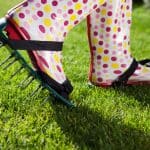
If your lawn feels spongy underfoot when you walk across it in May, the problem is almost always thatch. A thin layer of dead and living plant material at the base of the sward is normal and even beneficial, but once it builds past 1cm (about half an inch), it begins to choke the lawn. Water runs off, fertiliser stays trapped on the surface, moss colonises the moist mat, and roots stop pushing down because there is no oxygen below. Late spring is the second of the two annual windows when you can do something about it, and the next four weeks are your last chance before summer heat makes any deep work risky.
How to Tell If You Actually Have a Thatch Problem
The cleanest way to measure thatch is to cut a small wedge out of your lawn with a hand trowel or a sharp kitchen knife. Push the blade in to a depth of about 5cm (2 inches), then lever out a triangular section roughly 10cm (4 inches) wide. Lay it on its side. You will see green leaves on top, then a brown spongy layer of stems, runners, dead roots and partly decomposed clippings, then the soil. Measure that brown layer with a ruler. Under 1cm (less than half an inch) is healthy and works as a natural mulch that holds moisture and protects the crowns of the grass plants. Between 1cm and 2.5cm (half an inch to one inch) is a problem and needs treatment this season. Anything thicker than 2.5cm (one inch) is severe and means the lawn is effectively growing on top of itself rather than in the soil.
A faster test, useful if you do not want to dig holes in the lawn, is to walk on the grass in soft shoes. A healthy lawn feels firm underfoot. A lawn with excess thatch feels bouncy, almost like walking on a thin mattress. If footprints stay visible for several minutes after you have walked across it, the spongy layer is holding the blades down rather than the soil releasing them.
Why Thatch Builds Up in the First Place
Thatch is not caused by leaving grass clippings on the lawn. Short clippings from a regular mow are about 85 per cent water and decompose within days, contributing almost nothing to the layer. The real culprits are the woody stems, dead roots, and stolons (the horizontal stems that creep across the soil surface) of grasses that spread aggressively. Ryegrass and fescue varieties produce relatively little thatch and you may only need to address it once every three or four years. Bermuda, zoysia, Kentucky bluegrass and creeping bent species produce far more, because their rhizomes and stolons contain lignin that breaks down slowly. These grasses usually need attention every year.
Three lawn care habits accelerate the problem. Heavy use of synthetic nitrogen feeds drives top growth faster than the soil microbes can decompose the resulting plant material. Frequent shallow watering keeps roots near the surface, where they tangle into the thatch layer instead of pushing into the soil. And acidic soil (anything below pH 6.0) suppresses the bacteria and fungi that would normally decompose plant material at a healthy rate. If you have done a soil test and your pH is low, applying a calcified seaweed or garden lime at around 50g per square metre (1.6 ounces per square yard) will gently raise pH over the next six to eight weeks and improve microbial activity.
The Right Way to Remove Thatch in Late May
For light thatch (between 1cm and 1.5cm), a powered lawn raker is the right tool. The Bosch UniversalRake 900 (around £140/$175) is a 900W mains-powered machine with spring steel tines that comb the thatch out without cutting into the soil. Set it to the shallowest depth on the first pass, which is usually 2 to 3 millimetres above the soil. The aim at this depth is not to slice into the ground but to lift dead material upward. Make a single pass north to south, then a second pass east to west. You will be shocked at how much brown matter comes out of a lawn that looked green from above.
For heavier thatch (1.5cm and up), step up to a true scarifier with fixed blades rather than spring tines. The Einhell GE-SC 35 Li scarifier (around £150/$190 for the body, plus battery and charger if you need them) has a 35cm working width and adjustable depth from minus 5mm (just brushing the surface) to plus 12mm (cutting into the top layer of soil). For domestic use the right setting is usually 0 to plus 3mm, no deeper. Going deeper than 5mm in May risks pulling out healthy crowns along with the thatch, and the lawn will not have enough recovery time before summer to fill the gaps.
If you have a smaller lawn (under 100 square metres, or about 1,000 square feet), a hand spring tine rake works perfectly well. Look for the Wolf-Garten UR-M3 (around £18/$22) or similar. Lean your weight into the tines as you pull, and accept that you will need an hour for every 30 square metres if the thatch is genuine.
Timing within May is critical. Aim for a day when the grass is dry but the soil is moist a centimetre below the surface. Dethatching wet grass tears clumps out rather than combing them; dethatching bone-dry soil over-stresses the remaining plants. The week after a light rain is ideal.
What to Do Immediately After You Have Finished
The lawn will look brutalised. There will be brown patches, exposed soil between the remaining grass plants, and what looks like several wheelbarrows of debris. This is normal and the recovery happens fast if you do three things in the right order.
First, rake up and compost the debris within 24 hours. Left on the lawn it acts as a barrier and the work has been wasted.
Second, overseed any patches where you can see more than 30 per cent bare soil. Use a seed mix that matches your existing grass type (most general garden lawns are a ryegrass and fescue blend). The Johnsons Quick Lawn seed (around £18/$23 for 850g, covering about 25 square metres or 270 square feet) germinates in 7 to 10 days at this time of year. Spread at the rate printed on the box, usually around 35g per square metre for overseeding (heavier rates of 50g per square metre apply only to bare patches).
Third, apply a balanced feed with moderate nitrogen, something like a 9-7-7 NPK ratio. The Westland Aftercut All In One (around £14/$18 for 80m2) works well because it includes potassium that supports root development rather than just driving leaf growth. Water it in if no rain is forecast in the next 48 hours, because granular feed sitting dry on a freshly disturbed lawn can scorch the new shoots.
The reason this sequence works is that scarification creates thousands of tiny wounds and exposes soil to light. Seed needs that soil contact and light to germinate, the feed provides the energy for the grass to push new tillers (side shoots) outward, and the moisture from rain or watering activates both. Skip the overseeding step and weeds will fill the gaps within three weeks because their seeds are already in the soil and they germinate faster than ryegrass.
When You Must Wait Until Autumn Instead
If your lawn is mostly warm-season grass (a small but growing proportion of gardens in warmer climates), late May is fine because warm-season grasses are entering their peak growing window between 27 and 35 degrees Celsius (80 to 95 degrees Fahrenheit) at the soil surface. But if your lawn is cool-season grass (the standard ryegrass, fescue and bent mixes that dominate most domestic gardens) and the forecast shows daytime temperatures already pushing above 24 degrees Celsius (75 degrees Fahrenheit) consistently, you have already missed the spring window. Do nothing this season except keep mowing high (around 4cm or 1.5 inches) and water deeply once a week, then come back in late August or early September for the autumn scarification window when temperatures drop and the grass enters its second flush of growth. Scarifying cool-season grass in genuine summer heat causes damage the lawn cannot recover from before the next dormancy.
Get the timing right and a properly scarified lawn in late May will be visibly thicker, greener and more drought-tolerant by the first week of July. Get it wrong and you have set yourself up for a thin, weedy summer. The wedge cut and ruler are the only honest way to know which side of the line your lawn sits on.