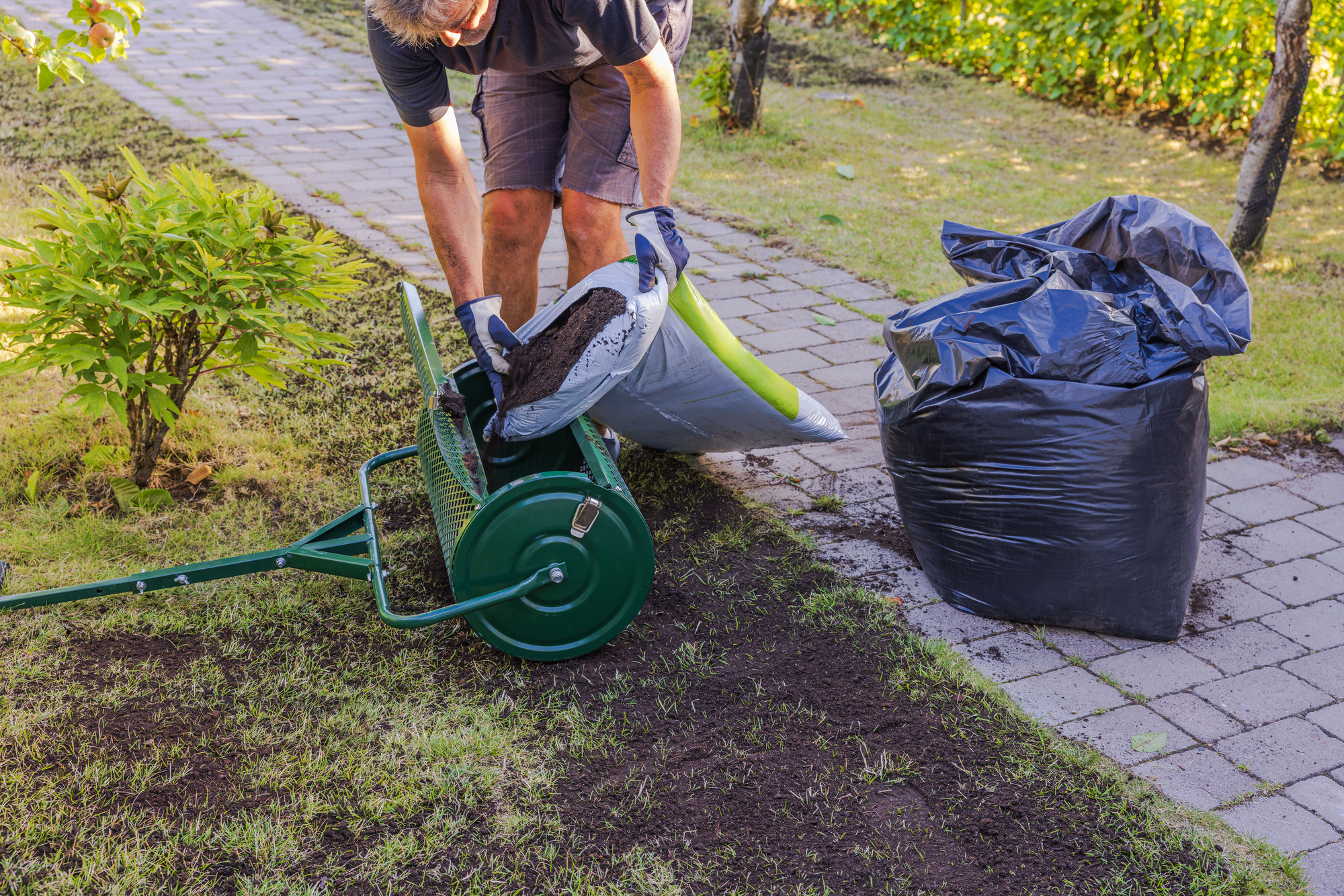
You can still buy a lawn roller at any large garden centre. They sit on the shelf next to the mowers, often with a little sign suggesting you roll your lawn in spring to flatten it out and improve the finish. This is one of the most stubborn pieces of bad advice in gardening, and it is being sold to you against the consensus of every professional turf scientist and groundsman who has studied the question. Rolling your lawn does not fix the things people think it fixes, and it actively causes damage that can take three or four seasons to recover from.
What the Lawn Roller Is Actually Doing to Your Soil
A garden lawn roller is a steel or plastic drum, usually around 50cm (20 inches) wide, filled with water or sand to give it weight. The heaviest domestic models weigh 60 to 80kg (130 to 175 lbs) when full. When you push it across your lawn, that weight presses down on a contact patch roughly 5cm wide across the full width of the drum. The pressure delivered to the soil works out at roughly 0.15 to 0.25 kilograms per square centimetre, applied repeatedly as you go up and down.
That force is more than enough to compress the air pockets between soil particles in the top 10 to 15cm (4 to 6 inches) of your lawn. Healthy lawn soil is around 50 per cent solid material (mineral and organic) and 50 per cent pore space split between air and water. After repeated rolling, the pore space drops to 25 or 30 per cent. The remaining pores are smaller, holding water for longer (which sounds good but actually causes anaerobic conditions where the roots cannot breathe) and offering almost no path for oxygen to reach the root zone.
The effect on grass roots is immediate and measurable. University turf science studies have repeatedly shown that compacted soil cuts root depth by 30 to 50 per cent within a single season. Roots that previously pushed down 15cm (6 inches) in pursuit of water and nutrients now sit in the top 5cm (2 inches) of the soil because they cannot punch through the compressed layer below. A shallow-rooted lawn is the lawn that browns first in dry weather, the lawn that bare patches develop on after a single party, and the lawn that weeds dominate within two summers.
Why People Think Rolling Works in the First Place
The instinct to roll comes from a real observation: lawns often look bumpy and uneven in early spring, especially after winter frost. A roller appears to solve this. Run it across the lawn and the bumps disappear. The grass looks visibly flatter for the first few weeks. The trouble is that what you have actually done is push the bumps down rather than fix them.
The bumps themselves are usually caused by one of three things. Worm casts (small mounds of soil pushed up by earthworms feeding overnight) make the surface lumpy in spring. Frost heave (the swelling of wet soil as it freezes and thaws) creates uneven surfaces during winter that mostly settle on their own by mid-spring. Animal activity (cats, dogs, foxes, badgers) leaves scratch marks and depressions. None of these problems are solved by compression. The worm casts get spread sideways, the heaved soil gets crushed into smaller air pockets, and the animal damage just gets pressed into a flatter version of the same damage.
The temporary flat appearance after rolling is also misleading. Within four to six weeks, the surface returns to roughly its original shape as soil moisture redistributes and grass grows back in. The bumps come back, the lawn just now has a compacted layer underneath it as well.
The Three Situations Where Rolling Is Actually Justified
There are exactly three cases where a roller has a legitimate role, all of them narrow and time-limited.
The first is immediately after laying new turf. A light water-filled roller (no more than 30kg, partially filled, so the pressure is gentle) passed once over freshly laid turf presses the roots into firm contact with the soil beneath. Without this contact, air gaps cause patches to dry out and die back at the joints between rolls. This is the only universally agreed legitimate use, and even then only one pass with a light roller.
The second is immediately after overseeding a bare patch. After scattering seed and raking it lightly into the surface, a light pass with a roller (or simply walking carefully across the seeded area in flat shoes) presses the seed into firm contact with the soil. This improves germination rates by 15 to 20 per cent because seeds need to absorb moisture from soil particles, which they cannot do reliably if they are sitting on top of loose dust.
The third is a single light pass in very early spring on a lawn that has experienced significant frost heave, where parts of the surface are visibly several centimetres higher than they were in autumn. The aim here is only to settle the heaved soil back to baseline, not to flatten anything. This should be done when the soil is just thawed but not yet saturated, with a roller no heavier than 30kg, in one direction only.
Outside these three scenarios, the roller stays in the shed. It is not a maintenance tool for an established lawn.
What You Should Do Instead to Fix a Bumpy Lawn
The proper way to flatten an uneven lawn is the exact opposite of rolling: aerate first, then topdress.
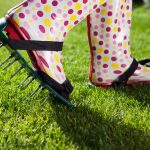
Core aeration removes plugs of soil from the lawn, leaving cylindrical holes around 1cm (0.4 inches) wide and 7 to 10cm (3 to 4 inches) deep at regular spacings across the surface. These holes immediately reduce compaction in the top of the soil, allow oxygen and water to reach the root zone, and create channels into which topdressing material can be brushed. A hand hollow-tine fork (around £25/$32, available at any garden centre) works for small lawns. For lawns over 100 square metres, hiring a powered hollow-tine aerator from a tool hire shop for half a day (around £55/$70) is faster and far more effective.
Once the lawn is aerated, the topdressing fills the dips and the cores. The standard professional mix is equal parts good quality topsoil, mature compost, and horticultural sand. Spread it thinly across the lawn at a rate of 3 to 5kg per square metre, then brush it across the surface with a stiff broom or a flexible rake. The aim is to leave a thin layer that fills the low points and works down into the aeration holes, while the existing grass blades still poke through clearly. If you cannot see the grass after spreading, you have applied too much and you will smother the lawn.
For very uneven lawns, the topdressing process can be repeated three or four times during the growing season at six-week intervals. Each application raises the low spots by 5 to 10mm without smothering the grass, and over a single season a noticeably bumpy lawn becomes visibly level. The lawn ends up firmer than it would have been with a roller, but firm in the right way: dense root mass holding the soil together, rather than compressed soil with shallow roots above it.
The Topdressing Tool Most Gardeners Have Never Used
A levelling rake (sometimes called a lute or a lawn leveller) is the piece of kit that makes this process easy. It is a flat metal or wooden bar around 60cm wide on a long handle. You drag it across the topdressed lawn and it pushes the dressing material from the high points into the low points, leaving a more even surface in a single pass. The Standard Golf landscape rake (around £75/$95) is the professional version. Cheaper alternatives from Wickes, Screwfix or Amazon do the same job for £30 to £45.
Combined with a topdressing mix, a levelling rake will transform a lumpy lawn in two seasons, with the side effect of improving the soil profile, increasing organic matter, and giving you a thicker, denser sward by the second autumn.
What to Do With the Roller You Already Bought
If you have already invested in a lawn roller, do not throw it out. Use it on the three legitimate jobs (new turf laying, post-seeding pressing, single light pass on heaved soil) and store it the rest of the time. The mistake is making it part of your regular spring maintenance routine. It belongs in the category of specialised tools that solve a specific problem and create problems if used for anything else. The same category includes flame weeders (excellent for paths, terrible on lawns) and pickaxes (essential for stumps, disastrous as a digging tool for borders).
The lawn industry has been quietly walking back the recommendation to roll for the last two decades. Most reputable seed companies and turf scientists now actively discourage it. The advice persists because the rollers themselves are still being sold and because the visible short-term effect (flatter lawn for a month) feels like a result. The long-term effect, six months and four years down the line, is a thinner, weedier, more drought-prone lawn that needs progressively more work to keep alive. The honest answer to a bumpy spring lawn is patience and a topdressing mix, not weight on a drum.