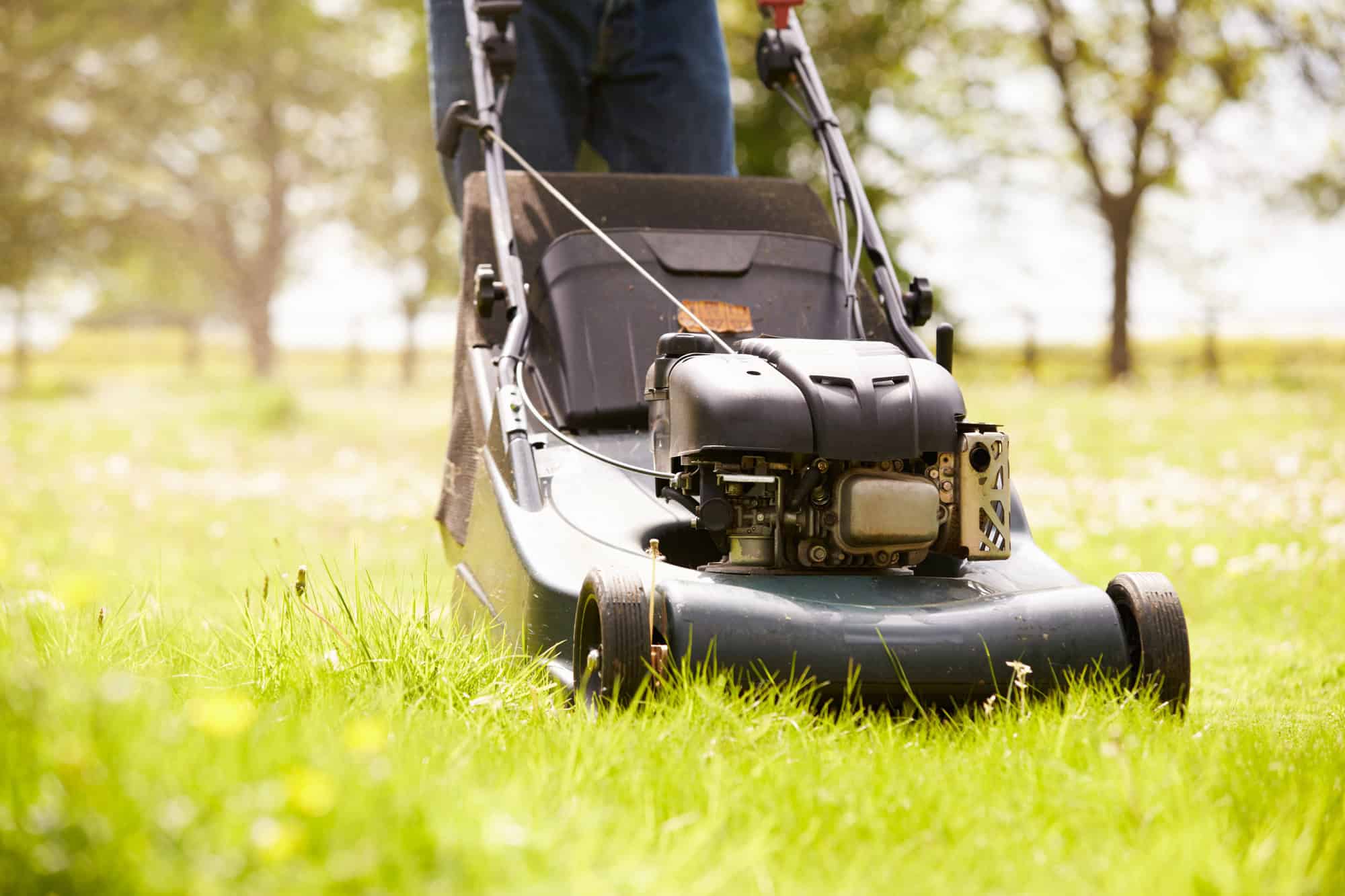
Most modern rotary mowers offer three cutting modes, three different ways of dealing with the clippings the blade produces. The owner’s manual typically describes each mode in a single sentence and assumes the user will pick. Most people pick whichever mode came set on the mower out of the box and never change it. That is a mistake, because each mode produces a different effect on the lawn and on your time, and the right choice changes with the season, the grass length and the weather. Understanding what each mode actually does internally is the difference between fighting your mower every weekend and getting a result that looks better with less effort.
The basic mechanical principle is the same across all three modes. A rotary blade spins horizontally inside a deck at roughly 3,000 rpm, creating an air vortex that lifts each grass blade vertically and presents it to the cutting edge. What differs between the modes is what happens to the clipping after it is cut.
Bagging Mode
Bagging mode routes the clippings out of the deck through a rear chute into a fabric or plastic collection box. The deck is sealed on the sides so that the airflow generated by the blade carries the clippings backward and into the bag. This is the most familiar mode and the one most home gardeners assume is correct, mainly because it produces the cleanest visible finish.
Bagging is the right choice in four specific situations. First, when the grass is significantly overgrown, more than 50 percent longer than your target cutting height, the volume of clippings is too high to leave on the lawn. They will mat down, block sunlight and rot in patches. Second, when the lawn is full of weed seed heads, bagging removes the seeds before they can spread, which is particularly useful in May and June when dandelions, plantain and meadow grass are flowering. Third, when the lawn is heavily diseased with red thread, dollar spot or rust, bagging removes the spore-bearing leaf tissue and slows the spread. Fourth, in autumn when leaves are mixed with the grass, the bag collects everything in one pass.
The downside of bagging that most people underestimate is what it does to soil fertility over time. Grass clippings are roughly 4 percent nitrogen, 1 percent phosphorus and 2 percent potassium by dry weight. Returning clippings to the lawn cycles those nutrients back into the soil. Removing them every mow means the lawn loses about 50 percent of the nitrogen and potassium it would otherwise receive naturally over a season. You then have to replace that with bought fertiliser, which is both expensive and an extra job. Troy-Bilt and university extension services both estimate that mulching mode rather than bagging cuts fertiliser needs by about 1 pound of nitrogen per 1,000 square feet (about 50 grams per 100m2) per year.
Mulching Mode
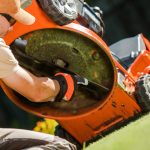
Mulching mode is something completely different from simply not collecting the clippings. A true mulching deck has a specialised internal shape, often with a plug fitted to seal the discharge chute, that recirculates the clippings inside the deck multiple times. Each clipping passes the blade three or four times rather than once, getting progressively shorter with each pass, until it is small enough to fall through the standing grass and reach the soil surface.
The science behind why this works is the size of the resulting clippings. A clipping of 5 to 10mm (about 0.2 to 0.4 inches) decomposes within a few days. A clipping of 30 to 40mm (about 1.2 to 1.6 inches) sits on the surface, dries out and forms thatch. Standard mowing without mulching produces clippings closer to the longer size. A purpose-built mulching deck shreds them to the short size automatically.
Mulching is the right choice in three situations. First, during regular weekly or twice-weekly mowing when you are removing less than 30 percent of the leaf length per cut. Second, when the grass is dry. Wet grass clumps inside the deck even with a mulching design and can choke the airflow. Third, when soil fertility is low and you want to recycle nutrients without buying feed. Lawn care surveys consistently show that around 70 percent of professional contractors prefer mulching for routine maintenance because it saves time on emptying bags and improves the lawn over time.
The downsides are real but limited. If you mow infrequently and the grass is long, mulching produces visible clumps of green that sit on the surface for several days. If the lawn is diseased, mulching keeps the infected tissue in contact with the rest of the lawn and spreads the problem. And if the lawn is mostly weeds with seed heads, mulching effectively replants the weed seeds back into the soil.
Side Discharge Mode
Side discharge mode opens a chute on the side of the deck (typically the right) and ejects the clippings out at high speed in a fan pattern. The clippings land back on the cut grass behind and to the side of the mower, spread out rather than collected. This is the original mode on the very first rotary mowers and remains the default on many ride-on, large self-propelled and commercial mowers.
Side discharge is the right choice in two situations. First, when the grass is wet or very long and would clog any other mode. The aggressive expulsion of the clippings clears the deck instantly and lets you keep cutting through conditions where bagging or mulching would jam. Second, when you are mowing a large area and speed counts for more than appearance. Side discharge is the fastest of the three modes because there is no resistance from clippings cycling inside the deck and no time spent emptying a bag.
The trade-off is appearance. Side discharge leaves visible rows of clippings on the side where the chute exits, which looks untidy for the first hour or two before the wind disperses them. On a small front lawn this is unacceptable. On a paddock or a back garden where presentation is not the priority, it is fine. A standard rule of thumb among contractors is that if you are mowing once a week or less frequently, side discharge is the practical choice. If you are mowing twice a week or more, mulching gives a better result.
Which Mode Your Lawn Wants This Time of Year
Late May is peak growth season, which is the most demanding time of year for any mowing setup. Soil moisture is still good, temperatures are warm and grass is producing leaf at the maximum rate it will all year. For a typical domestic lawn at this point, the answer depends on how often you are willing to mow.
If you mow twice a week, set the mower to mulching mode and forget about the bag for the rest of the summer. The clippings will be short enough to disappear into the sward, the soil will benefit from the steady nitrogen return, and you save 10 to 15 minutes per mow not emptying the collection box. The lawn looks cleaner because there are no visible clippings on top.
If you mow once a week, mulching still works but you may see clumps if growth has been heavy. The fix is to mow a day earlier than usual or to raise the cutting height by one notch so you remove less leaf per pass. If the grass is regularly too long for the mower to mulch cleanly, switch to bagging for the first cut of each fortnight and mulching for the second cut.
If you mow every two weeks or less, mulching will not work cleanly. Use bagging mode and accept that you are losing the nutrient cycling benefit. Compensate with a light spring and summer feed.
If you have just had heavy rain and the grass is wet but you need to cut today, use side discharge regardless of your usual mode. The mulching plug will clog within minutes on wet grass and the bag will fill with sticky clumps that have to be scraped out. Side discharge clears the deck cleanly and lets you finish the job, even if the visible finish is rougher.
Switching Between Modes on the Same Mower
Most modern rotary mowers from Bosch, Flymo, Honda, Ego, Stihl and Mountfield offer 2-in-1 (bag and mulch) or 3-in-1 (bag, mulch and side discharge) capability. The switch usually involves fitting or removing a mulching plug at the back of the deck and either attaching or detaching the collection box.
Cordless models like the Ego LM2135E-SP and the Bosch AdvancedRotak 36-750 both come with mulching plugs in the box. Many owners never unwrap them. Petrol models from Honda and Mountfield usually include the plug as standard. If you cannot find your mulching plug, manufacturer replacement plugs cost £8/$10 to £20/$25 and ship within a couple of days from Amazon or the brand’s spare parts site.
The single change that improves more home lawns than anything else is owners moving from default bagging to mulching during peak growth season. Try it for a fortnight on the parts of your lawn that get the most regular mowing. If the clippings stay invisible and the grass looks the same or better, you have just removed the most time-consuming part of every mow and saved yourself the cost of half your annual fertiliser. If clumps appear, raise the cutting height or mow slightly more often. Most lawns adapt to the mulching schedule within three weeks and never need to go back.