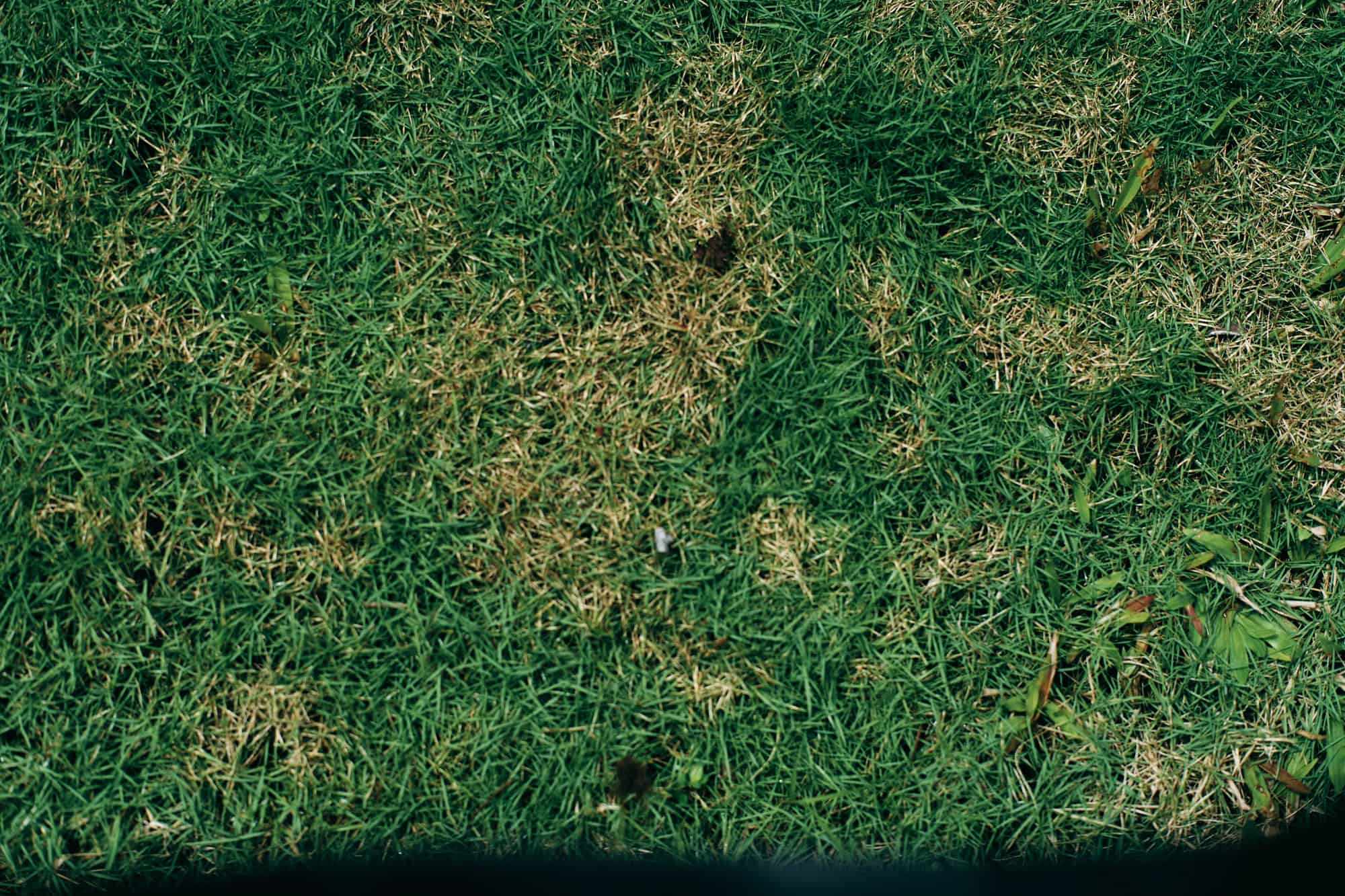
Scattered straw-coloured spots about the size of a coin, dotted across an otherwise green lawn in warm summer weather, are almost always dollar spot. It is one of the most common lawn diseases of the season, and the fix surprises most people: you feed the lawn rather than starve it. A light nitrogen feed clears the majority of cases faster than a fungicide does, because the disease takes hold precisely when grass is hungry and stressed.
How to Recognise Dollar Spot and Not Confuse It
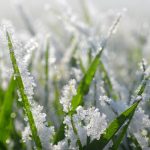
Dollar spot takes its name from the small, round, bleached patches it leaves, each roughly 2.5 to 7.5cm (1 to 3 inches) across and slightly sunken below the surrounding turf. From standing height they look like pale freckles. Get down on your knees and the giveaway is on the individual blades. Each infected blade carries a bleached, straw-coloured lesion banded by a thin reddish-brown border, and the lesion often pinches in across the middle of the blade into an hourglass shape. Early in the morning, while the dew is still down, you may see a fine white cobweb of fungal growth lying across the spots. It looks a little like spider silk and disappears as the dew burns off, which is why so many people miss it.
The disease is caused by a fungus, Clarireedia jacksonii, known for years by its old name Sclerotinia homoeocarpa. Left alone, the small spots merge into larger sunken patches. It is worth telling dollar spot apart from two look-alikes before you treat anything. Drought stress browns the lawn in broad sweeps, follows the sunniest and driest areas, and never produces those banded lesions on single blades. Red thread, another summer disease, leaves pink or red threadlike strands and a reddish tinge across patches rather than crisp coin-sized spots. Treating the wrong problem wastes time and money, so confirm the blade-level lesions before you act.
Why It Appears, and the Science Behind It
Dollar spot is driven by a specific and very common combination: grass that is low in nitrogen, soil that is dry at the root, and a leaf surface that stays wet for long periods. Add warm, humid weather, with temperatures somewhere around 15 to 30C (60 to 85F), and the disease has everything it needs. The mechanism is worth understanding because it explains the cure. A lawn short of nitrogen cannot grow quickly. When the fungus colonises a leaf, an underfed plant has no spare energy to push out fresh tissue and replace what is infected, so the disease keeps the upper hand. Well-fed grass grows out of the infection faster than the fungus can spread.
Leaf wetness is the second half of the story. The fungus spreads as fine threads that creep across the moist surface of the leaves, and it hitches a ride on mower wheels, boots and dragged hoses. Warm nights that leave a heavy dew sitting on the grass until mid-morning give it hours of the wet leaf surface it needs to grow and jump from plant to plant. The cruel twist is that the soil can be bone dry at the same time the canopy is soaking wet at dawn, and that exact pairing, dry roots and wet leaves, is the perfect storm for dollar spot.
The Counterintuitive Fix: Feed First
The instinct when a lawn looks diseased is to stop feeding it, which is the worst thing you can do here. Nitrogen is the primary control. In a three-year turf study, lawns given adequate nitrogen together with morning-only watering showed around 85 per cent less dollar spot than underfed lawns, and that simple pairing outperformed fungicide used on its own. So reach for a feed before you reach for a chemical.
In warm weather, use a light, quick-acting nitrogen source rather than a heavy granular dump that could scorch. A soluble lawn food such as Miracle-Gro Water Soluble Lawn Food (around £12/$15 for a tub that treats a typical lawn several times) dissolves in a watering can and is taken up within days, which is exactly the fast response you want when a disease is active. If you prefer granules, a summer lawn food like Scotts Turf Builder or an EverGreen summer feed applied at the rate printed on the box, usually around 35g per square metre, does the same job more slowly. Keep the rate modest during a hot spell and water it in, because feed left dry on the surface in heat can burn the grass. The aim is a gentle, steady push of leaf growth, not a sudden flush. As the grass grows away, it both replaces infected tissue and thickens the sward so the canopy dries faster after dew, removing the wet-leaf window the fungus depends on.
Watering, Mowing and When to Reach for Fungicide
How and when you water decides whether the disease fades or spreads. Water deeply but in the early morning only, so the lawn has the whole day to dry before nightfall. Never water in the evening during a dollar spot outbreak, because it leaves the leaves wet right through the warm night and hands the fungus an extra ten or twelve hours of growing time. A useful old groundsman trick is to knock the dew off first thing in the morning, either by mowing or by dragging a long hose or pole across the lawn, which shortens the daily leaf-wetness period and slows the disease noticeably. While the disease is active, mow with a sharp blade and collect the clippings rather than mulching them, so you are carrying spores off the lawn instead of redistributing them, and never mow when the grass is soaking wet. Raise the cutting height slightly rather than scalping, since a stressed short lawn is more vulnerable.
Only if the spots keep spreading after you have fed and corrected your watering should you consider a fungicide. Chlorothalonil and propiconazole are among the more effective active ingredients available to home gardeners, but be aware that dollar spot has developed confirmed resistance to certain fungicide groups in many areas, so a chemical is no guarantee on its own. For most lawns it never comes to that. Feed the grass, water in the morning, sharpen the blade, and you should see clear improvement within two to four weeks. Ignore it and the coin-sized spots merge into larger sunken patches of dead grass, and those bare, depressed areas are exactly where weeds move in once the disease has passed.
A Simple Season-Long Routine That Keeps It Away
Once you have cleared an outbreak, a light routine stops it coming back, and it costs almost nothing. The single most useful habit is to keep the lawn modestly fed through the warm months rather than letting it run hungry between one big spring feed and the next in autumn. A lawn that is never allowed to go short of nitrogen rarely develops dollar spot at all, because the disease is at heart a symptom of starvation. Little and often beats a single heavy dose, so a small application every five or six weeks through summer, at half the rate you would use in spring, keeps growth steady without forcing a soft, sappy flush that brings its own problems.
Pair that with three quick checks. First, water in the morning and water deeply but infrequently, soaking the soil to around 15cm (6 inches) once or twice a week rather than splashing the surface every evening, which trains roots downward and keeps the canopy dry overnight. Second, keep the mower blade sharp so each cut is a clean shear that heals quickly, because the ragged wounds left by a blunt blade are open doors for any fungus. Third, watch the worst-drained or most shaded corner of the lawn, since these areas hold dew longest and almost always show dollar spot first. If you see the early coin-sized spots return there, a light feed and a few mornings of knocking the dew off usually settle it before it can spread across the rest of the grass. Caught at that stage it is a five-minute job rather than a season-long battle.