
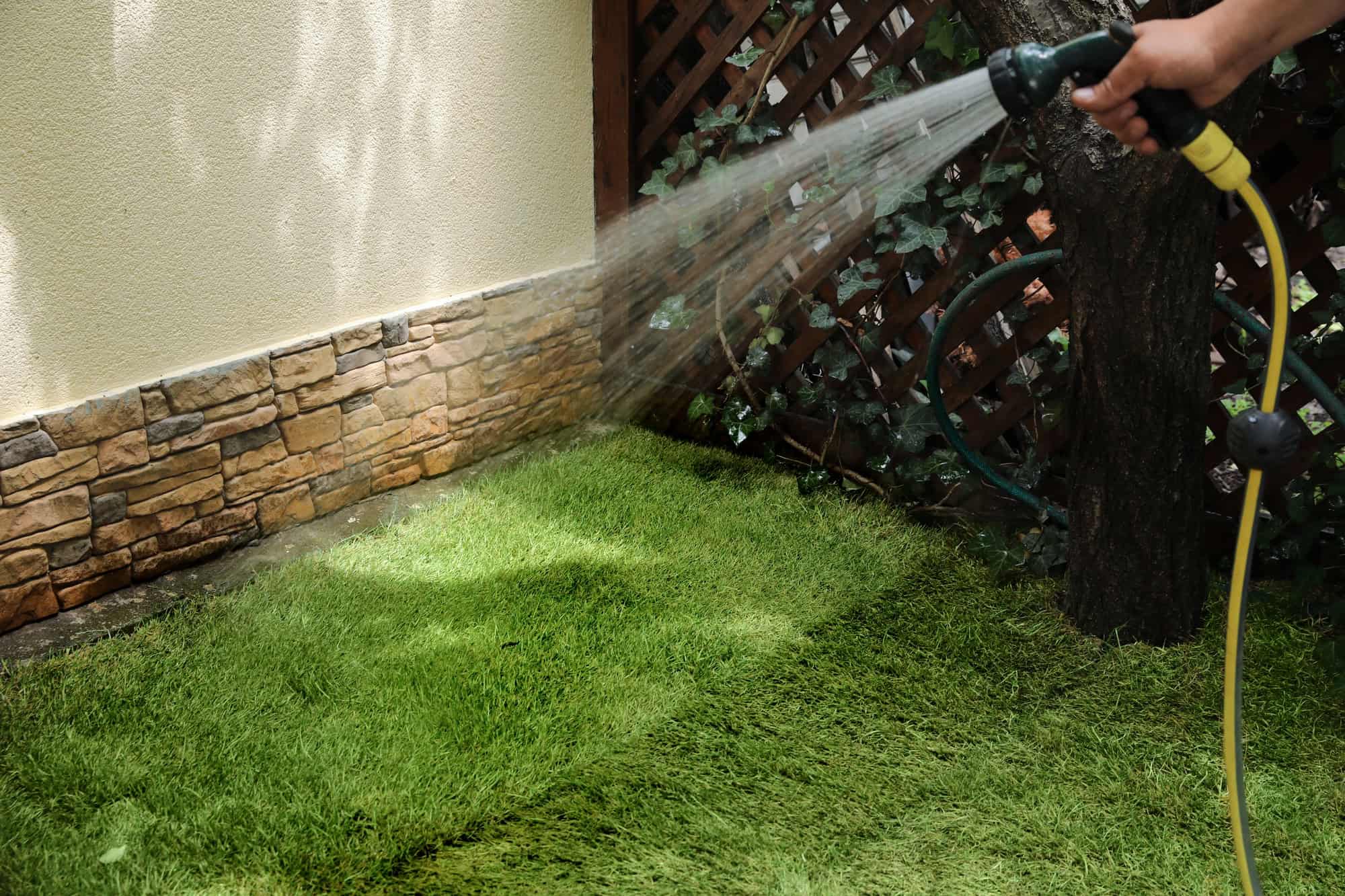
A single water butt fed from a downpipe can capture hundreds of litres from one heavy shower, and that stored water is free, untreated, and ready for the driest weeks of summer when the tap is the last place you want to turn. The practical takeaway is simple: fit a butt to the downpipe that drains the largest roof area you have, set up a diverter so it fills automatically, and prioritise that water for the parts of the lawn that suffer first. Rainwater is also slightly better for grass than tap water, which makes a water butt one of the cheapest upgrades a lawn owner can make.
This guide explains how much water a roof can realistically collect, why stored rainwater suits a lawn so well, how to set up a butt that actually fills instead of overflowing, and how to spend that water where it does the most good once a dry spell sets in.
How Much Water You Can Actually Collect
The arithmetic of rainwater is more generous than most people expect. Every 1mm of rain falling on 1 square metre of roof delivers almost exactly 1 litre of water. So a modest roof section measuring 5m by 8m, which is 40 square metres of catchment, sheds around 400 litres in a single 10mm shower. Allow for a little loss to splashing and evaporation and you still fill a large butt from one ordinary rainy afternoon. Across a full year, the roof of an average house can shed many thousands of litres, with figures of up to around 24,000 litres a year quoted for a typical home.
What this tells you is that collection is rarely the problem. Storage is. A 100 litre butt fills and overflows from the first decent shower, so the real question is how much you can hold for the weeks when no rain falls at all. That is why the gardeners who get the most from rainwater tend to run more than one butt, or a single larger tank, rather than relying on a small barrel that empties after one watering.
Why Rainwater Suits a Lawn Better Than Tap Water
Stored rainwater is not just free, it is chemically kinder to a lawn than treated mains water. Rainwater is naturally soft and slightly acidic, with a pH usually somewhere between 5.5 and 6.5, which sits close to the range most lawn grasses prefer. Tap water in hard-water areas, by contrast, is alkaline and carries dissolved calcium and magnesium, and watering with it repeatedly over years can nudge the surface pH upward and leave faint lime deposits in the soil. Mains water is also chlorinated, and while the chlorine does no lasting harm to established grass, it is not doing the soil life any favours either.
The reason this helps the lawn comes down to soil biology. Grass relies on a population of bacteria and fungi in the root zone to break organic matter down into the nutrients it can absorb. Soft, untreated rainwater at a mildly acidic pH supports that microbial life and keeps nutrients available, whereas a steady diet of hard, chlorinated tap water is a slightly more hostile environment for it. For a newly seeded or freshly turfed area, where the roots are shallow and the young grass is most sensitive, that difference is worth having.
Setting Up a Water Butt That Actually Fills
The setup that catches the most water is the one connected to the right downpipe. Choose the pipe that drains the largest area of roof, usually a main rear or side pipe rather than a small porch or garage. A basic 100 litre butt costs around £25 to £35 (about $32 to $45), a sturdier 200 to 210 litre model runs from around £40 for a plain barrel up to £146 to £169 (about $185 to $215) for a decorative planter-topped version, and most are sold at B&Q, Wickes, Homebase, Home Depot, Lowe’s, and Amazon.
Work through the basics in order:
- Stand the butt on a firm, level base or a purpose-made stand. Water weighs 1kg per litre, so a full 210 litre butt holds over 200kg and must not be allowed to lean or tip. The stand also lifts the tap high enough to slide a watering can underneath.
- Fit a rain diverter to the downpipe rather than cutting the pipe and pointing it into the butt. A diverter kit costs around £10 to £15 (about $13 to $19), feeds water across into the butt, and automatically sends the overflow back down the pipe once the butt is full, so it never floods.
- Use the lid. A sealed lid keeps out leaves, blocks light so algae cannot grow, and stops mosquitoes breeding in the standing water.
- Link a second butt if you have room. A short connector kit joins two butts at the base so they fill and empty together, doubling your storage from the same downpipe.
Set up this way, the butt fills itself every time it rains and holds that water cleanly until you need it, with no risk of an overflow soaking the wall behind it.
Using Stored Rainwater on the Lawn Without Wasting It
The mistake to avoid is sprinkling your hard-won rainwater thinly over the whole lawn. A lawn under drought stress wants roughly 25mm (about 1 inch) of water a week to stay green, and that works out at about 25 litres for every square metre. A full 210 litre butt, then, gives a proper soak to only around 8 square metres of grass. Spread that same butt across a whole lawn and you wet the surface, encourage shallow rooting, and the moisture is gone by lunchtime.
Spend it where it counts instead. Newly seeded patches, fresh turf, and grass in the rain shadow of a wall or hedge are the areas that brown first and recover slowest, so they are the priority for your stored water. Apply it in the early morning or the evening, when less is lost to evaporation, and give those areas a deep soak rather than a daily splash, so the water reaches down and draws the roots after it. An established lawn growing on decent soil can be left to go dormant and brown in a long dry spell and will green up again when the rain returns, so save the butt for the grass that cannot wait. For the full method, see our guide on how to water your lawn deeply so it survives the driest weeks of summer.
Sizing Up and Linking Butts for a Dry Summer
Because a single butt holds so little relative to what a lawn drinks in a hot week, scaling up your storage is the upgrade that turns rainwater from a token gesture into a usable supply. Two or three linked butts, or one larger 500 litre tank, mean you can carry water from the showery weeks into the dry ones rather than running empty after the first watering. A pump-fed butt outlet or a simple gravity feed into a soaker hose lets you move that water onto the lawn without lugging cans, and keeping the butts topped up before a forecast dry spell means you start the drought with reserves rather than scrambling once the grass is already suffering.
Stored rainwater becomes most valuable of all when restrictions arrive, because a hosepipe ban applies to mains water, not to the rain you have already collected. A garden set up to capture and hold rainfall keeps its options open while everyone else watches the grass brown. If a ban is on the cards in your area, our guide on how to keep your lawn alive through a hosepipe ban explains how to stretch a limited supply as far as it will go. Fit a butt to your busiest downpipe this week, add a second when you can, and a free, soft, lawn-friendly water supply builds up quietly in the background, ready for the day the tap is off the table.