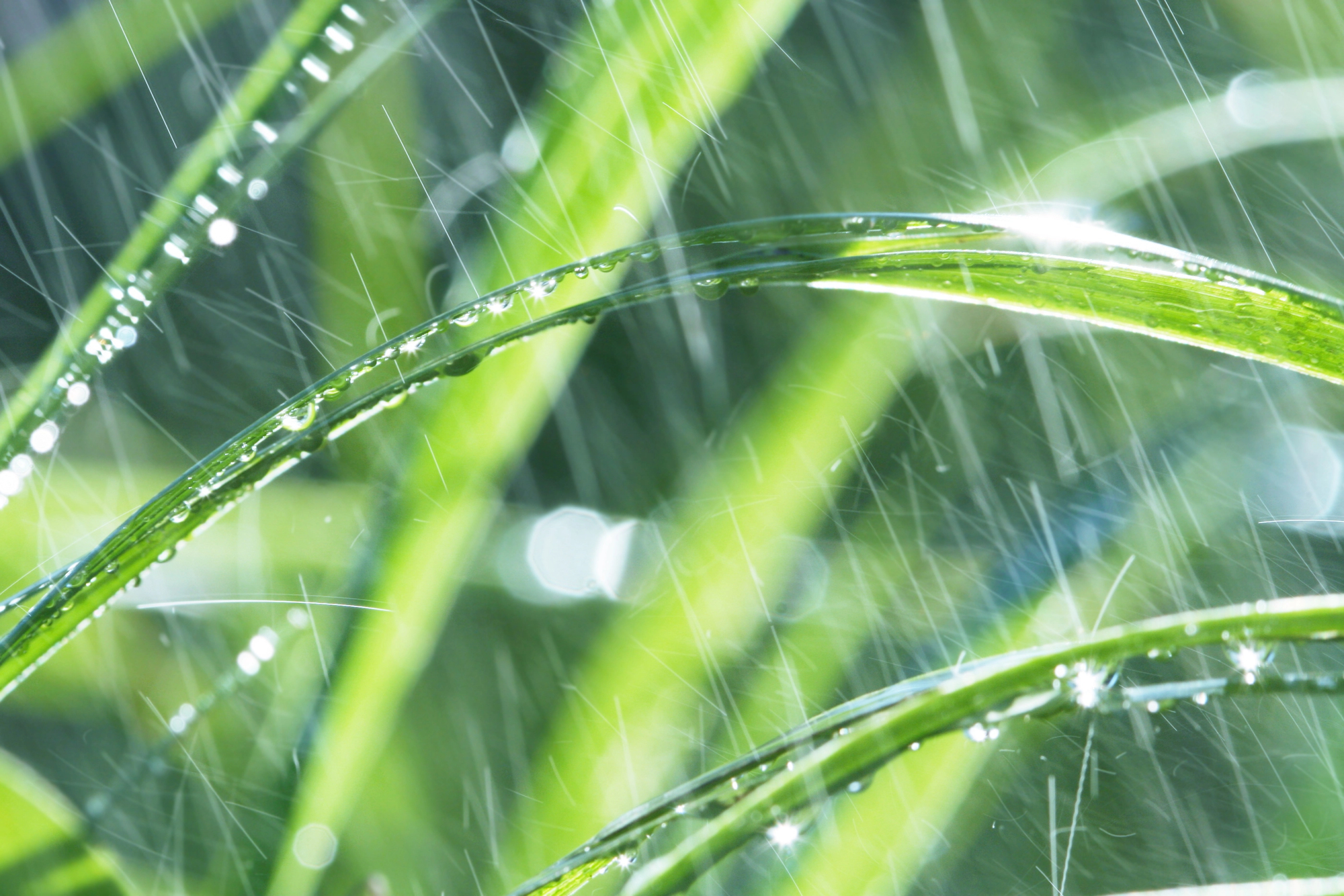
If your lawn turns a deeper green after a night of rain than it ever does after an evening with the sprinkler, you are not imagining it. Rain feeds grass in ways tap water cannot match. It carries a small dose of natural nitrogen, it is slightly acidic so roots can pull up the nutrients already in the soil, it is free of the salts and chlorine that build up in treated water, and it soaks in slowly enough to reach the full depth of the root zone. The good news is that once you understand what rain is actually doing, you can close most of the gap with the hose.
The Nitrogen Your Sprinkler Cannot Deliver
The air above your lawn is about 78 per cent nitrogen gas, but grass cannot use nitrogen in that form. It has to be split apart and combined with oxygen or hydrogen first. A lightning strike does exactly that. The electrical discharge breaks the strong bond holding nitrogen molecules together, the freed atoms bond with oxygen to form nitrogen oxides, and those dissolve in falling raindrops as dilute nitric acid. By the time the drop lands, it is carrying nitrate, the same nitrogen compound that the bag of lawn feed in your shed is built around. Plants take nitrate up through their roots almost immediately.
Over a year, the atmosphere delivers a meaningful amount of this free fertiliser. Depending on how industrial and stormy your area is, rain and airborne particles deposit somewhere between 5 and 15 kilograms of nitrogen per hectare, which works out to roughly 0.5 to 1.5 grams per square metre. That is a fraction of what a feeding programme provides, but it arrives in a form grass can use straight away, spread perfectly evenly, with no scorch risk.
There is a second, larger effect that turf scientists point to. When rain rewets soil that has dried out, it triggers a sudden burst of activity from the bacteria and fungi living in the top few centimetres. These microbes break down organic matter and release the nitrogen locked inside it, a flush that researchers call the rewetting or Birch effect. So part of the post-rain green-up is nitrogen falling from the sky, and part is nitrogen that was already in your soil being unlocked by moisture. A sprinkler that only dampens the surface rarely wets enough soil deeply enough to set off that microbial release the way a proper soaking rain does.
Why Rainwater Beats the Tap Drop for Drop
Beyond the nitrogen, the water itself is different. Rainwater forms when atmospheric carbon dioxide dissolves into it, producing a weak carbonic acid that gives clean rain a pH of around 5.6. Mains tap water is usually treated to sit on the alkaline side, often between pH 7 and 8.5, partly to stop it corroding metal pipework. That difference reaches into the soil chemistry under your feet. Several lawn micronutrients, including iron, manganese and zinc, become harder for roots to absorb as conditions turn alkaline. Above about pH 7.5 they bind tightly to soil particles and effectively go out of reach, which is one reason a lawn watered all summer with hard water can look pale even when it has plenty of nitrogen. The slightly acidic rain keeps those micronutrients in a form the grass can take up, which feeds the deep green colour.
Treated water also carries dissolved salts and chlorine or chloramine added for disinfection. None of that is a problem in a single watering, but across a long dry summer, where you water often and little of it drains away, those salts concentrate in the top layer of soil and can stress roots and beneficial soil life. Rain is naturally soft and close to distilled, so as well as adding nothing harmful, it flushes accumulated salts down and out of the root zone. Rain also picks up oxygen as it falls through the air, and that dissolved oxygen reaches roots that respire just like the rest of the plant.
How Rain Soaks In When Sprinklers Run Off
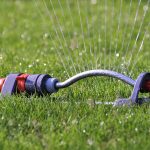
The way water arrives is as important as what it contains. Steady rain falls gently over several hours, giving the soil time to absorb it so the moisture reaches the bottom of the root zone, around 15 centimetres (6 inches) down on a healthy lawn. A sprinkler or hose often applies water faster than dry, compacted summer soil can take it in, so a good share runs off across the surface or evaporates before it sinks. Worse, a brief daily sprinkle only ever wets the top 2 to 3 centimetres (about an inch), and grass responds by keeping its roots shallow where the water is. Shallow roots are the first to suffer the moment a hot spell arrives.
This is why a single overnight downpour can do more for a lawn than a week of short evening waterings. The rain wets everything, evenly, all the way down, and it usually comes with the warmth and humidity that cool-season grasses grow fastest in. If you want to copy that effect, the target is roughly 25 millimetres (about an inch) of water in one go, once or twice a week, rather than a little every day. Our guide to watering your lawn deeply so it survives the driest weeks of summer walks through how to measure that, and the one-inch rule explains the simple tin-can test that tells you when you have applied enough.
How to Get Closer to Rain From the Tap
You cannot manufacture lightning, but you can narrow the gap. The single most effective step is to collect rain itself. A 200-litre water butt costs around £30 to £45 (about $38 to $57) and fills from a single downpour off a shed or house roof, giving you a store of soft, salt-free, slightly acidic water to use first on the lawn and on new seed. Use it before you reach for the mains tap.
When you do use the hose, water deeply and infrequently so the moisture reaches the full root zone and sets off the soil microbes, exactly as rain does. If your supply is hard and alkaline, an occasional dose of liquid seaweed or a sequestered iron tonic restores the micronutrient availability that high pH water suppresses, and brings back colour without forcing soft growth. To replace the nitrogen that rain drip-feeds, a summer lawn feed with a nitrogen-led ratio such as 20-0-5 applied at the label rate, usually around 35 grams per square metre, gives grass the steady supply it would otherwise get from storms. Products like Miracle-Gro EverGreen or Westland SafeLawn are widely stocked at B&Q, Home Depot, Amazon and most garden centres, and should always be watered in if no rain follows within 48 hours so the granules do not scorch the surface.
A cheap rain gauge, around £6 to £10 (about $8 to $13), takes the guesswork out of all this. Push it into a border, and after a shower you can see at a glance whether the lawn received a useful soaking or a token few millimetres that never reach the roots. It also stops you running the sprinkler the morning after a downpour that already did the job. If you are tied to hard mains water, leaving a filled can or butt to stand uncovered for a day lets some of the chlorine gas off before it touches the grass, and watering in the early morning rather than the evening shortens the time droplets sit on the blades, which lowers the risk of the fungal diseases that take hold on warm, wet foliage overnight.
Get it wrong and the consequences show up by midsummer. A lawn watered with a daily splash of hard tap water tends to grow pale and shallow-rooted, with salts slowly building in the topsoil, and it is the first to brown the moment a dry spell hits. A lawn that is fed occasionally, watered deeply, and topped up with collected rainwater behaves far more like one that lives on storms: deeper green, deeper rooted, and far slower to give up its colour when the weather turns hot.