The single biggest decision when you buy a walk-behind mower is not the brand or the engine. It is whether the back of the machine rolls on two wheels or on one full-width roller. A rear roller gives you the striped finish you see on cricket squares and ornamental lawns, and it bridges minor bumps so the mower does not scalp the high spots. A rear-wheel mower is lighter, cheaper, easier to steer around obstacles and far happier on rough or long grass. Pick the wrong one and you either fight a heavy roller across a bumpy lawn, or you spend years wondering why your grass never stripes. Here is how to choose with confidence.
What a Rear Roller Actually Does
A rear roller mower carries two wheels at the front and a single cylinder of metal or plastic running the full width of the machine at the back. As the blade cuts, the roller immediately behind it presses the freshly cut grass down and flat. That is the whole secret behind lawn stripes. The light and dark bands you admire are not two colours of grass at all. They are the same blades bent in opposite directions. Grass leaning away from you reflects more light back to your eye and looks pale and silvery, while grass leaning towards you absorbs more light and reads as a deeper, darker green. Mow up and down in alternate passes, and the roller lays each strip in the opposite direction, producing the classic ribbon effect. The heavier the roller, the more sharply the grass is bent and the longer the stripes hold before the blades spring upright again.
The roller does more than decorate. Because it spans the entire width of the deck, it rides across the tops of small humps and hollows rather than dropping into each one. A wheeled mower behaves the opposite way: the narrow wheels fall into every dip, which tips the deck down and lets the blade shave the high point beside it to the soil. That is what causes the pale, scalped patches on a slightly uneven lawn. The roller bridges those ups and downs, keeping the cut even, and its weight is spread along its full length so it acts as a gentle lawn firmer rather than digging in. On a settled, reasonably flat lawn it also improves traction and helps the mower track in a straight line.
Where a Wheeled Mower Wins
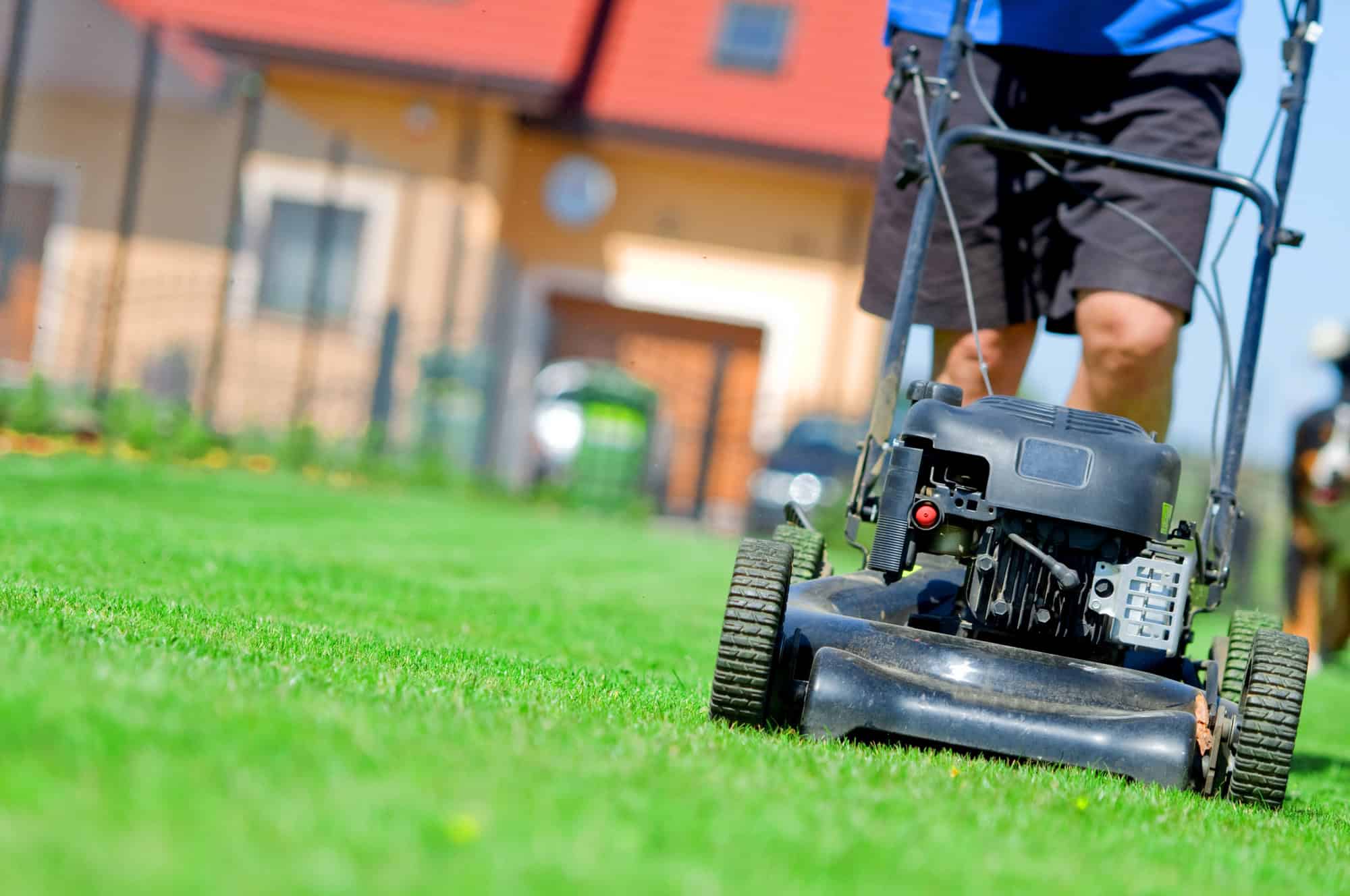
None of that makes a roller the right choice for every garden. A rear-wheel mower is the better tool more often than people expect. It is lighter, which you notice the moment you have to lift it up a step, turn it at the end of a run, or push it uphill. It is more manoeuvrable around trees, beds and ornaments because the back end pivots on wheels instead of dragging a wide roller around. And it copes far better with the two things rollers struggle with: rough ground and long grass.
On a tussocky, bumpy or recently laid lawn, a wheeled mower simply rides over the lumps, and on grass that has grown away from you after a holiday or a wet spell, the open rear of a wheeled deck clears clippings without the roller smearing and packing them down. Wheeled mowers are also cheaper to buy and to maintain, since a roller adds cost, weight and another moving part to keep clean. If your lawn is a hard-wearing family space rather than a display piece, or if it slopes, a four-wheeled rotary will usually serve you better and for less money. Our comparison of battery and petrol mowers is worth reading alongside this, because the power source and the roller question are separate decisions and you will need to settle both.
Stripes, Edges and the Finish
There is one more practical advantage to a roller that gets overlooked. Because the roller sits inside the width of the cutting deck and the rear of the machine is supported across its full span, you can run a roller mower with its deck slightly overhanging a lawn edge or a path without the back end dropping off and gouging the turf. That lets you cut cleanly right up to a border, a flower bed or a paved edge, which is exactly where a wheeled mower tends to leave an uncut fringe because a wheel would fall off the edge. Combined with the striping, this is why roller mowers produce the tidy, finished look associated with formal lawns.
If stripes are your main goal but you already own a wheeled mower, you do not have to replace it. A separate lawn roller, or a clip-on roller kit, will lay stripes after cutting, and our guide to the roller trick that gives any lawn professional looking stripes covers that route. But an integrated rear roller does the job in a single pass, which is why keen lawn owners gravitate to one once the surface is smooth enough to suit it.
Which to Buy, With Real Models and Prices
At the affordable end of the roller market, the Cobra RM40C is a sensible entry point: a 40cm (16 inch) petrol push mower with a 118cc engine and a seven-position height adjuster, usually priced around £230 to £300 (about $290 to $380). It gives you genuine stripes without the cost of a premium machine, and it suits a small to medium flat lawn. Step up to the well-regarded Hayter Harrier 48, a 48cm (19 inch) mower, and you are paying around £1,049 (about $1,330) for the petrol variable-speed version or roughly £1,494 (about $1,890) for the 60-volt cordless model, which ships with a 7.5Ah battery. The Harrier is heavier, self-propelled and lays a deep, long-lasting stripe, which is why it is a fixture on well-kept display lawns. These and similar models are stocked through specialist dealers as well as Amazon and the larger garden machinery retailers.
It is worth weighing the upkeep too. A roller needs the grass and soil that collect along its length scraped off after each cut, because a caked roller stops turning evenly and smears the lawn instead of pressing it flat. A wheeled mower has less to clean and fewer parts to seize. Between the two extremes sits a large middle ground of self-propelled rear-roller models from brands such as Mountfield, Webb and Cobra in the £350 to £700 range (about $440 to $890), which lay a respectable stripe with a powered drive that takes the effort out of pushing a heavier machine. If you mow a medium lawn of perhaps 200 to 400 square metres and want stripes without the cost of a Hayter, that band is the sweet spot. For a purely practical wheeled choice on the same size of lawn, a self-propelled rotary from Mountfield or Hayter in a similar price bracket will clear long grass and handle slopes that would defeat a roller, and you can always firm and stripe the lawn separately with a hand roller if the mood takes you.
The decision itself is simple once you are honest about your lawn. If the surface is reasonably flat and settled, you cut regularly, and you want the formal striped finish and clean edges, choose a rear roller. If your lawn is bumpy, sloped, frequently long, dotted with obstacles, or simply a tough family lawn where appearance comes second to durability and easy steering, choose a rear-wheel mower and save the money. Buy against that grain and the faults show quickly. A heavy roller dragged across an uneven lawn drops into the hollows it was meant to bridge and clogs the moment the grass is damp or long, while a wheeled mower on a fine ornamental lawn will never stripe, and its wheels can press ruts into soft summer ground if you mow the same line every week. Match the machine to the surface and the mower does the hard work for you.