
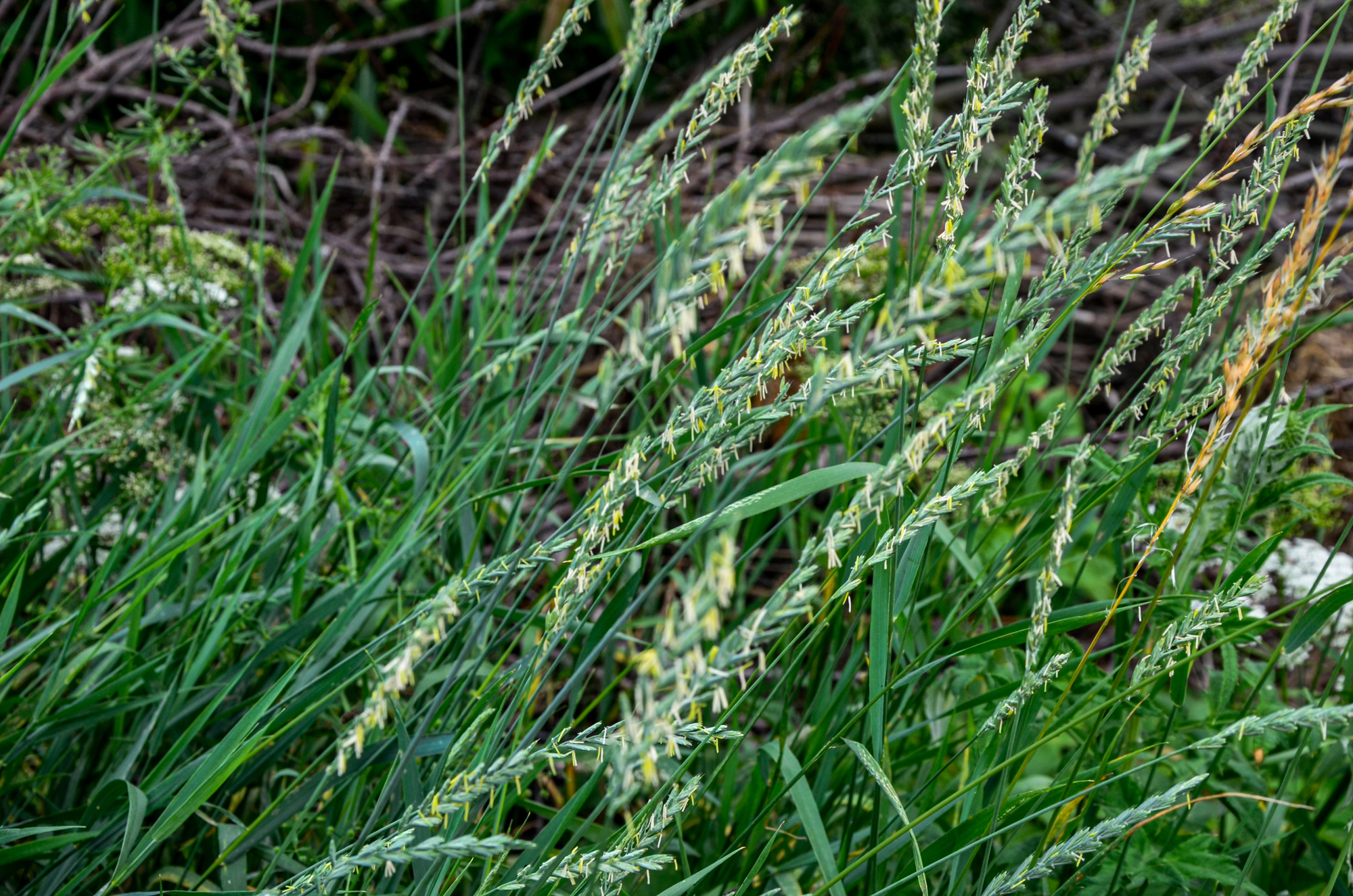
If you have noticed coarse, fast growing blades pushing above the rest of your lawn this summer, paler and broader than the grass around them, you are almost certainly looking at couch grass. The practical takeaway is this: couch grass is itself a grass, so no selective lawn weedkiller will remove it without killing your good grass too. Beating it comes down to lifting the underground stems by hand with a fork, or in bad cases stripping and re-laying the affected area. Pulling the leaves off at the surface does nothing, because the plant rebuilds itself from a network of white roots hidden below.
Couch grass, also called twitch, scutch or quack grass, is the species Elymus repens. Above ground its flat green blades can reach 40cm (about 16 inches) and grow noticeably quicker than fine lawn grasses, which is why it spikes up between mowing and ruins an even finish. The real story is underground. The plant produces white, pointed rhizomes, which are creeping underground stems that travel in roughly straight lines away from the parent plant. Each rhizome carries growth buds along its length, and every bud can become a new shoot.
Why It Spreads So Fast Once Summer Warmth Arrives
Couch grass spreads through those rhizomes rather than relying only on seed. Once soil temperatures climb through late spring and early summer, the rhizomes extend rapidly, sometimes several centimetres a week, sending up fresh shoots as they go. A single plant can colonise a square metre in a season. This is the mechanism behind the frustration most gardeners feel: you weed it out, and within weeks it returns thicker than before. The reason is that any rhizome fragment left in the soil, even one a couple of centimetres long, holds a viable bud and regrows into a full plant. Chopping at couch grass with a spade or rotavating the soil multiplies it, because every cut piece becomes a new individual.
Summer mowing makes the problem easy to miss until it is established. Because couch recovers from cutting so well, regular mowing simply keeps the leaf tips level with the lawn while the rhizome network keeps expanding underground. By the time you see broad pale patches with a slightly different texture, the roots have already spread well beyond what is visible on the surface.
How to Identify It Before You Treat the Wrong Thing
Before you dig anything up, confirm what you are dealing with. Coarse meadow grasses such as Yorkshire fog can look similar from a distance. The reliable test is to lift a small plant with a hand fork and inspect the roots. Couch grass shows the distinctive white or cream rhizomes with a sharp pointed tip, almost like a knitting needle, running horizontally. If you find those creeping white stems, it is couch. Other coarse grasses tend to grow in dense clumps without the far reaching horizontal runners.
Identifying it correctly saves you from a common mistake: reaching for a lawn weedkiller. Selective lawn herbicides are formulated to kill broadleaf weeds such as dandelions and clover while leaving grass unharmed. Couch grass is a true grass, so those products slide off it completely. The only chemical that kills it is a non-selective weedkiller based on glyphosate, and that will kill every blade it touches, good grass included.
It also helps to understand where couch grass came from, because that tells you how to keep it out. It often arrives in cheap topsoil, in unscreened manure or compost, or as a hitchhiker in the rootball of a new plant, then establishes wherever soil is bare and open. New lawns, freshly dug borders and the strip along a fence line where the mower cannot reach are its favourite entry points. A thick, well fed, regularly mown lawn is its worst enemy, because couch needs light reaching open soil to get a foothold. The denser your turf, the fewer gaps a stray rhizome has to exploit, which is why weak, patchy lawns suffer far more than healthy ones.
The Methods That Actually Work
For small or scattered infestations, hand removal is the most reliable approach and needs no chemicals at all. Wait until after rain when the soil is soft, then use a garden fork rather than a spade. Push the fork in well clear of the visible shoots, lever the whole clump up gently, and tease out the long white rhizomes by hand, following each one until it ends. A spade slices the rhizomes and leaves cut pieces behind, which is why forking is the professional choice. Work slowly and lift the entire network rather than yanking the tops, which snap off and leave the roots in place.
Importantly, do not put the rhizomes on your compost heap. Home compost rarely reaches the sustained temperature needed to kill them, so you risk spreading live couch grass back across the garden when you use the compost later. Bag the roots for council green waste collection or take them to a recycling site. After lifting, rake the area level and oversow with a hard wearing lawn seed such as a ryegrass and fescue mix, watering it in. Early autumn, around September, is the ideal window because soil is still warm and the new seed germinates quickly to fill the gap before couch can return.
Patience pays here in a way that surprises most people. A patch you think you have cleared in July will often send up a few thin shoots three or four weeks later from a fragment you missed. This is normal, not failure. Mark the spot, wait until those shoots have a little leaf on them so you can trace them back to the rhizome, then fork them out again after the next rain. Two or three rounds of careful lifting through a single season will exhaust a small infestation, because each removal takes more of the plant’s stored energy with it and gives it less leaf to rebuild from. The mistake is to give up after one go and assume hand removal does not work.
Where couch grass has taken over a large part of the lawn, spot weeding is no longer worth the effort. The thorough route is to strip off the affected turf with a spade or turf cutter, fork through the exposed soil to remove every rhizome you can find, leave it a couple of weeks to check for regrowth, then re-turf or reseed. If you prefer a chemical reset on a badly infested bed rather than a lawn, painting glyphosate gel onto the actively growing leaves with a weed brush, while the plant is in full summer growth and moving sugars down to the roots, gives the best kill. Expect to repeat the treatment, as couch is stubborn.
What Happens If You Get It Wrong
The single most expensive mistake is rotavating or repeatedly digging soil that contains couch grass. A rotavator chops the rhizomes into hundreds of fragments and distributes them evenly through the bed, turning a contained problem into a carpet of new plants. Gardeners who do this often find the infestation is four or five times worse the following year. The second common error is impatience with the fork: rushing the job and snapping rhizomes leaves buds in the ground, and within a month the shoots reappear in the same spot, which convinces people the removal failed when really it was incomplete.
Couch grass is beatable, but only with the right method and a degree of patience. Lift it properly with a fork after rain, dispose of every scrap of root away from your compost, reseed the gaps in early autumn, and keep checking the area for the telltale broad pale blades returning. A lawn kept thick and well fed also resists invasion, because dense healthy turf leaves couch grass little bare soil to colonise in the first place. For more on building that density, see our guides on overseeding and summer feeding on lawnandmowers.com.