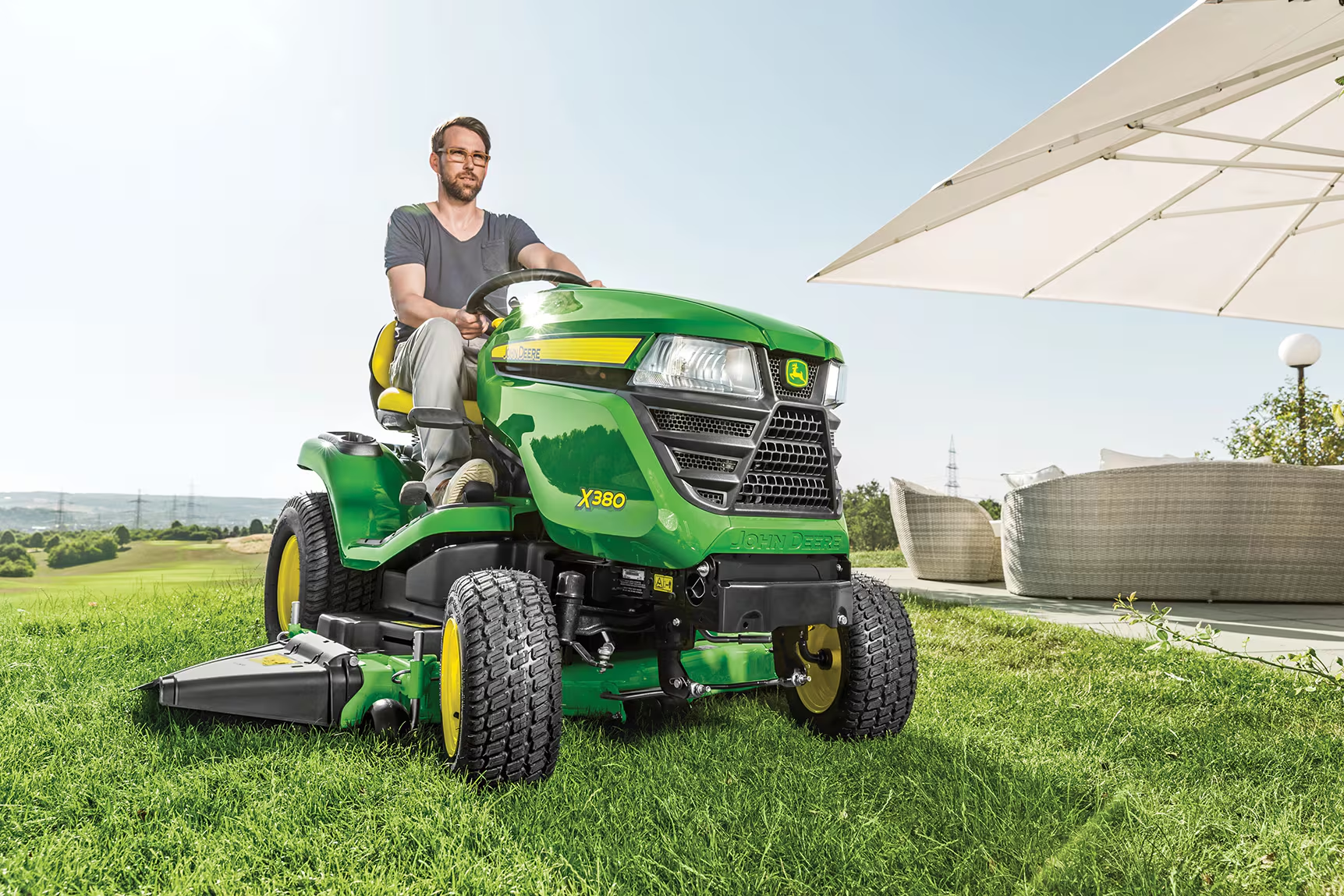
If you are choosing between a zero-turn mower and a lawn tractor, the decision comes down to three things: how big and how flat your ground is, how many obstacles you mow around, and whether you want the machine to do jobs beyond cutting grass. The short version is that a zero-turn cuts a large open lawn far faster and trims around flower beds and trees with much less fuss, while a lawn tractor costs less, climbs slopes more confidently, and can pull attachments such as rollers, spreaders and small trailers. Both suit roughly half an acre upwards, but they reward very different gardens.
Below that half acre mark, a walk-behind or self-propelled mower is usually the smarter buy, because a ride-on cannot turn or manoeuvre efficiently in a small space and you pay a lot for capacity you never use. Once you are regularly spending more than 40 minutes behind a push mower, a ride-on starts to earn its place. The question then is which type.
It is worth being honest about the gap between the two, because the marketing tends to blur it. These are not two versions of the same machine with a styling difference. They steer differently, they handle slopes differently, they cost different amounts to buy and run, and they suit very different shaped gardens. A zero-turn that is wrong for a steep, damp plot will frustrate you every week, and a lawn tractor bought for a flat, obstacle filled lawn will have you doing extra passes around every flower bed. Getting the choice right is mostly about matching the machine to the ground you actually have, rather than to the lawn you wish you had, so it is worth measuring and walking your plot before you set a budget.
How the Two Machines Actually Differ
A lawn tractor has a steering wheel and a cutting deck mounted underneath, between the front and rear axles, much like a small car. It drives through the rear wheels, with the engine at the front. That front weight and steered front axle is why a tractor pulls itself up slopes and over uneven ground with relative ease, and why it tows attachments well. The trade off is the turning circle. A lawn tractor has a wide turning radius, so at the end of every pass it leaves a curved strip of uncut grass that you must catch on a later pass, which adds time and overlap on a lawn full of obstacles.
A zero-turn mower replaces the steering wheel with two lap bars, one for each rear wheel, each driven by its own hydrostatic transmission. Pushing one bar forward and pulling the other back spins the machine on the spot, giving a turning radius of effectively zero. The deck sits out front or directly below, and you steer the nose right up to a flower bed edge or around a tree and pivot away without leaving a missed crescent. On an open lawn dotted with borders, a zero-turn can cut the same area in noticeably less time, often a third faster, simply because it wastes no passes cleaning up missed corners.
That agility has a cost on difficult ground. Because a zero-turn drives and effectively steers through its rear wheels, it can feel skittish on wet grass and slopes, where the back end loses grip and slides. Most makers advise against using one across slopes steeper than about 15 degrees. A lawn tractor, with its steered front wheels and rear drive, holds a hillside far more securely. If your garden is sloped, banked or frequently damp, the tractor is the safer and more predictable tool.
What You Pay and What That Buys
Pricing overlaps at the entry level and then diverges. A basic lawn tractor such as the John Deere S100, with a 42 inch (107cm) deck and a 17.5 horsepower single cylinder engine, sells for around 1,900 pounds / 2,299 to 2,499 US dollars. That is the sweet spot for a flat to gently sloping lawn of half an acre to two acres where you also want to fit a tow hitch for a spreader or sweeper later on. Entry zero-turns start a little higher: a residential model such as the Cub Cadet Z1 42 runs around 2,400 pounds / 2,999 US dollars, and a larger 50 inch (127cm) deck machine like the Ultima ZT2 50 sits near 3,600 pounds / 4,499 US dollars.
Spend more on a zero-turn and you are buying deck width, a stronger frame, a more comfortable seat and a higher ground speed, all of which shave time off bigger lawns. Spend more on a tractor and you are mostly buying engine size, deck width and the ability to run more attachments. For most home gardens between half an acre and four acres, you do not need a commercial machine. Commercial zero-turns, which cost from around 9,000 pounds / 11,500 US dollars upwards, are built for contractors mowing all day and are wasted on a private garden.
Running costs deserve a moment’s thought too. Petrol ride-ons, whether tractor or zero-turn, need annual servicing: an oil and filter change, a fresh spark plug, a clean or new air filter, and blade sharpening, which adds up to perhaps 80 to 150 pounds / 100 to 190 US dollars a year if you pay a dealer, or far less doing it yourself. Battery powered ride-ons are now sold in both formats and remove most of that maintenance, with no oil, no plugs and no fuel to stabilise over winter. They run quietly and start instantly, which suits gardens near neighbours, but the large batteries are expensive to replace and runtime caps how much you can cut on one charge. For a lawn you can finish in under 45 minutes of cutting, battery is increasingly the easier life. For several acres, petrol still rules on endurance.
Matching the Machine to Your Garden
Choose a zero-turn if your lawn is mostly open and flat to gently undulating, between half an acre and four acres, and broken up by trees, beds and paths that you currently spend ages trimming around. The speed and the zero turning radius pay you back every single cut. Choose a lawn tractor if your ground includes real slopes or banks, if it stays damp, if you want one machine that also tows a roller, aerator, spreader or trailer through the year, or if you simply want the lowest purchase price for a half acre to two acre lawn. The tractor is the more forgiving machine to learn on, too, because the steering wheel behaves the way drivers expect.
A few practical checks before you buy either. Measure your narrowest gateway and gate path, because a 50 inch deck will not fit through a 42 inch gap. Note where you will store it, as both need dry, ventilated cover. Check the deck wash port and how easily the deck drops for blade access, since underside cleaning is what keeps the cut clean and prevents corrosion. And if you are weighing a battery powered version, match the stated runtime to your mowing time with margin to spare, because cutting capacity falls in long damp grass.
Comfort is worth more than buyers expect, because a ride-on is something you sit on for half an hour or more at a stretch. A zero-turn places you low between the rear wheels with a sprung seat and armrest-style lap bars, which most people find smooth and quick to learn once the initial twitchiness of the controls settles. A lawn tractor sits you higher with a familiar steering wheel and pedals, which feels reassuring to anyone who has driven a car, and the raised seat gives better visibility over tall obstacles. If you have any doubt, sit on both at a dealer before deciding, and try a few turns, because the way each machine handles is hard to judge from a spec sheet. Resale also tends to favour the well known tractor brands, which hold value strongly on the used market when serviced and kept under cover.
Whichever you choose, set the cutting height sensibly for summer, no lower than about 5cm (2 inches) for most lawns, keep the blades sharp, and clean the deck underside after each use. A faster machine that scalps a dry lawn or spreads disease on a dirty deck is no bargain. For more on deck width, cutting height and blade care, see the mower guides on lawnandmowers.com.