If moss is creeping across a shaded corner while the rest of your lawn turns dry and pale, the weather is not the real culprit. Moss does not kill grass. It moves into the space that thin, struggling grass has already surrendered. The fix is to deal with the shade, the lingering damp and the poor soil underneath, knock the moss back with a sulphate of iron treatment, then rake out what dies and reseed the gaps. Get the order right and the moss stays away. Get it wrong and it returns within weeks. Here is why moss takes over a shady lawn in the middle of summer, and the sequence of jobs that actually keeps it gone.
Why moss spreads in shade while the rest of the lawn bakes
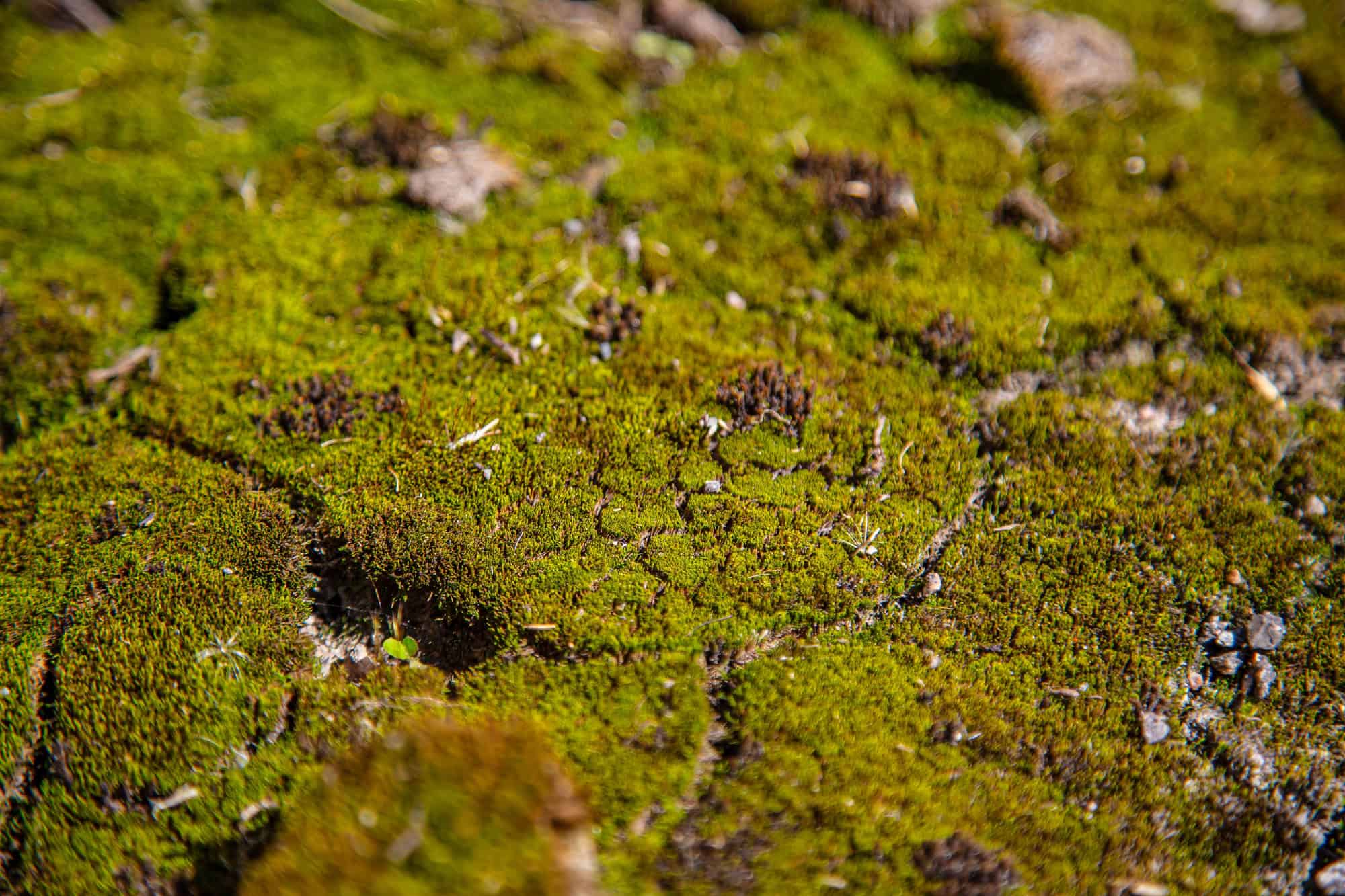
Moss is a primitive, non-flowering plant with no proper roots and no internal plumbing to move water around. It absorbs moisture directly through its surface, which means it depends entirely on the conditions immediately around it. Where the air and soil stay damp, moss grows. Where they dry out, it goes dormant and waits. That single fact explains why a shaded strip behaves so differently from the open lawn just a few feet away.
In high summer the open part of your lawn is in full sun for most of the day. The surface dries quickly after dew or rain, the soil warms, and grass that is getting six or more hours of light grows strongly enough to crowd moss out. The shaded strip under a fence, a hedge or a north-facing wall is a different world. It may get only an hour or two of direct light. Dew sits on the blades until late morning, the soil stays cool and moist, and air movement is poor. The grass there is already weak because it is competing with tree or hedge roots for the little water and light available. The Royal Horticultural Society points out that moss takes hold wherever grass is sparse or patchy from shade, drought stress, low fertility or mowing too short. The shaded pocket hands moss every one of those advantages at once, so while summer starves moss out of the open lawn, it lets moss flourish in the gloom.
This is the insight most quick guides miss. Moss in summer is not a sign that you have done something wrong this week. It is a sign that one part of your lawn has been quietly failing for months, and the moss is simply the first plant tough enough to colonise the bare, damp ground the grass left behind.
Find the real reason before you reach for the moss killer
Spraying a moss killer without fixing the cause is the most common mistake, and it wastes both money and effort because the moss simply grows back. Before you treat anything, work through the four conditions that let moss win.
The first is shade. Most lawn grasses need four to six hours of direct light a day to stay dense. Under trees the problem doubles up, because you get both low light and dry shade, where surface roots from the tree drink most of the rain before the grass can reach it. The second is drainage and compaction. Push a screwdriver into the shaded soil and into the open lawn and compare. If it slides into the open lawn but stops short in the shade, that soil is compacted and holding water at the surface, which is exactly what moss wants. The third is soil acidity. Moss tolerates acidic soil below pH 5.5 far better than grass does. A simple test kit costs around £8 to £12 (about $10 to $15) at any garden centre, B&Q or Amazon, and tells you in minutes whether low pH is part of the problem. The fourth is mowing height. Cutting a shaded lawn as short as a sunny one scalps the weakened grass, removes the leaf it needs to photosynthesise in low light, and opens the door to moss with every pass.
If you skip this diagnosis and only treat the symptom, the consequence is predictable. The moss blackens and dies, the ground sits bare for a fortnight, and because the shade, damp and compaction are all still there, a fresh green film of moss returns before the grass ever gets a chance to fill the gap.
Kill the moss without ruining the chance of grass returning
Once you understand the cause, the treatment is simple. The standard chemical control is sulphate of iron, also sold as ferrous sulphate or built into a granular lawn sand. A widely available example is Elixir Gardens Lawn Sand and Moss Killer, which contains around 14 percent iron sulphate and sells at B&Q in bags from 1kg up to 20kg, with a 20kg bag costing roughly £15 to £20 (about $19 to $25). Apply it at the rate printed on the bag, typically 35g per square metre for lawn sand, spread evenly on a still, dry day when rain is expected within 48 hours or when you can water it in yourself. The iron scorches the moss, which turns black within two to three weeks.
That blackening stage is where the second mistake happens. Dead moss is not the same as removed moss. If you leave the black mat in place it goes on holding moisture against the soil and smothers any new grass trying to emerge, so you must rake it out. Use a springbok rake and work gently, because the soil and grass are already stressed by summer heat. This is light raking, not full scarifying, which is far too aggressive for a hot, dry month and would tear out more grass than moss. If you would rather avoid raking altogether, a bacterial product such as Viano MO Bacter, an organic granular feed and moss remover at around £24 to £30 (about $30 to $38) for a 10kg bag that treats roughly 200 square metres, contains bacteria that digest the dead moss so there is nothing to rake up. It works more slowly and only when soil temperatures are above about 10 degrees C (50 degrees F), but it doubles as a gentle slow-release feed, which suits a tired summer lawn.
Stop it coming back through autumn and beyond
Killing moss buys you a clean slate. Keeping it gone means changing the conditions, and the best window to do that is early autumn when the soil is still warm but the heat has eased. Start with light. Crown-lifting or thinning the lower branches of a tree, or trimming back an overgrown hedge, can transform a shaded strip by letting a couple of extra hours of sun reach the grass each day. Next, deal with compaction by aerating, ideally with a hollow-tine aerator that pulls out plugs of soil and opens vertical channels for air and water. On a small area a garden fork pushed in 10cm (4 inches) deep and rocked back and forth every 15cm (6 inches) does the same job. If your pH test came back acidic, apply garden lime in autumn at the rate on the pack to nudge the soil back towards a grass-friendly 6.0 to 6.5.
Finally, give the grass a fighting chance by overseeding the bare patches with a shade-tolerant mix. Blends based on creeping red fescue and hard fescue cope with low light and dry shade far better than the ryegrass in a general-purpose lawn seed. Raise your mowing height in shaded areas to 50 to 65mm (2 to 2.5 inches) and keep it there, so the grass holds enough leaf to feed itself in the gloom. If a corner is so dark and dry that no grass has ever thrived there, the honest answer is to stop fighting it. A shade-loving ground cover, a gravel path or a planted bed will look better and cost less in the long run than an annual battle with moss. Treat the moss as the messenger it is, fix what it is telling you about that part of the garden, and you break the cycle for good.