If a strip of your lawn has gone thin, flat and bare after a summer of barbecues, paddling pools and a constant stream of feet to the back gate, the fix is not simply more seed. Worn grass is almost always a soil problem first and a grass problem second. The single most useful thing you can do is relieve the compaction underneath the bare strip before you sow a single seed, because seed dropped onto hard, airless ground will sit, sulk and feed the birds rather than root. Get the order right, and a worn path can knit back together in four to six weeks even in the middle of summer.
Why Summer Foot Traffic Wrecks Grass So Fast
Grass is far more vulnerable to wear in summer than people expect. Two things happen at once. First, every footstep presses the soil particles closer together, squeezing out the tiny air pockets that roots depend on. Roots need oxygen to respire, and in compacted ground the oxygen runs out within the top few centimetres. The grass cannot push new roots down, so it stays shallow, dries out faster and thins. Second, summer is when cool-season grasses like ryegrass, fescue and bent are already under heat stress and growing slowly, so they recover from damage far more slowly than they would in spring or autumn.
The result is a feedback loop. Compacted soil holds less water, the grass over it browns first, the thin turf gives way to bare earth, and the bare earth gets walked on even more because there is nothing left to protect. A path that was merely tired in May can be bare clay by late July. The point to take away is that you are not fixing grass, you are fixing the ground the grass has to live in. Skip the soil and you will be reseeding the same strip every single summer.
Step One: Relieve the Compaction Before You Reseed
On a small worn strip, you do not need to hire a machine. A garden fork is the cheapest and most effective tool you own. Push the tines in to a depth of about 10cm (4 inches), then ease the handle back a couple of centimetres to fracture the soil rather than just making neat holes. Work across the whole bare area at roughly 10cm (4 inch) spacings. The aim is to crack the compacted layer so air, water and new roots can move down again. On heavy clay that has set like a brick, water the area the evening before so the fork goes in without a fight.
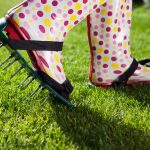
For a larger worn area, a hollow-tine aerator that pulls out plugs of soil does a better job than solid spiking, because solid spikes can smear and seal the sides of the hole on wet clay. A hand hollow-tine tool costs around £25 to £35 ($32 to $45) at B&Q, Amazon or most garden centres. After aerating, brush a thin layer of sharp sand or a sandy topdressing into the holes, around 2 to 3kg per square metre. The sand keeps the channels open so the compaction does not simply return the first time someone walks across. This is the step almost every quick guide skips, and it is the reason their repairs never last.
Step Two: Reseed With the Right Grass and Method
For a path or play area, choose a hard-wearing seed mix that leans heavily on perennial ryegrass. Ryegrass germinates in 5 to 10 days, the fastest of the cool-season grasses, and it tolerates wear far better than fine fescue or bent. A general hard-wearing or family lawn mix from Johnsons, Miracle-Gro or a garden centre own-brand costs around £10 to £18 ($13 to $23) for enough to cover 35 to 50 square metres at a repair rate. For overseeding bare patches, sow at roughly 35g per square metre, which is heavier than the rate for a brand new lawn because you want the worn strip to fill in densely and crowd out weeds.
Loosen the top centimetre of soil with a rake, scatter the seed, then rake again lightly so most seeds sit just under the surface. Firm it down with the back of the rake or by treading gently, because seed needs close contact with soil to draw up moisture. Cover with a thin scatter of sieved compost or topsoil, no more than 5mm, to hold moisture and hide the seed from birds. Then comes the part that decides everything: water. Keep the top 1 to 2cm constantly moist, which in warm weather means a light watering once or twice a day. The moment summer seed dries out after it has begun to swell, it dies, and no amount of later watering brings it back. Keep this up until the new grass is 5 to 8cm (2 to 3 inches) tall, then ease off and let it root deeper.
Step Three: Feed Lightly, and Reroute the Traffic
New summer seedlings benefit from a gentle, balanced feed once they are a few centimetres tall, but avoid a high-nitrogen summer feed on bare repairs in hot weather. Concentrated granular feed sitting on thin soil can scorch tender seedlings through salt burn, where the fertiliser draws water out of the young roots faster than they can replace it. A diluted liquid seaweed or a low-strength balanced feed is far safer at this stage. Hold the stronger feeding until autumn when the whole lawn is growing strongly again.
Finally, deal with the cause or you will be back here next July. If the bare strip is a desire line where everyone cuts the corner to the shed, washing line or gate, the honest answer is that grass will never win against daily feet in summer. Lay a row of stepping stones, a narrow gravel path or a couple of timber treads along the route. Even temporary boards laid over a fresh repair for the first month, lifted to let air and light in every few days, can protect new seedlings while they establish. Spreading the load is the only permanent fix for a route that gets used every day.
How Long Recovery Takes and the Mistakes That Undo It
With the compaction relieved and the seed kept moist, expect to see the first green haze of ryegrass within 7 to 10 days, with the strip thickening over the following three to four weeks. A repair started in late June is usually knitted in and able to take light use again by early August. Warm soil actually speeds germination compared with spring, which is the one advantage summer gives you, provided you can keep the surface damp. The work is front-loaded: the first ten days of watering decide the whole result, and after that the new grass largely looks after itself.
The mistakes that undo a summer repair are nearly always the same three. The first is sowing onto compacted ground without forking it, which leaves the seed sitting on a hard pan where roots cannot penetrate, so the grass comes up weak and dies in the first dry spell. The second is letting the seedbed dry out once, even for a day, after the seed has taken up water and begun to swell. A swollen seed that dries is a dead seed, and this single lapse kills more summer repairs than anything else, which is why people conclude grass simply will not grow in summer when the real fault was a missed watering. The third is walking on the repair too soon. New seedlings have shallow, fragile roots for the first month, and foot traffic crushes the crowns and reopens the compaction you worked to relieve.
One further detail separates a lasting repair from a temporary one: keep weeds out of the gap while the grass establishes. Bare, disturbed soil is an open invitation to fast-colonising weeds such as annual meadow grass and broadleaf plantain, which germinate quickly and cope with compaction better than lawn grass does. A dense sowing rate helps the ryegrass close the gap before weeds get a foothold, and hand-pulling any seedling weeds in the first few weeks, rather than reaching for a weedkiller that would also harm young grass, keeps the repair clean. Resist feeding the strip with anything strong until the new grass has been cut two or three times and is clearly established.
Get a bare summer path wrong and the consequences are predictable: the seed never comes up, the soil bakes harder, weeds such as plantain and annual meadow grass colonise the gap because they cope with compaction better than lawn grass, and by next spring you have a permanent muddy scar. Get it right, in the order of compaction first, then seed, then careful watering, then traffic control, and a worn strip that looked beyond saving will be green and knitted back into the lawn before the school holidays are over.