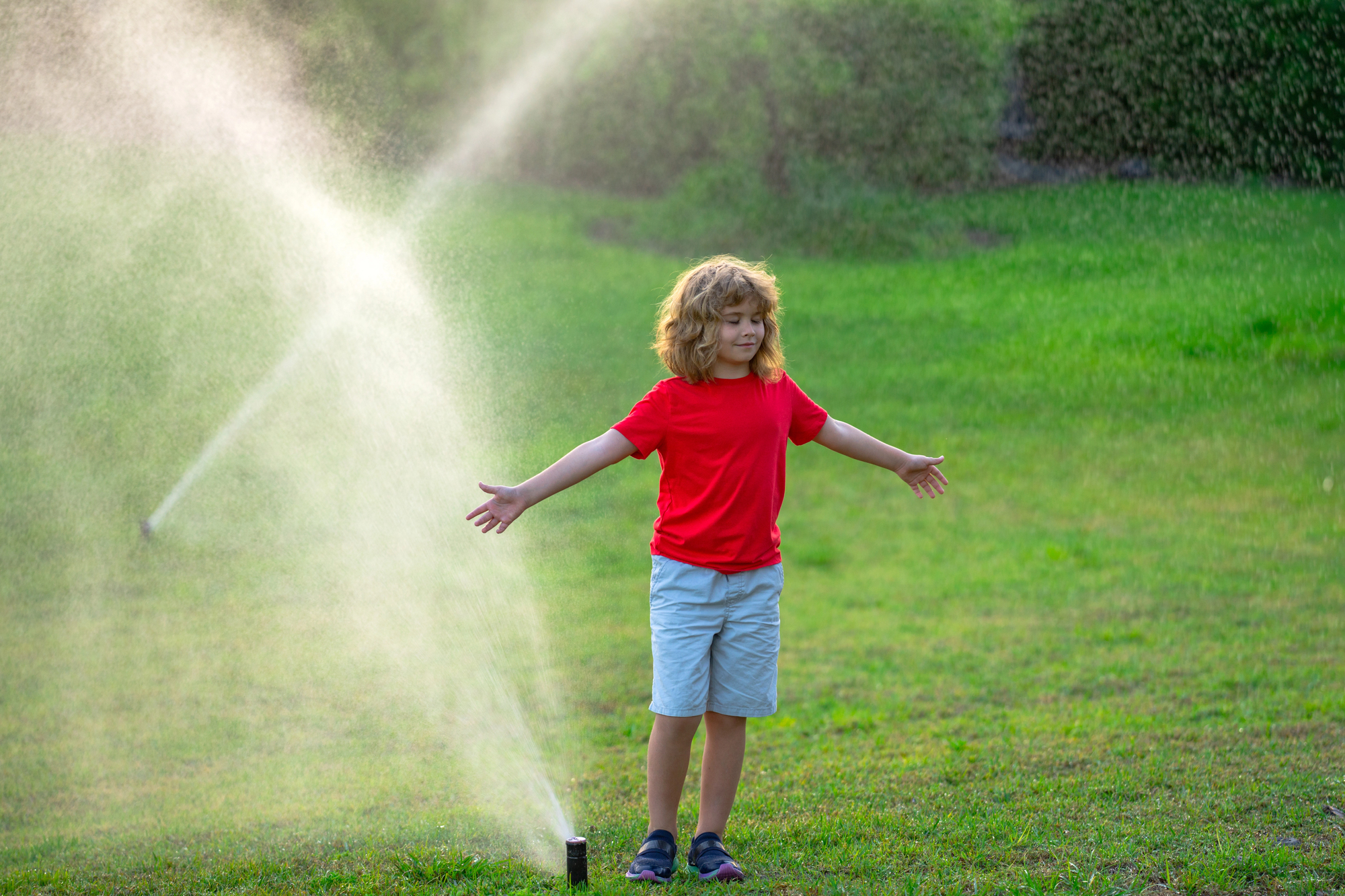
The lawn you come home to after two weeks away is decided in the hour before you lock the door, not while you are gone. Most holiday lawn disasters are self-inflicted: a final mow cut too short, a heavy feed left to scorch, or a lawn sent away bone dry. Do three simple things before you leave and your grass will look after itself, even through a hot fortnight with nobody to water it. Raise the cut, skip the feed, and water deeply once rather than topping it up. Everything else is detail.
Raise the Mower, Do Not Scalp It
The instinct before a holiday is to cut the lawn as short as possible so it looks tidy and grows back to a sensible length by the time you return. This is the worst thing you can do in summer. Short grass has short roots. The length of grass above the soil roughly mirrors the depth of root below it, so a lawn scalped to 15mm before a heatwave has a shallow root system that dries out within days. Longer grass shades the soil surface, slows evaporation and keeps the crowns cooler.
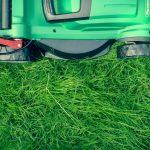
Before you go, set a rotary mower to around 40 to 50mm (1.5 to 2 inches), which is higher than your normal summer cut. The standard summer height for most lawns is about 25 to 40mm (1 to 1.5 inches), so you are deliberately leaving it longer than usual. Follow the one-third rule even now: never remove more than a third of the blade in a single cut, because taking more forces the plant to pull energy from its roots to rebuild leaf, exactly when you want those roots strong and deep. If the lawn is already long, raise the deck, cut once, wait two days, then cut again lower rather than shearing it all off at once. Leave the clippings where they fall if they are short; a light scatter of clippings acts as a mulch that slows moisture loss from the surface.
Do Not Feed Right Before You Leave
A feed before a holiday feels productive, but it is a trap. Nitrogen drives a flush of soft, sappy leaf growth, which is the last thing you want when there is nobody to water and mow for a fortnight. That tender growth wilts fastest in heat, and a lawn growing hard will overshoot into a shaggy, uneven mess by the time you get back. Worse, granular feed needs watering in within about 48 hours. Left dry on the surface in warm weather, the concentrated salts draw moisture out of the grass blades and scorch the lawn brown in streaks, a problem made worse if a spreader has dropped feed unevenly.
If you really want to support the lawn through a dry spell, the right product is a wetting agent rather than a feed. A wetting agent breaks the surface tension on dry, water-repellent soil so that any rain or dew that does fall actually soaks in instead of running off. Products such as a soil wetter from Westland or a generic surfactant cost around £8 to £15 ($10 to $19) and are applied diluted through a watering can or hose feeder. Apply it a day or two before you leave and water it in. This does far more for a lawn left alone in summer than any nitrogen feed.
Water Deeply Once, Not Little and Often
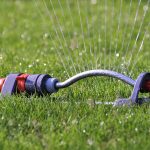
The single most useful thing you can do the evening before you travel is give the lawn one long, deep soak. The goal is to wet the soil to a depth of about 15cm (6 inches), which encourages roots to follow the moisture downwards where it stays cool and available for far longer than water in the top inch. As a rule of thumb, a lawn needs around 25mm (1 inch) of water to wet that depth. Stand a few empty tuna tins or shallow containers on the grass while the sprinkler runs and stop when they hold about 25mm. On most sprinklers that takes between 45 minutes and an hour and a half.
Water in the early morning or the evening so less is lost to evaporation before it soaks in. A deep soak the night before departure can keep a lawn going for one to two weeks because the grass draws on the deep reserve slowly. Light daily sprinkling, by contrast, only ever wets the top centimetre, trains roots to stay shallow and would be useless anyway with no one home to repeat it. One deep soak beats fourteen shallow ones you cannot give.
If you want insurance for a longer trip or a known heatwave, a simple hose timer takes the worry away. A battery tap timer such as a Hozelock model costs around £30 to £46 ($38 to $58) at Amazon, B&Q, Home Depot or most garden centres, and connects between the outdoor tap and a sprinkler or soaker hose. Set it to deliver one long run every three or four days in the early morning, not a short burst daily. Test it the day before you leave to make sure the battery is good and the sprinkler reaches the whole lawn, because a timer that fails on day two is no better than no timer at all.
Accept That Brown Is Not Dead
If you come home to a straw-coloured lawn despite all this, do not panic and do not reach for a heavy feed to force it back. Cool-season grasses are built to survive drought by going dormant. The leaves brown off and the plant shuts down above ground while the crown stays alive at soil level. A dormant lawn looks dead but greens up within two to three weeks once proper rain returns or you resume watering. The test is simple: tug a handful of brown grass. If it holds firm, the crowns are alive and dormant. If it pulls away easily and the base is dry and shrivelled, that part has died and will need overseeding in autumn.
It also helps to do a quick tidy of the edges and borders before you leave, because long, untended edges are what make a returning lawn look neglected even when the main sward is fine. Run an edging iron or shears along the border lines on the same day as your final mow. Lawn edges always dry and brown faster than the middle anyway, since the soil at a border loses moisture from two sides and often sits against heat-reflecting paving, so a crisp edge cut before you go buys you a tidier look for longer. Pick up any garden furniture, paddling pools, trampolines or hose reels sitting on the grass as well. Anything left lying on a lawn for two weeks in summer blocks light and traps heat, leaving a yellow or bleached print that can take weeks to recover once it greens back up.
If a neighbour or family member is keeping an eye on the house, the most useful single instruction you can leave is not to mow but to water, and to water the way you would: one long soak every three or four days in the cool of the morning, never a daily sprinkle. A quick note showing where the tap, hose and sprinkler are, and how long to run it to fill a tuna tin to 25mm, turns a vague favour into something properly useful for the grass. If nobody is available and you have no timer, accept that the lawn may brown and trust it to recover rather than asking someone to give it the light, frequent watering that would only train shallow roots.
The mistake that does lasting harm is walking heavily across a dormant brown lawn or mowing it short while it is stressed. The crowns are fragile when dry, and foot traffic or a low cut can kill grass that would otherwise have recovered on its own. When you return, water deeply, wait, and let it come back in its own time. Resume mowing only once it is green and growing again, and ease back to your normal height gradually. A lawn sent away tall, unfed and deeply watered is a lawn that forgives a fortnight of neglect.