
Cylinder and rotary mowers do the same job in two completely different ways, and the difference decides which one will give you the lawn you want. A cylinder mower shears each blade of grass like a pair of scissors, producing the fine, close, striped finish you see on bowling greens and cricket squares. A rotary mower chops the grass with a single fast-spinning blade, which is more forgiving, more versatile and cheaper, but never quite as precise. If you have a flat ornamental lawn and want it short and immaculate, a cylinder mower is the tool. If you have ordinary family grass, uneven ground or anything that tends to grow long, a rotary is almost always the better buy. Understanding why comes down to the cutting action.
How Each Mower Actually Cuts the Grass
A cylinder mower carries a set of curved blades arranged in a spiral around a horizontal cylinder, usually five, six or more depending on how fine a cut it is built for. As the cylinder spins, each blade sweeps grass against a fixed blade at the base called the bedknife, and the two surfaces shear past one another exactly like the blades of a pair of scissors. The grass is sliced cleanly between two cutting edges. This is why a cylinder cut is described as a scissor or shear cut, and why it leaves such a clean, even surface. The more blades on the cylinder and the faster it turns relative to your walking speed, the more cuts per metre and the finer the finish.
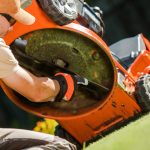
A rotary mower works on a different principle entirely. It has one blade, mounted horizontally underneath the deck, spinning at very high speed, often around 3,000 revolutions per minute. There is no second cutting surface. The blade severs the grass by sheer speed of impact, slicing through it the way a strimmer line cuts a weed. Because the cut relies on velocity rather than a shearing pair, a rotary blade tears slightly rather than slicing perfectly, and a blunt rotary blade does not cut at all so much as bludgeon, leaving ragged, bruised tips. The high-speed airflow under the deck also lifts the grass upright before it is cut and helps throw the clippings into the collector, which is why rotary mowers handle longer growth so well.
Cut Quality, Height and the Finish You Can Expect
The scissor action of a cylinder mower gives a cleaner cut than a rotary, and that is not just about looks. A clean slice leaves a smaller wound on each grass blade, which loses less moisture and heals faster, so a well-cut lawn is slightly less prone to drought stress and disease at the tips. The torn ends left by a dull rotary blade dry out and turn whitish-brown, giving the whole lawn a hazy, frosted appearance a day or two after mowing. That said, the gap is smaller than purists suggest: a rotary mower with a properly sharp blade and enough power produces a cut most people would never tell apart from a cylinder finish on an ordinary lawn. Blade sharpness, not mower type, is what separates a good rotary cut from a bad one.
Cutting height is where the two truly part company, and it is the single most useful thing to know before buying. A quality cylinder mower can cut extremely short, down to around 5mm (about 3/16 inch), and still leave a clean, even surface, which is exactly what fine ornamental, golf and sports lawns require. Raise it much above 25mm (1 inch), though, and the cut quality starts to fall away, because long grass slips through the cylinder before it can be sheared. A rotary mower is the opposite. It generally will not cut cleanly below about 13mm (half an inch), so it cannot give you that very short manicured look, but it will happily cut anywhere from there up to 75mm or even 100mm (3 to 4 inches) with no loss of quality. That high range is why a rotary copes with the longer summer cut that keeps lawns healthy in heat, and why it can tackle a meadowy patch a cylinder mower would choke on.
For stripes, both can produce them if fitted with a rear roller, but the cylinder mower’s roller and close cut give the crisp, defined banding associated with formal lawns. A rotary with a rear roller gives a softer stripe that suits most gardens perfectly well.
Which One Suits Your Lawn
Match the mower to your lawn and your ambitions rather than to the marketing. Choose a cylinder mower if you have a flat, fine, well-kept ornamental lawn and you want it cut short with the cleanest possible finish and sharp stripes. The catch is that cylinder mowers demand a level surface: their fixed cutting geometry means bumps cause them to scalp the high points and miss the hollows, so they are unforgiving on rough ground. They also struggle with grass that has been left to grow long, and they cannot cut wet, sappy growth as easily, because soft grass folds rather than feeding cleanly into the blades.
Choose a rotary mower if you have an average lawn, uneven ground, areas that sometimes get away from you, or a mix of grass types. A rotary handles long, coarse and damp grass far better, rides over undulations without scalping, and is the practical choice for the great majority of gardens. It is also the cheaper and more versatile tool. A capable electric or battery rotary mower for a small to medium lawn costs from around £120 to £350 ($150 to $450), and a petrol rotary for a larger garden from around £250 upward, available at B&Q, Home Depot, Screwfix, Amazon and garden centres everywhere. A good walk-behind cylinder mower starts higher, typically £200 to £600 ($250 to $800) for brands such as Allett, Webb or Hayter, and powered sports-grade machines climb well beyond that. If budget is tight or your lawn is anything other than billiard-table flat, the rotary wins on value before you even consider the cut.
One more practical point separates the two on an everyday level: noise and convenience. A petrol rotary is the loudest of the common options and needs fuel, oil changes and seasonal servicing, while a battery rotary starts at the press of a button and runs quietly enough to mow early without disturbing neighbours. A hand-push cylinder mower, by contrast, has no motor at all and is near silent, which suits a small, flat lawn and a gardener who does not mind the extra effort. Think about how often you will actually mow, how large the lawn is, and how much maintenance you are willing to take on, and the honest answer usually points most households toward a battery rotary for the balance of cut, cost and ease.
Maintenance Realities Most Buyers Miss
The maintenance burden is where many people are caught out, and it tips the decision more than the showroom suggests. A rotary mower is simple to keep cutting well: sharpen or replace the single blade once or twice a season, balance it after sharpening, keep the underside of the deck clean, and that is essentially the whole job. Anyone can do it with basic tools in half an hour.
A cylinder mower asks far more. The cylinder and the bedknife must be set to a precise clearance so they shear cleanly against each other, and that setting drifts with use and needs periodic adjustment. Done correctly the mower cuts paper-thin; set even slightly wrong and it chews and tears the grass, giving a worse result than a cheap rotary. Sharpening is not a quick file-up either: cylinder blades are usually restored by backlapping, running a grinding paste between cylinder and bedknife to hone the mating edges, a job many owners send out to a service shop. Hit a stone or a hidden root and you can nick the blades or knock the cylinder out of true, which is a costly repair. None of this makes a cylinder mower a bad choice, but it does mean it rewards an owner who enjoys maintaining a machine and wants a showpiece lawn, and frustrates one who just wants to cut the grass and put the mower away. Be honest about which you are, and the right mower picks itself.