If a low, sprawling weed with three small leaves and tight clusters of bright yellow flowers has started creeping across the thin, dry parts of your lawn this summer, the plant is almost certainly black medic, and its arrival is a clue about the soil underneath. Black medic (Medicago lupulina) takes hold where grass is hungry, dry and patchy, so the quickest way to push it out is to feed and thicken the grass first, then deal with the weed itself. Reaching straight for a spray treats the symptom and leaves the cause untouched, which is why so many people find it back again the following year.
How to Tell Black Medic From Clover and Other Lawn Weeds
Black medic is easy to confuse with clover and the lesser trefoils, and getting the identification right changes how you treat it. Each leaf is divided into three small leaflets, like clover, but the central leaflet sits on a tiny stalk of its own a couple of millimetres long, while the two side leaflets attach directly. White clover, by contrast, has all three leaflets meeting at one point, larger rounded leaves and a pale crescent watermark across each one. Black medic leaflets are also finely toothed around the tip and often carry a small point at the very end.
The flowers settle the matter. Black medic produces rounded heads of 15 to 50 tiny yellow flowers, each head roughly 3 to 8mm (about a quarter of an inch) across, sitting on wiry stems that radiate flat from a central taproot. After flowering, those heads turn into tightly coiled, kidney-shaped seed pods that ripen from green to black, which is where the plant gets its name. Lesser trefoil (Trifolium dubium) looks similar from a distance but its seed pods stay straight rather than curling, and its central leaflet has little or no stalk. If you see coiled black pods, you are looking at black medic.
It usually behaves as an annual or short-lived plant, but a single specimen can set hundreds of seeds in one season, and those seeds survive in the soil for years. That is why it tends to appear in the same spots each summer, and why timing your response before the pods ripen makes such a difference.
Why Black Medic Means Your Lawn Is Hungry and Dry
Black medic belongs to the pea and bean family, and like its relatives it forms a partnership with Rhizobium bacteria that live in nodules on its roots. Those bacteria pull nitrogen straight from the air and convert it into a form the plant can use. The practical result is that black medic does not depend on nitrogen in the soil the way grass does. Where a lawn is starved of nitrogen and the grass has thinned, the medic simply ignores the shortage and colonises the gaps. Its presence is one of the clearest signs a turf specialist will read as low soil fertility.
The second signal is moisture. Black medic drives down a deep taproot that reaches water well below the top few centimetres where grass roots sit. During a dry summer, when shallow-rooted grass browns and stops growing, the medic stays green and keeps spreading. Add compacted soil and full sun, both of which weaken fine lawn grasses, and you have the exact conditions it thrives in. So the weed is really a report on three things at once: the soil is hungry, the ground is dry or compacted, and the sward has thinned enough to let light reach the surface.
Left alone, it forms dense mats over the warmest weeks, smothering the grass beneath. Then, when it dies back in autumn and winter, it leaves bare soil exactly where the lawn was already weak. That open ground is colonised by more weed seedlings the following spring, so an untreated patch tends to grow year on year rather than fading away.
How to Get Rid of Black Medic and Keep It Out
Because the weed thrives on a hungry, dry, thin lawn, the most reliable control is to remove those conditions. Start by feeding the grass. A summer lawn feed high in nitrogen thickens the sward so it shades the soil surface and crowds out medic seedlings. A slow-release summer feed such as Miracle-Gro Water Smart or a similar 20-0-5 type, around £18/$23 for enough to cover 200 square metres, releases nitrogen steadily over six to eight weeks rather than in one flush. Apply at the rate printed on the box, usually around 35g per square metre, and water it in within 48 hours if no rain falls so it does not scorch the grass in warm weather.
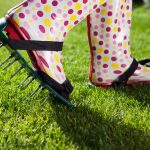
Raise your mowing height at the same time. Cutting to 6 to 7.5cm (about 2.5 to 3 inches) over summer keeps the grass canopy tall enough to shade the soil, and black medic seed needs light to germinate. Close mowing is the single most common trigger, because every scalped patch is an invitation for the seed bank below to wake up. Water deeply but less often, around 2.5cm (1 inch) once a week rather than a daily sprinkle, so the grass roots chase moisture downward and compete better with the medic taproot. On compacted ground, spike the area with a garden fork or hollow-tine aerator in autumn to let air, water and feed reach the roots.
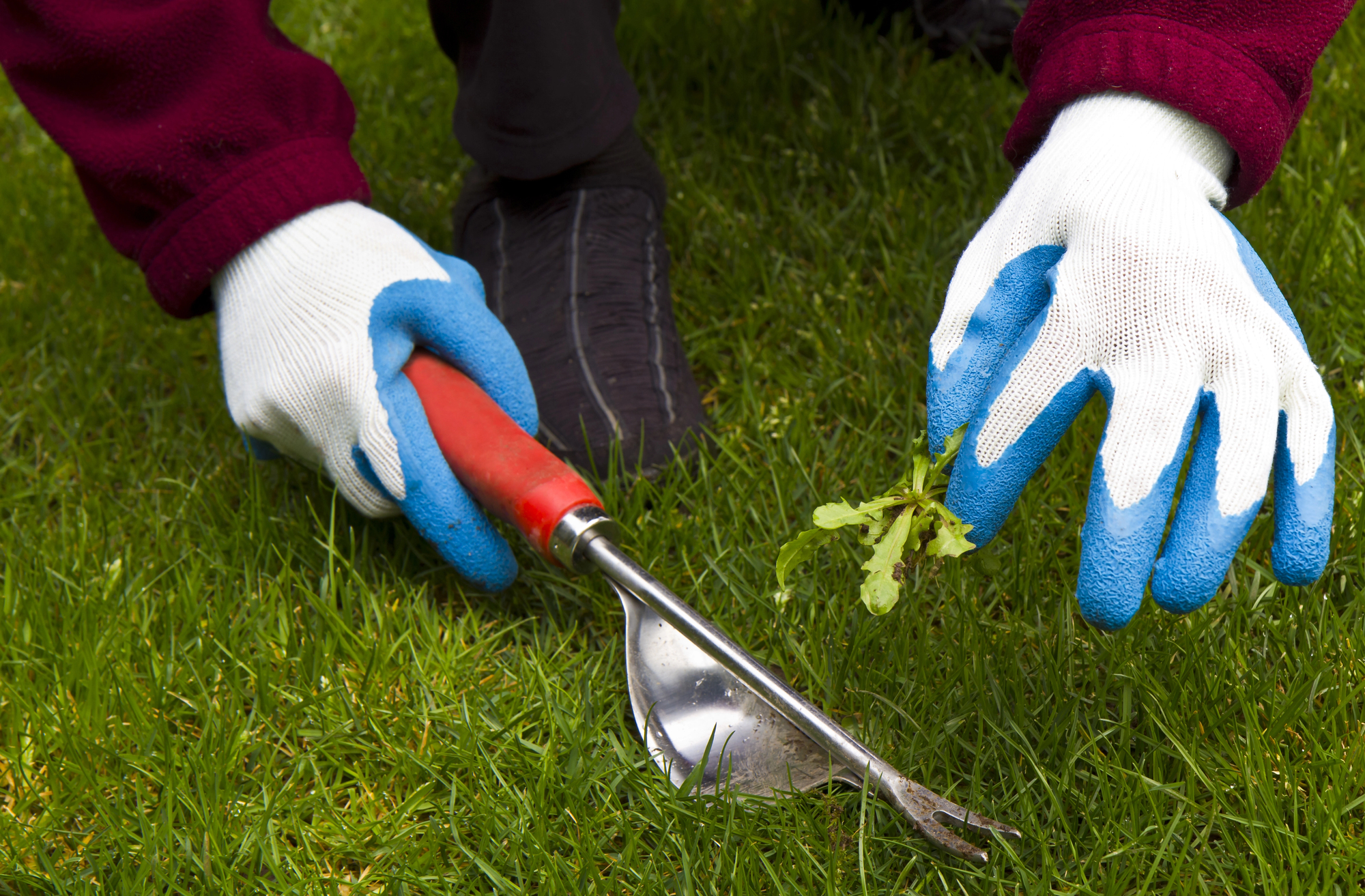
For the plants already there, hand weeding works well on small patches, especially now in early summer before the pods ripen and scatter seed. Loosen the soil with a hand fork and lift each plant by its taproot, because any crown left behind will regrow. Do it when the soil is moist and the whole root slides out more easily. On larger infestations, a selective broadleaf lawn weedkiller will clear it without killing the grass. Look for one containing 2,4-D, mecoprop-P (also written MCPP), dicamba or fluroxypyr, the active ingredients turf scientists at university extension services list for this weed. Ortho Weed B-Gon, which combines 2,4-D, mecoprop-P and dicamba, costs around £12/$15 for a concentrate that treats a typical lawn, and triple-action lawn feeds that include a weedkiller do the same job while feeding at once. Apply only when the weed is growing strongly and the weather is mild, never during a heatwave or drought.
The Mistakes That Let Black Medic Come Straight Back
The first mistake is spraying and doing nothing else. The herbicide clears the visible plants, but the soil stays hungry and dry, so the seed bank simply produces a fresh crop. Treat the cause and the weed has nowhere to establish. The second is cutting too short in the belief that it weakens the weed. It does the opposite, opening the canopy and letting light trigger germination, while also stressing the grass that should be competing.
The third is timing chemical treatment badly. Spraying in hot, dry conditions scorches grass that is already under stress, and the medic, protected by its deep root, often recovers anyway. Wait for a spell of mild, moist weather when the plant is actively growing and the spray moves down into the root. The fourth catches people out every year: pulling or strimming the weed after the pods have formed scatters ripe seed across the lawn. If the coiled pods have turned dark, bag the plants and bin them rather than adding them to the compost heap, where the seed can survive.
Black medic is not really a sign you have done something wrong. It is closer to a soil test you did not pay for, pointing straight at low fertility and a dry, thin lawn. Feed the grass, raise the cut, water deeply and keep the sward dense, and the conditions that let it in disappear. Fix those and the weed fades on its own, with the spray doing nothing more than tidying up the last of it.