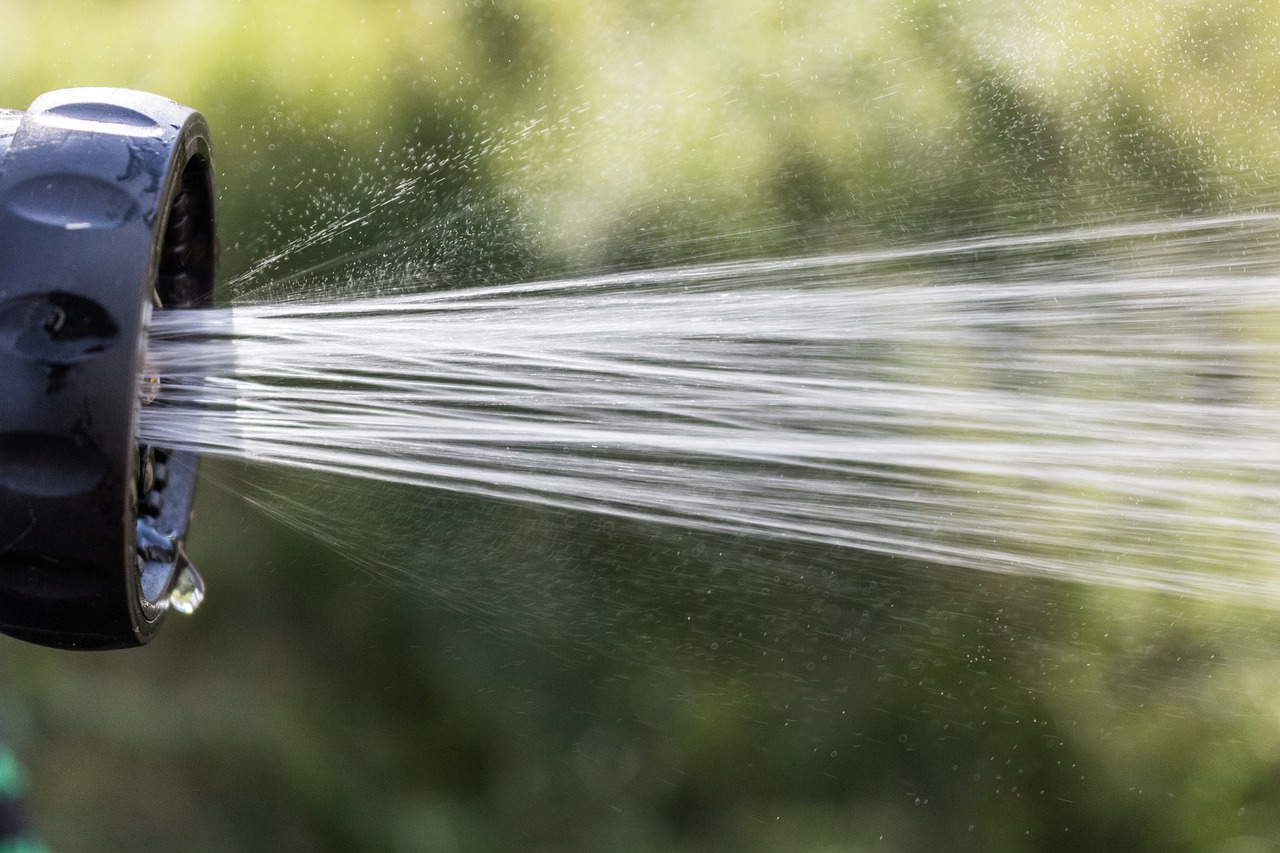
Watering your lawn after dinner feels sensible. The air is cool, the sun has gone, and less water seems to vanish into the sky. The problem is what happens to the grass for the next eight to twelve hours. An evening or night soak leaves every blade wet through the darkest, most humid part of the day, and that long stretch of wet leaf is the exact condition the most damaging lawn diseases need to take hold. If you water at one time only, make it early morning, between roughly 4am and 9am, and most fungal problems lose the opening they rely on.
What Actually Happens to Wet Grass Overnight
Fungal diseases of turf do not infect dry leaves. They need a film of moisture sitting on the blade long enough for spores to germinate and push their threads into the leaf tissue. Turf scientists measure this as leaf wetness duration, and it is one of the most reliable predictors of an outbreak. During the day, sunshine and a light breeze dry the grass within an hour or two of watering, so the wetness window stays short. At night there is no sun to evaporate the water and no warmth to lift the humidity, so the moisture simply lingers.
Now add the natural dew that forms on grass overnight anyway. From late evening the lawn picks up its own film of moisture as the air cools and water condenses on the cooler blades, and that dew often stays until the morning sun burns it off. If you water at night, you are stacking a deep soak on top of the dew period and handing the fungus a continuous eight to twelve hours of saturated leaf surface. Morning watering does the opposite. It tops up the soil just as the dew is about to dry anyway, so the leaves are wet for a couple of extra hours at most before the day dries them out.
The Diseases That Feed on Night Watering
The numbers explain why timing has such an effect. Brown patch, caused by the fungus Rhizoctonia, needs grass blades to stay continuously wet for around 10 to 12 hours before it can infect, and it spreads fastest when warm nights above 20 degrees C (68 degrees F) meet that long wet period. A single humid night of watering can be enough to let it race across a lawn in expanding straw-coloured circles. Dollar spot works to a similar threshold, leaving small bleached patches the size of a coin that merge into larger dead areas, and it is one of the most common results of evening irrigation on a fed lawn.
Red thread, recognised by pink-red threads webbing through the grass, also leans on extended leaf wetness, as does pythium blight, the fastest and most destructive of the lot, which can flatten patches of lawn into greasy, water-soaked streaks overnight in warm, humid weather. None of these fungi are introduced by your hose. They are already present in almost every lawn as dormant spores and threads in the thatch. What night watering does is flip the switch that lets them grow, by giving them the one thing they cannot manufacture for themselves, which is hours of unbroken moisture on the leaf.
The same logic explains why a lawn that has never had a disease problem can suddenly develop one after someone sets an evening sprinkler timer for the summer. The grass is no weaker than before. The watering schedule has simply extended the wet window night after night until the fungus finally has the conditions to spread.
How to Water So Disease Never Gets the Chance
Water early in the morning, ideally finishing before 9am. At that hour the soil takes the water in before the heat of the day can evaporate it, the leaves dry quickly once the sun is up, and the wet window stays too short for fungal infection. Research from turf extension services suggests morning watering can also cut water use by 20 to 30 per cent compared with watering in the heat of the afternoon, because far less is lost to evaporation before it soaks down to the roots.
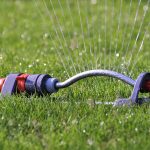
Water deeply and rarely rather than little and often. Most lawns need roughly 2.5cm (1 inch) of water a week, including rainfall, delivered in one or two soakings rather than a daily splash. To measure it, stand a few empty tuna or cat-food tins on the grass while the sprinkler runs and stop when they hold about 2.5cm. Deep, infrequent watering pushes roots downward and builds a more drought-tolerant lawn, while shallow daily watering keeps roots near the surface and keeps the leaves damp, the worst of both worlds. A simple tap timer such as a Hozelock unit, around £25/$32, will run the sprinkler at first light without you setting an alarm, and oscillating or rotary sprinklers spread the water evenly so no patch stays soggy.
If a heatwave forces you to water at another time to stop the grass scorching, a short midday top-up is safer than an evening one, because the afternoon sun still dries the leaves before night. The principle to hold onto is simple: water the soil, not the leaves, and never leave the blades wet going into the dark.
The Watering Habits That Quietly Spread Disease
The most common mistake is the convenience soak after work, a nightly sprinkle that feels caring but keeps the lawn wet through every warm night of summer. Over a fortnight of humid weather that habit alone can trigger an outbreak that takes the rest of the season to recover from. The second is overwatering, running the sprinkler so long or so often that the soil never dries between sessions, which not only wastes water but keeps humidity high around the base of the grass where fungi establish.
A third habit is watering by feel rather than by time, dragging the hose out whenever the lawn looks a little tired, usually in the evening when you are home to do it. Set a fixed early-morning schedule instead and the guesswork disappears. Finally, watering lightly every single day trains the grass to root shallowly and keeps a permanent film of moisture on the surface, which is why daily-watered lawns so often look greener for a week and then break out in disease. Get the timing right and you solve two problems at once, because the same early, deep, infrequent watering that starves the fungus of moisture also builds the deeper roots that carry a lawn through a dry summer.
It helps to know what an early outbreak looks like, because catching it quickly limits the damage. Brown patch shows as roughly circular patches of tan or straw-coloured grass, often with a darker, water-soaked ring around the edge in the early morning while the dew is still down. Dollar spot starts as scattered bleached dots the size of a small coin, sometimes with an hourglass-shaped lesion across individual blades. Red thread reveals itself as ragged pink or red patches with fine coral threads visible at the leaf tips when you look closely. If you find any of these, the first change to make is the watering schedule, shifting to early morning so the leaves spend far less time wet, then easing back on nitrogen feed for a few weeks, since soft, fast growth is more vulnerable to several of these fungi.
There is a deeper reason morning watering builds a healthier lawn than evening watering, beyond avoiding disease. Watering deeply at first light, then letting the surface dry through the day, trains roots to grow downward in search of the moisture held lower in the soil. Those deeper roots reach water that shallow-rooted grass cannot, so a morning-watered lawn stays green longer in a dry spell and recovers faster from heat. Night watering does the opposite twice over: it keeps the surface permanently damp, which holds roots near the top of the soil, and it feeds the fungi at the same time. Switching the timer to come on before sunrise is one small change that improves drought resistance and disease resistance together, for no extra water and no extra cost.