
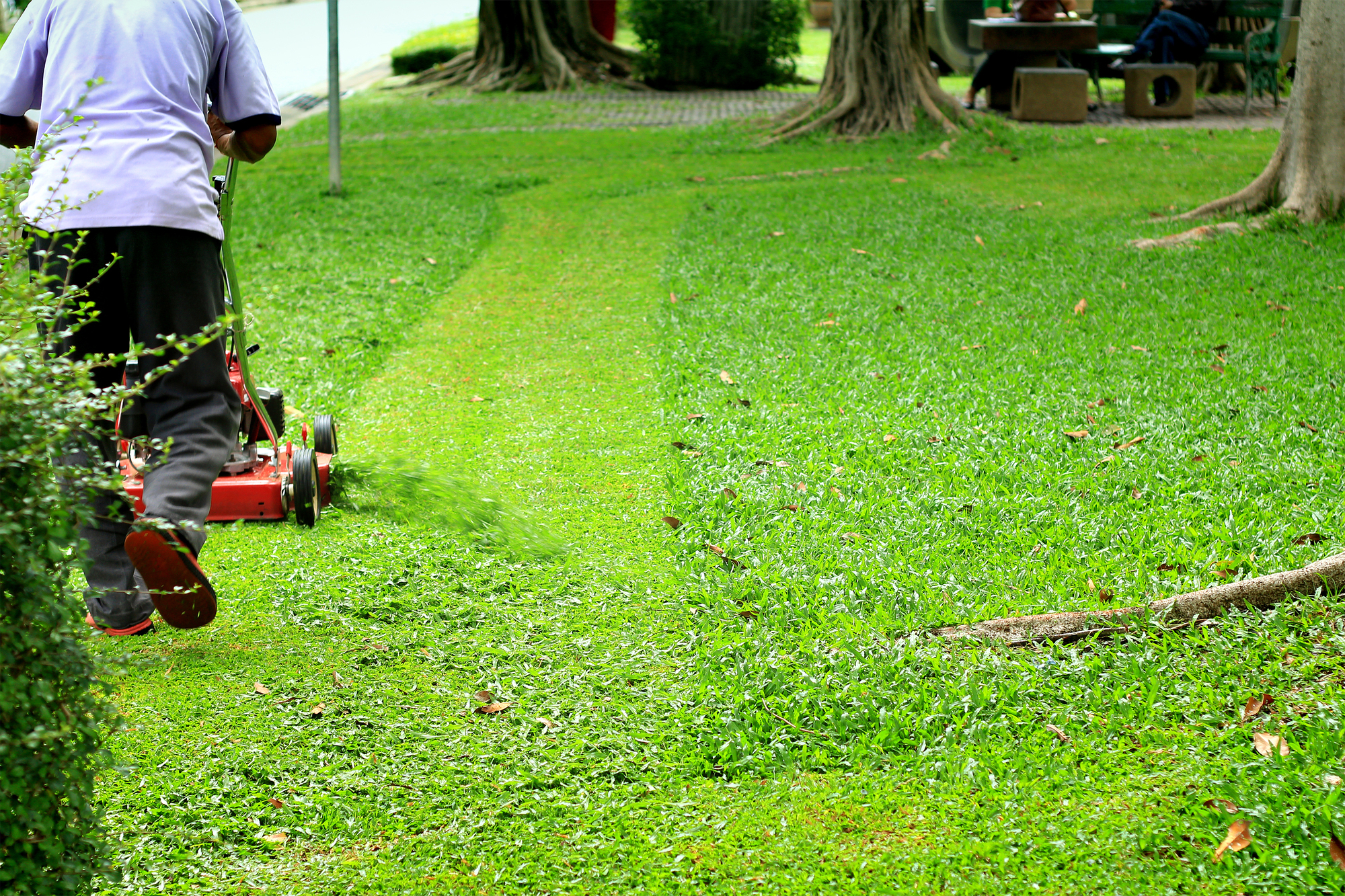
A mower pull cord that has gone solid, or that pulls out a few centimetres and jams, almost never means the engine is finished. In most cases the cause is one of a short list of problems you can check at home in under half an hour, and working through them in the right order saves you from snapping the rope or cracking the recoil housing by yanking harder. The single most important rule before you do anything else: never force a stuck cord. If it will not move, find out why first.
Start With the Safety Bail and the Blade
On most walk-behind mowers the lever you hold against the handle is not just a throttle. It is the operator presence control, and it releases a brake that sits against the engine flywheel. Let go of that bail and the brake clamps the flywheel to stop the blade within seconds, which is exactly what it is designed to do. If you try to pull the cord without holding the bail down, the brake is still locking the flywheel and the rope will not budge no matter how hard you pull. So step one is simple: hold the bail firmly against the handle, then pull. A surprising number of stuck cords are nothing more than this.
If the bail is held and the cord still will not move, the next suspect is the blade itself. The starter rope, the flywheel, the crankshaft and the blade are all connected, so anything jamming the blade locks the cord instantly. Tip the mower on its side with the air filter and carburettor facing upward, never downward, and look underneath. A wedged stick, a build-up of compacted wet grass under the deck, or a stone trapped against the blade will all hold everything solid. Before you reach under the deck, pull the spark plug cap off so the engine cannot fire, then clear the obstruction by hand or with a piece of wood. Cables can also seize: if the brake bail cable has rusted or stiffened over winter, the brake may not fully release even when you squeeze the lever, and freeing or replacing that cable restores normal movement.
Hydrolock: Why Oil in the Cylinder Locks the Cord
If the bail is fine and the blade turns freely but the cord is still stiff or springy, the most likely cause on a four-stroke petrol mower is hydrolock. Oil that should sit in the sump at the bottom of the engine has found its way up into the combustion chamber above the piston. Because liquid will not compress, the piston cannot complete its stroke and the cord stops dead or feels spongy. This almost always follows tipping the mower the wrong way up, storing it on its side, or laying it carburettor-side down to clean the deck or change the blade.
The fix is easy enough to do yourself. Remove the spark plug with a plug socket, usually 13/16 inch or 21mm, then pull the cord slowly several times over an old cloth. Oil will spray out of the plug hole, so keep your face and anything electrical clear. Once the cord pulls smoothly again, check the air filter, which is often soaked with oil after a hydrolock and will need cleaning or replacing, and check the oil level in the sump, topping up or changing it as needed. Clean or fit a fresh spark plug, refit it, and the mower should start. The reason this counts beyond the inconvenience is that yanking hard on a hydrolocked engine can snap the starter rope, shatter the recoil pulley, or in a bad case bend a valve or connecting rod, turning a ten-minute job into a workshop bill.
Inside the Recoil Starter
If the engine turns freely when you spin the blade by hand with the plug removed, but the cord itself feels loose, will not retract, or pulls out without spinning anything, the fault is in the recoil starter assembly rather than the engine. Inside that plastic housing on top of the engine sit three parts: a coiled return spring that pulls the rope back in, a pulley the rope winds around, and a set of small pawls or dogs that flick out to grip the flywheel hub when you pull, then release when you stop. Grass dust, rust and age can jam any of them.
Unbolt the housing, usually three or four bolts, and lift it clear to inspect. A rope that will not retract usually means the return spring has lost tension or come unhooked, and the spring can be rewound or the whole recoil unit replaced. Pawls that have stuck with dirt or corrosion stop the starter gripping the engine, so the rope pulls out limply. A complete recoil starter assembly for a common mower engine costs around £15/$20 and bolts straight back on, which is often quicker and safer than fighting a tightly wound spring by hand, as a slipped spring can spring loose and cut you.
It is worth knowing how the rope itself is replaced, because a snapped cord is one of the few faults that leaves the mower completely dead even when the engine is perfectly healthy. With the recoil housing off the engine and the spring tension released, the old rope unties from the pulley and a new length of the correct diameter, usually 4 to 5mm, threads back through the pulley and the handle. The pulley is then wound against the spring by a few turns to build the return tension before the rope is fed out through the guide and knotted. A replacement rope costs only a pound or two, far less than a new recoil unit, so it is worth keeping a length in the shed if your mower is older.
When the Engine Itself Has Seized
The last and least common cause is a truly seized engine. The test is clear: remove the spark plug so there is no compression, then try to turn the engine by rotating the blade by hand, with the spark plug lead disconnected for safety. If it still will not move, the engine is locked internally. The usual reasons are running it low on oil until the moving parts overheated and gripped, or rust forming on the cylinder walls after the mower sat through a damp winter with old fuel in it. A lawn left with stale ethanol-blended petrol over winter is a frequent culprit, because the fuel attracts moisture and corrodes internal parts.
A lightly rust-seized engine can sometimes be freed by removing the plug, adding a little penetrating oil into the cylinder, leaving it overnight and gently working the blade back and forth, but an engine seized through oil starvation usually needs professional repair or replacement. At that point it is worth weighing the cost of the work against a new mower. The key safety point throughout all of this is to disconnect the spark plug before your hands go anywhere near the blade, and to stop and reassess rather than pull harder the moment a cord refuses to move, because the cord is rarely the real problem. It is just the part that tells you something else is wrong.
Most stuck-cord problems are easier to prevent than to fix. Always tip a four-stroke mower with the spark plug and carburettor uppermost so oil cannot run into the cylinder, drain or stabilise the fuel before winter storage so it does not corrode the engine internally, and clear grass from under the deck after each cut so nothing dries hard against the blade. Store the mower somewhere dry to keep rust off the cylinder walls and the recoil pawls. Do those few things and the cord stays smooth season after season. If you have worked through the bail, the blade, a hydrolock check and the recoil and the cord still will not move with the spark plug out, stop and take the mower to a repairer, because the next stage is internal engine work that is rarely worth attempting at home.