Letting part of your lawn grow into a meadow is one of the cheapest changes you can make in a garden, and one of the most misunderstood. The idea sounds effortless: stop mowing and wait for flowers. What actually happens in the first summer is usually a tall stand of coarse grass with a scattering of buttercups, and a lot of people give up there. The plants that turn long grass into a real meadow need three things you have to provide on purpose, poorer soil, the right cut at the right time, and in most cases a small grassland plant called yellow rattle. Get those right and a corner of mown lawn becomes a changing display of flowers and insects from late spring into summer, for the price of mowing it less.
What Changes in the First Summer
The moment you stop cutting, the plants already living in your lawn get their chance to grow up and flower. Most lawns contain far more than grass: clover, daisies, selfheal, buttercup, dandelion and yarrow are all common, kept as flat green rosettes by regular mowing and never allowed to bloom. Leave the grass uncut from spring and these come into flower within weeks, bringing colour and, more visibly, insects. Bees, hoverflies and butterflies arrive to feed on flowers that simply were not there when the area was mown weekly, and the longer grass shelters beetles, grasshoppers and the small creatures that birds and hedgehogs feed on.
You do not have to give over the whole lawn to find out whether you like it. Leaving one defined area to grow, or a strip along a fence or under a tree where the grass is patchy anyway, lets you test the idea without losing the part of the lawn you use. Mowing a neat path through or around the long grass makes a real difference here, because it signals that the area is deliberate rather than neglected, keeps access open, and frames the meadow so it reads as a feature. The honest part is that a first-year meadow on ordinary lawn soil is often more grass than flower, because the conditions still favour vigorous grasses. That is the problem the next two steps solve.
Why You Have to Make the Soil Poorer
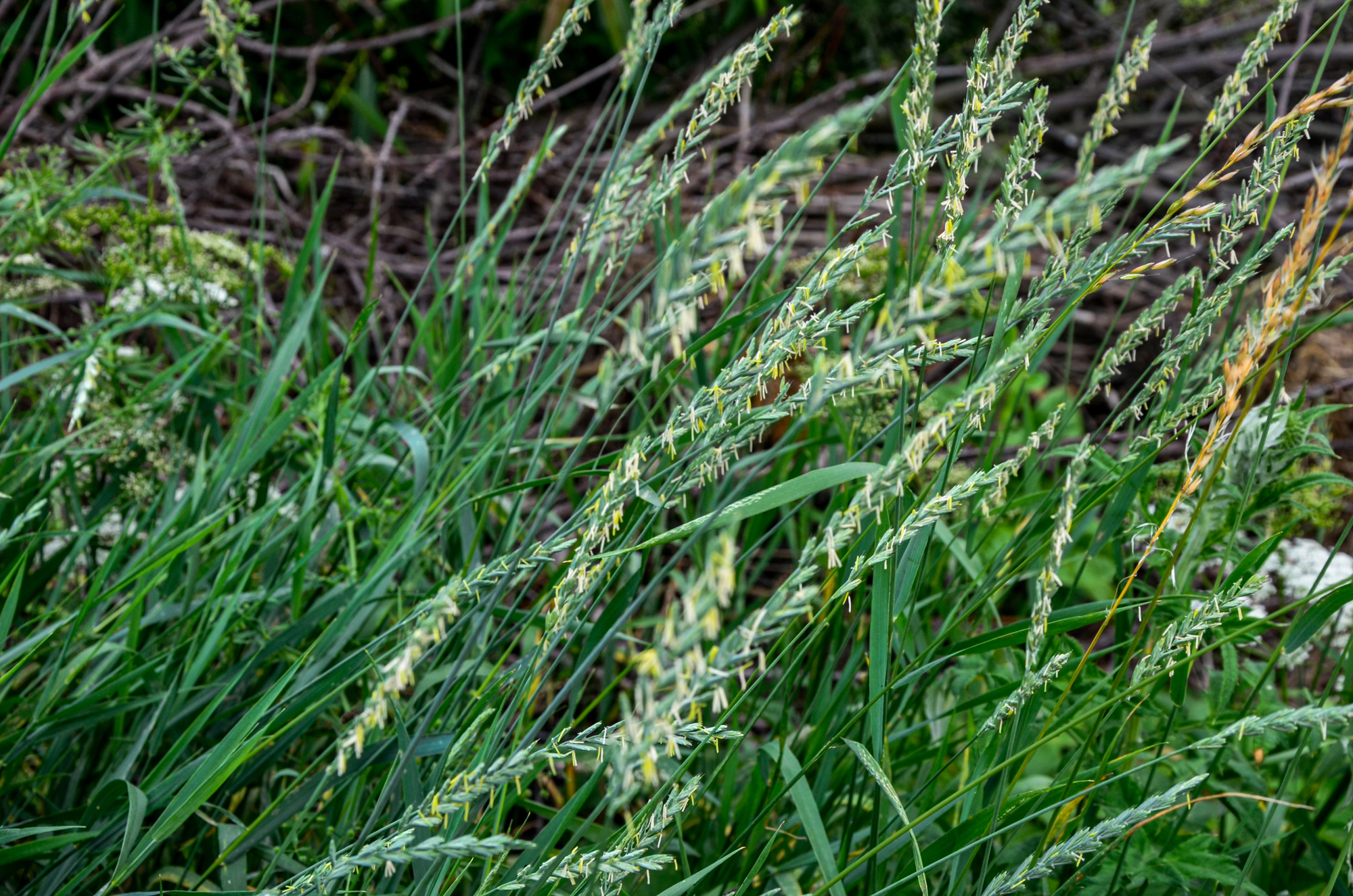
This is the step that goes against every instinct built up from looking after a lawn. Good lawns are fed to keep the grass thick and green. Meadows want the opposite. On rich, fertile soil, a handful of fast-growing grasses such as ryegrass and Yorkshire fog grow tall and dense and simply smother the finer, slower wildflowers before they can establish. Lower the fertility and the balance tips back toward the flowers, which are adapted to lean ground where the grass cannot run away with all the light and nutrients.
Two habits lower fertility over time. The first is to stop feeding the area completely, no lawn feed, no fertiliser, ever. The second is to remove the clippings every single time you cut. If you leave cut grass lying, it rots down and returns its nitrogen to the soil, feeding the very grasses you are trying to weaken, so each cut must be raked off and composted elsewhere or removed. The Royal Horticultural Society advises exactly this for anyone converting a lawn, treating the first year as a deliberate weakening of the grass: keep mowing through that first season, always removing the clippings, while you prepare to introduce wildflowers. Stripping nutrients is slow, taking two or three seasons to show, which is why patience does more for a meadow than any product you can buy.
Yellow Rattle, the Plant That Makes a Meadow Work
If there is one plant that decides whether a meadow succeeds, it is yellow rattle (Rhinanthus minor), and it works by being a partial parasite on grass. Its roots tap into the roots of surrounding grasses and draw off water and nutrients, which can cut the vigour of the grass by up to half. That weakening is what opens space and light for slower wildflowers to move in, which is why meadow makers call yellow rattle the meadow maker or, less kindly, the hay rattle that breaks the grasses grip.
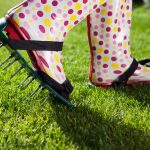
Sowing it correctly is the part people get wrong. Yellow rattle is an annual that must set seed each year, and its seed needs a long cold spell over winter before it will germinate, so it has to go down fresh in late summer or early autumn, roughly from August to September, not in spring. Sow it onto bare, scratched soil rather than thick grass, so rake or scarify the area hard first to expose patches of earth, scatter the seed at around 1 gram per square metre, and tread it in. Do not cover it deeply. Fresh seed is essential because viability drops fast, and reputable suppliers sell it by the gram for this reason: Emorsgate Seeds, a long-established grassland specialist, lists yellow rattle at around £3.50 for 1 gram, £35 for 100 grams or £320 per kilogram, which is roughly $4.50, $45 and $410. One good year of yellow rattle thins the grass enough that other wildflowers, sown as seed or planted as small plug plants the following spring, can finally take hold.
How to Cut and Keep It
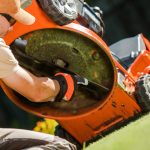
A meadow is not no maintenance, it is different maintenance, and the timing of the cut is what keeps it as a meadow rather than letting it slide back to rank grass or scrub. The main cut comes in late summer, generally from late August into September, once the flowers have bloomed and dropped their seed for next year. Cut it down to around 5 to 7.5cm (2 to 3 inches) with a scythe, a strimmer, or a mower set high if it can handle long growth, then leave the cuttings lying for a day or two so any remaining seed drops, and after that rake every scrap off and remove it. Some gardeners add a light tidy-up cut in early spring before growth gets going. One or two cuts a year, always with the hay removed, is the whole routine.
The mistakes are mostly about timing. Cut too early, in the middle of summer, and you remove the flowers before they have set seed, so the display fades year on year instead of building. Leave the clippings on, and you feed the grass straight back up and undo the work of lowering fertility. Keep mowing through the growing season out of habit, and the area simply reverts to a lawn. The shift in mindset is the hardest part, because a meadow looks untidy at exactly the moments a lawn is meant to look its best, through June and July when the grass is tall and going over. Hold your nerve through those weeks, make the late cut, take off the hay, and each year the flowers gain a little more ground on the grass until the corner you stopped mowing becomes the part of the garden most alive with colour and movement.
Once yellow rattle has thinned the grass, you can add the flowers that turn a quiet green meadow into a colourful one. Reliable perennials for ordinary garden soil include ox-eye daisy, common knapweed, field scabious, bird-foot trefoil, selfheal and lady-bedstraw, all of which cope with lean ground and flower across early and mid summer. The surest way to establish them is not loose seed scattered into competing grass but plug plants, small pot-grown wildflowers planted in autumn or early spring straight into gaps you open in the turf with a trowel. A tray of mixed native plugs costs around £15 to £25, roughly $20 to $32, and a few dozen plugs dotted through a small meadow area give a far better strike rate than seed alone. Choose a mix suited to your soil and light, since a damp shady corner and a dry sunny bank want very different plants.