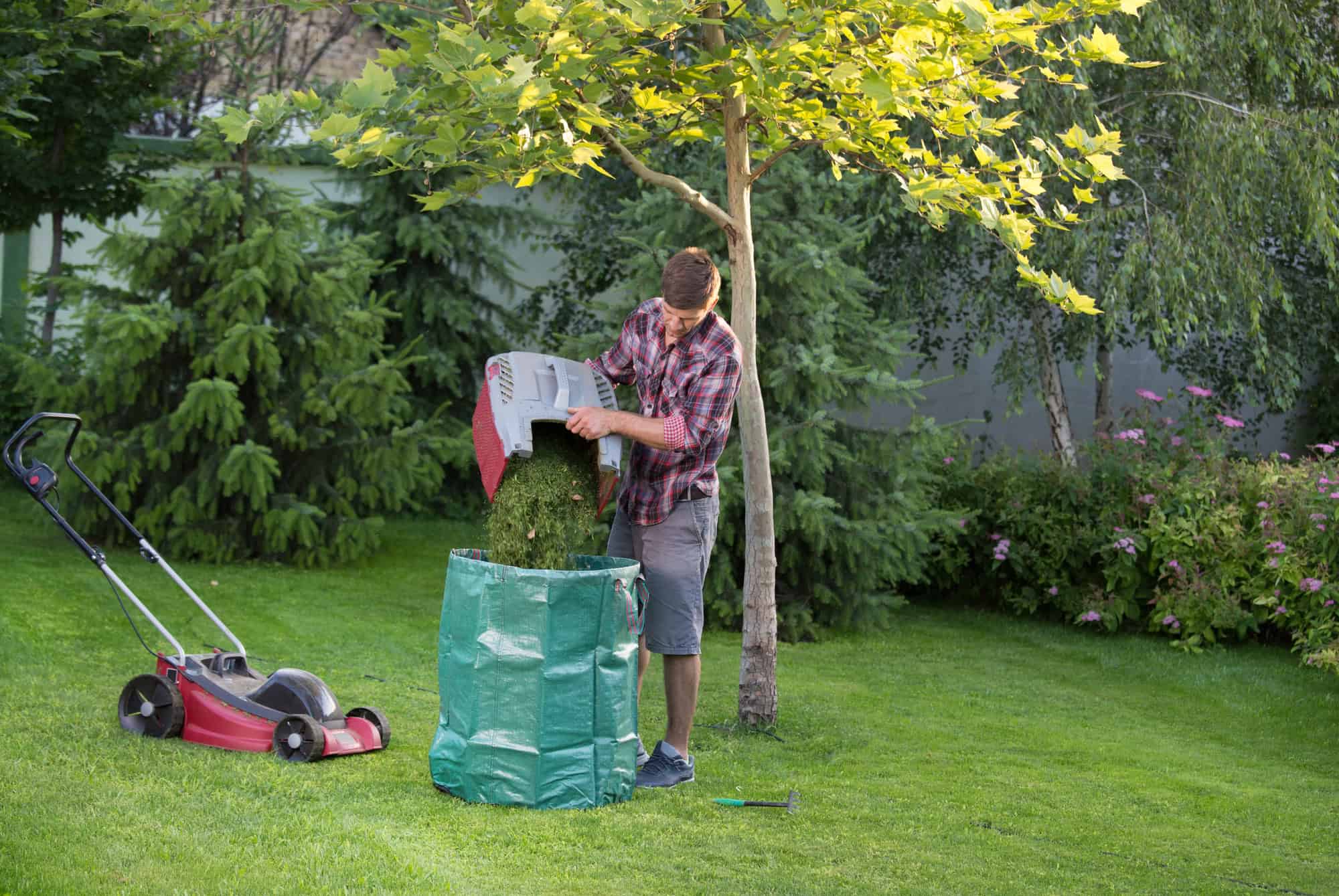
A mulching mower does not collect your grass clippings. Instead it cuts them, then cuts them again into pieces a few millimetres long, and drops that fine confetti back down into the base of the lawn where it breaks down and feeds the soil. Done properly in summer, this returns a meaningful amount of nitrogen to the grass, keeps the soil cooler and damper through dry spells, and cuts your mowing time by up to a third because you never stop to empty a box. The clippings do not cause thatch and they do not make the lawn look messy, as long as you follow two simple rules: mow often, and only mulch when the grass is dry. Get those wrong and you get clumps and smothered patches, which is where mulching earns its undeserved bad reputation.
How a Mulching Mower Actually Works
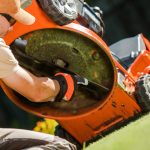
An ordinary mower cuts the grass once and either flings the clipping into a collection box or out of a side chute. A mulching mower is built to keep the clipping circulating. It uses a closed deck with no exit, a specially shaped mulching blade with extra cutting edges, and often a plug or insert that seals the discharge opening. The clipping is lifted by the airflow inside the deck, cut, held in suspension, and cut several more times by the recirculating blade until it is chopped small enough to fall down between the standing grass blades rather than sitting on top of them. Many modern mowers are sold as “2-in-1” or “3-in-1” machines, meaning you can fit a mulching plug when you want to recycle clippings and remove it to collect or side-discharge when you do not.
The size of those chopped pieces is the whole point. A long, intact clipping lies on the surface, blocks light, holds water against the leaf, and takes a fortnight to rot. A clipping chopped to 5mm (about a quarter of an inch) slips down to the soil surface, where the high water content, grass is roughly 80 to 85 percent water, means it shrivels and is pulled into the soil by worms and microbes within a day or two in warm weather. That is why a properly mulched lawn looks clean within hours of mowing, while a lawn that has been cut too long and mulched looks strewn with hay.
What Mulching Does for Your Lawn in Summer
The headline benefit is free fertiliser. Grass clippings are rich in the same nutrients you pay for in a bag of lawn feed, principally nitrogen, along with potassium and phosphorus. Returning clippings over a full growing season can supply a substantial share of a lawn’s annual nitrogen need, which means a mulched lawn can be fed less often than one that is boxed off. Each time you mulch, the nutrients locked in that week’s growth go straight back into the system rather than being carried off to the compost heap or the green bin. Over a summer that is a steady, slow-release feed delivered every time you mow.
The second benefit is moisture conservation, and it is the one that earns its keep in a hot, dry summer. The fine layer of chopped clippings sitting at the soil surface acts as a thin mulch, shading the ground and slowing evaporation so the soil beneath stays cooler and holds water longer between rain or watering. On a lawn that is boxed off every week, the bare soil surface between the grass plants bakes and dries far faster. During a dry spell, that retained moisture can be the difference between a lawn that stays green and one that browns off. The third benefit is simply time and effort. Tests of grasscycling, the technical name for recycling clippings in place, have found mowing takes up to 38 percent less time when you never stop to empty a box or haul bags of clippings away, and you save the disposal trips entirely.
The most persistent myth is that clippings cause thatch, the spongy brown layer of dead material that can build up at the base of a lawn. They do not. Thatch is made of tough, slow-rotting stems, roots, and crown tissue that is high in lignin, whereas grass clippings are soft, watery leaf that breaks down quickly and adds almost nothing to the thatch layer. Decades of turf science have settled this point: it is the underlying plant material, not your clippings, that builds thatch, and a healthy soil full of worms and microbes digests mulched clippings long before they can accumulate.
When to Collect Instead of Mulch
Mulching is not always the right call, and knowing when to switch to collecting is what separates a good result from a poor one. Collect the clippings if the lawn is showing signs of fungal disease such as red thread, dollar spot, or fairy ring, because chopped infected clippings spread the spores across the whole lawn, and bagging them removes that source of reinfection until the problem is treated. Collect, too, if the grass has grown long and rank, after a holiday or a wet spell when you could not mow on schedule, because there is simply too much volume to chop finely and it will fall in smothering clumps. And collect if the lawn is full of weed seed heads, such as dandelion clocks or annual meadow grass in seed, since mulching would sow that seed straight back into the turf.
The single rule that makes mulching work is to mow little and often, removing no more than one third of the leaf at each cut. In peak summer growth that may mean mowing twice a week. Cut a third off a lawn kept at 35mm (about 1.4 inches) and you remove around 12mm of leaf, a small volume that chops to nothing and vanishes. Let the lawn reach 70mm and then take it back to 35 in one cut, and you remove a huge volume of long clipping that no mulching mower can disperse cleanly. This is why people who mulch on a regular schedule rave about it, while those who mulch occasionally on overgrown grass end up disappointed and blame the machine.
Choosing and Using a Mulching Mower
Most cordless and petrol rotary mowers now come mulching-capable. A solid mid-range cordless option such as the Bosch UniversalRotak or an EGO Power Plus 42cm model (around £350 to £450 / $430 to $560 with battery) includes a mulching plug in the box, while petrol machines from Honda’s IZY range (from around £395/$490) and Hayter offer dedicated mulching settings. Look for the term “2-in-1” or “3-in-1” and check that a mulching plug or kit is supplied, because some budget mowers list mulching as an optional extra you must buy separately. A dedicated mulching blade, with its longer cutting edge and steeper lift, produces noticeably finer clippings than a standard blade fitted with a plug.
In use, keep the blade sharp, because a blunt blade tears rather than cuts and the ragged clippings disperse poorly and rot more slowly. Only ever mulch dry grass, since wet clippings stick together, clog the deck, and fall in wet clumps that smother and yellow the grass beneath within a couple of days. If you do leave a few visible clumps after mowing, run the mower back over them or scatter them with a rake so they do not sit and bleach the lawn. Get the routine right, dry grass, sharp blade, little and often, and a mulching mower quietly feeds and waters your lawn for free all summer. Get it wrong by mulching wet or overgrown grass and you will see the clumps, the smother marks, and understand exactly why the technique gets unfairly criticised.
One last point that beginners often miss: mulching and collecting are not a once-and-forever decision. The best lawn keepers switch between the two through the year. They mulch through the steady growth of late spring and summer to feed the lawn and conserve water, then collect in autumn when fallen leaves and slower decomposition mean clippings linger, and collect again for the first cut of spring when the grass is long and wet. Treat the mulching plug as a tool you fit and remove as conditions change, rather than a setting you choose once, and you get the feeding and moisture benefits when they help most without ever leaving clumps on the lawn.