When a lawn turns brown in a summer drought, the instinct is to drag out the sprinkler and pour water on it. In most established lawns that is the wrong move. A brown summer lawn is usually not dying, it is dormant, a survival mechanism the grass uses to wait out dry weather with its roots and growing points alive underground. Leaving it brown saves water, saves money, and saves the lawn from the diseases and weak shallow rooting that frequent shallow watering encourages. The grass greens up again within a couple of weeks of proper rain. Understanding the difference between dormant and dead is the key skill, because once you trust dormancy, doing nothing becomes the smartest and cheapest thing you can do all summer.
What Dormancy Actually Is
Dormancy is a deliberate shutdown. When soil moisture runs low and temperatures climb, cool-season grasses such as fescue, ryegrass, and bent stop putting energy into green leaf and instead protect the parts that keep them alive: the crown at the base of the plant, the rhizomes, and the roots. The visible leaf browns off and dies back because the plant is no longer spending precious water keeping it green, but beneath the surface the crown stays alive and waits. The moment reliable moisture returns, that crown pushes out new leaf and the lawn greens up again. This is the same strategy wild grasses have used for millions of years, and a normal garden lawn does it naturally given the chance.
The Royal Horticultural Society’s advice reflects this directly: resist the temptation to water established lawns through the summer months, however brown they get, because the grass will send up new leaves once it rains. While drought turns the top growth brown, in a well-established lawn the underlying roots stay alive, ready to recover when rain comes back. In other words the brown is cosmetic, not terminal, and the lawn is doing exactly what it evolved to do.
How Long a Dormant Lawn Can Survive
There is a limit, and it is worth knowing so you can judge when a small amount of water becomes worthwhile. A healthy dormant lawn can generally survive around 4 to 6 weeks without any water, its crowns and roots holding on while the leaf stays brown. Heat shortens that window. Research from university turf extension services puts survival at roughly 4 to 5 weeks in moderate conditions, dropping to 3 to 4 weeks when daytime temperatures stay above about 27 degrees C (80 degrees F), and as little as 2 to 3 weeks in sustained heat in the low to mid 30s C (90s F). The exact figure depends on your soil too, because a deep clay or loam holds moisture in reserve far longer than a thin sandy soil that dries within days.
If a drought runs longer than those windows, the crowns themselves start to die and the lawn moves from dormant toward truly dead. At that point a small drink keeps it alive. The technique is to give the lawn just enough to keep the crowns hydrated without breaking dormancy, around 1cm (roughly half an inch) of water once every two to four weeks. That small amount will not green the lawn up, and it is not meant to. It simply keeps the growing points alive so the whole lawn recovers when rain returns, rather than dying back in patches. This is the one situation where watering a brown lawn is justified, and even then it is a fraction of what a sprinkler running every evening would use.
Why Half-Hearted Watering Is the Worst Choice
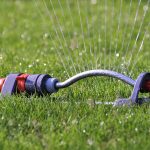
The truly damaging option is neither full dormancy nor full irrigation, but the middle path of sprinkling the lawn lightly every evening. This is the habit that causes the most harm, and understanding why is what changes how people water for good. A light daily sprinkle wets only the top centimetre or two of soil. The grass responds by sending its roots up toward that surface water instead of down, building a shallow, fragile root system that dries out the instant you stop watering and cannot reach moisture deeper in the soil. You have trained the lawn to depend on you. Worse, the evening timing leaves the grass surface damp all night, which is the exact condition fungal diseases such as red thread, dollar spot, and brown patch need to take hold, so the lawn you are trying to save ends up diseased as well as weak.
If you do choose to keep a lawn green through a dry spell, the right way is the opposite of a daily sprinkle. Water deeply but infrequently, applying around 2.5cm (about an inch) once a week in a single long soak that wets the soil to a depth of 15cm (6 inches), early in the morning so the surface dries through the day. Put an empty tuna tin or jam jar on the lawn to measure when the sprinkler has delivered that inch. Deep, infrequent watering drives roots downward and builds a resilient lawn, while light, frequent watering does the reverse. But for most gardens, simply letting the lawn go brown and dormant is easier, cheaper, kinder to the water supply, and better for the grass than any amount of casual sprinkling.
Telling Dormant From Dead, and Helping Recovery
Because the whole approach depends on trusting that the lawn is alive, it helps to be able to check. Dormant grass browns evenly across the whole lawn and the crowns at the base of the plants, where the leaf meets the soil, stay firm and slightly green or cream rather than crisp and brown. Tug gently on a handful of grass: dormant grass resists and stays rooted, while dead grass pulls away easily with no resistance. Dead patches also tend to be irregular and scattered rather than a uniform browning, often where wear, pets, or disease have killed the crown. If most of the lawn passes the tug test, it is dormant and will recover.
To help a dormant lawn through a drought and into a clean recovery, raise your mowing height before and during dry weather, cutting no lower than 40 to 50mm (about 1.5 to 2 inches), because longer leaf shades the soil, keeps the crowns cooler, and reduces moisture loss. Stop feeding once the lawn is dormant, since fertiliser pushes growth the plant cannot support without water and can scorch the stressed grass. Keep heavy foot traffic off a brown lawn, as the brittle dormant crowns are easily crushed and those are the spots that fail to recover. When rain finally returns, the lawn greens up on its own within one to two weeks, and a light feed at that point speeds the recovery. Get dormancy wrong by panicking and watering little and often, and you spend money to grow a shallow-rooted, disease-prone lawn. Get it right by holding your nerve, and the grass looks after itself until the weather turns, which it always does.
There is a real environmental and financial case for embracing dormancy too, beyond just the health of the grass. A sprinkler can use around 1,000 litres (roughly 260 gallons) of water an hour, so keeping a lawn green through a six-week drought with regular sprinkling can run through tens of thousands of litres and a noticeable rise in a metered water bill, all to maintain something the grass is perfectly capable of surviving without. In regions where summer hosepipe bans and water restrictions are increasingly common, a lawn that depends on constant irrigation becomes a liability the moment the tap is turned off, browning suddenly and unevenly after being kept artificially green. A lawn that has been allowed to go dormant on its own schedule, by contrast, is already adapted to the dry spell and shrugs off restrictions without drama.
If you want to reduce how often or how deeply your lawn goes dormant in the first place, the work happens in spring and autumn, not in the heat of summer. A lawn that is aerated to relieve compaction, top dressed to improve the soil, and fed to build deep roots before summer arrives holds moisture far better and stays green longer into a drought than a compacted, shallow-rooted one. Choosing drought-tolerant grass species when you sow or overseed, such as the deep-rooting tall fescues, also extends the green season. But even the best-prepared lawn will eventually brown in a long, hot, dry summer, and when it does, the right response is the same: trust the dormancy, keep off the grass, and wait for the rain that always comes.