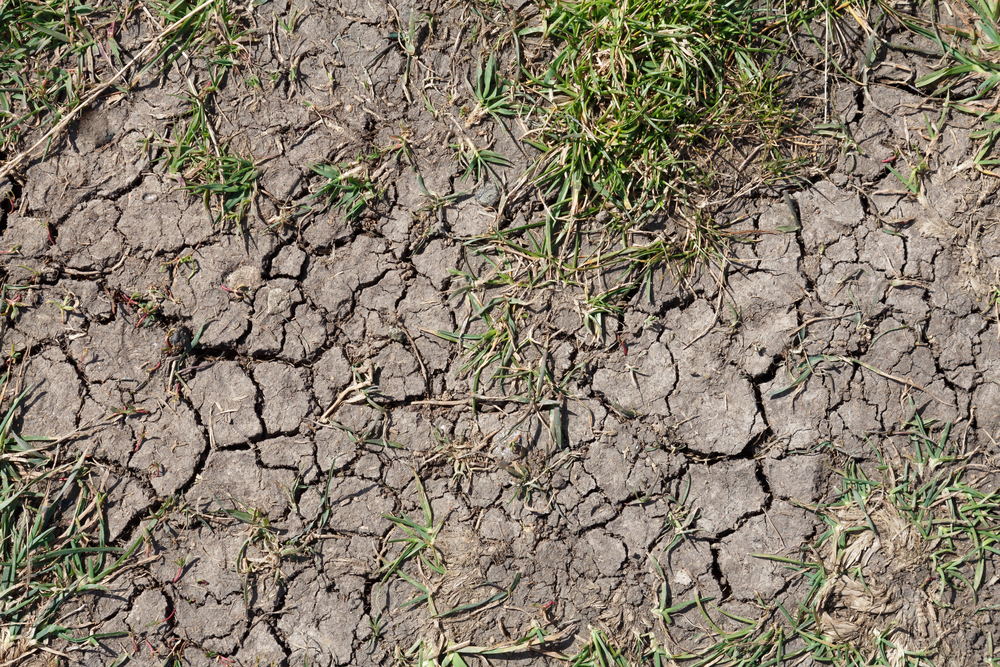
You water a dry patch of lawn, or a summer shower passes over, and instead of soaking in the water sits on top in little beads or runs off to the edges. Underneath, the soil stays dust dry no matter how much you pour on. That is hydrophobic soil, and it is the reason some brown patches refuse to recover however much you water them. The fix is not more water, which just runs off again, but breaking the waxy barrier that is repelling it, and a wetting agent does that in a matter of hours.
Water repellent soil is far more common than most gardeners realise, especially on sandy ground, in thatch heavy lawns, and after a long dry spell has baked the surface hard. It shows up as patches that stay yellow brown and crispy while the rest of the lawn is green, and it quietly wastes every drop you apply. Once you understand why soil turns water repellent, the cure and the prevention both make sense.
Why Soil Starts Repelling Water
Soil turns hydrophobic when its particles become coated in waxes and oils. These come from natural sources: decomposing organic matter, the waxy substances plant roots release, and the residue left by fungal threads in the soil. Over time, and especially in sandy soils where plants produce a lot of root material, these waxes build up as a thin coating around each particle. While the soil stays moist the coating causes little trouble, but once it dries out fully, in a drought or under a thick thatch layer that stops rain reaching the ground, the waxy film sets hard and turns each particle water repellent.
The beading you see is basic physics. Water molecules cling to each other through surface tension, which is why water pulls itself into rounded droplets on a waxy surface like a polished car bonnet. When the soil surface is coated in wax, the water cannot wet it and spread into the pores, so that same surface tension holds the water in beads that sit on top or roll away to lower ground. The soil is behaving like a raincoat, shedding water instead of absorbing it, and the root zone below stays parched even after heavy rain.
This patchy, water shedding damage has a name among greenkeepers: localised dry spot, often shortened to LDS. It appears as scattered yellow brown patches that look for all the world like ordinary drought stress, which is why so many people respond by watering harder and get nowhere. If you have dry patches that never green up no matter how much you water, hydrophobic soil is the most likely explanation, and there is a simple test to confirm it.
How to Confirm It and Fix It Fast
The test takes seconds. Pour a small cup of water onto a suspect patch and watch. On healthy soil it soaks in within a few seconds. On hydrophobic soil it beads and sits on the surface, often for a minute or more, before slowly and unevenly disappearing. For a second check, cut out a small plug of turf with a trowel and look at the soil profile. If the surface and the top few centimetres are bone dry and dusty while you have been watering regularly, the water has been running off rather than soaking in, and you have your answer.
The direct fix is a wetting agent, also sold as a soil wetter or soil surfactant. It works like a mild detergent. Each wetting agent molecule has two ends, one that is attracted to water and one that is attracted to oils and waxes. When you apply it, the wax loving end grips the waxy coating on the soil particles and the water loving end pulls water in, breaking the barrier so moisture can spread through the soil again. Most quality wetting agents start working on contact and show visible improvement in water penetration within hours, and a mildly hydrophobic patch can be fully rewetted within 24 to 48 hours. A litre of concentrated lawn wetting agent costs around £10 to £15 (about $13 to $19) and treats several hundred square metres, and it is stocked at garden centres, B&Q, Amazon and specialist turf suppliers.
Apply the wetting agent to the affected area at the rate on the label, then water it in gently so it carries down into the root zone. For a stubborn, deeply dry patch, spike the area first with a garden fork to a depth of around 10cm (4 inches), rocking the fork to open the holes, so the wetting agent and water have channels to run down rather than sheeting off the hard surface. A watering can with a fine rose, or a hose end applicator, spreads it evenly. For a small emergency treatment, a few drops of ordinary washing up liquid in a full watering can act as a mild surfactant and will get you started, though a proper lawn wetting agent is gentler on the grass and lasts longer.
Change how you water while you are at it. Instead of one long blast that beads and runs off, use the cycle and soak method: water for a short burst, stop and let it soak in for 15 to 30 minutes, then water again, repeating until the soil is wet through. Breaking the watering into pulses gives the surface time to accept each dose rather than shedding it, and it is the single most effective change you can make on repellent ground.
Stopping It Coming Back
A wetting agent is a rescue, not a permanent cure. The waxy coatings rebuild over time, so on a lawn that is prone to it you will need to reapply every few weeks through the growing season, and the beading returns if you stop. To reduce how often you need it, tackle the underlying causes. A thick thatch layer, the mat of dead stems and roots between the green grass and the soil, is a major culprit, because it holds water off the ground and dries into a repellent sponge of its own. Scarifying in autumn to remove excess thatch lets water reach the soil again and cuts the problem at its root.
Aeration helps for the same reason. Hollow tine aerating in autumn, pulling small cores of soil out of the lawn, opens channels for water to enter and relieves the compaction that stops it soaking in. Following aeration with a light topdressing of a sandy loam and a little organic matter improves the soil structure over time so it holds moisture more evenly. Keeping the lawn from ever baking bone dry also helps, because soil that stays lightly moist is far slower to turn repellent than soil that dries out completely, so steady watering through a drought does more than rescue the grass, it keeps the ground receptive to water in the first place.
Get the underlying soil and thatch right and the repellent patches become rare rather than a yearly battle. Leave the thatch thick and the soil to bake, and you will be reaching for the wetting agent again and again.
The Takeaway When Water Beads Up
When a patch of lawn sheds water instead of drinking it, stop pouring on more and change your approach. Confirm the problem with the cup test, break the waxy barrier with a wetting agent watered into forked holes, and switch to cycle and soak watering so the ground can accept moisture again. Then deal with the causes over the autumn by scarifying out thatch and aerating to open the soil. Do that and the beads stop forming, the dry patches green up, and every drop you water finally reaches the roots instead of running away.