
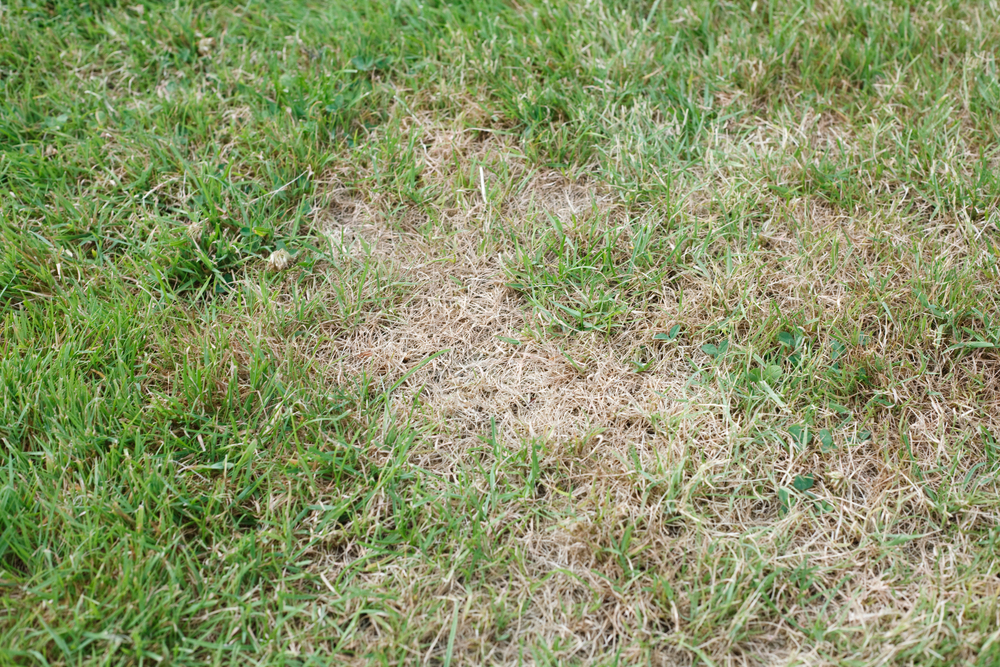
A steel blue tint spreading across your grass is the first thing to read on a hot week, and it shows up days before any brown appears. Catch it here and the lawn recovers in a day or two. Miss it, and the same patch slides into dormancy that takes weeks to reverse. The colour shift is a distress signal from the plant, and once you know what it means you can water at the exact moment it does the most good rather than guessing.
What the Blue-Grey Colour Actually Is
Healthy grass blades stand upright and reflect light evenly, which is what gives a well-watered lawn its bright green look. Each blade holds its shape through turgor pressure, the internal water pressure that pushes plant cells firm against their walls. When soil moisture drops, the plant loses more water through its leaves than the roots can pull up, and turgor pressure falls. The blades lose rigidity and start to fold or roll inward along their length. That folding exposes more of the dull, waxy underside of the leaf and less of the glossy upper surface, so the whole lawn takes on a greyish, bluish cast almost overnight.
The rolling is not damage. It is a defence. By curling, the blade cuts the surface area it exposes to sun and wind, which slows the rate it loses moisture through the tiny pores called stomata. A rolled blade can lose far less water than a flat one, so the plant buys itself time. The colour you see is the visible side effect of that survival move. At this point the roots are still alive and drawing what little water they can find, which is exactly why the window to act is so short and so valuable.
Cool-season grasses such as ryegrass, fescue and bentgrass show this blue-grey stage clearly. The tint usually appears first on the parts of the lawn that dry fastest: south-facing slopes, strips along paths and driveways where reflected heat adds up, and thin areas over compacted soil where roots sit shallow. Reading the map of where the colour shows first tells you which parts of your lawn have the weakest root systems and need the most attention over the rest of summer.
\nThe Footprint Test and How Fast You Must Act
The colour change works alongside a second test that removes all doubt. Walk across the lawn and look back at your tracks. On a healthy lawn the blades spring straight back up and your footprints vanish in seconds. On a drought-stressed lawn the blades have lost the turgor pressure that lets them rebound, so the flattened prints stay pressed into the grass for minutes or longer. Groundskeepers call this footprinting or wilt, and it is one of the oldest and most reliable ways to judge when turf needs water.
When both signs show together, the grey tint and the lingering footprints, you have roughly one to two days to get water down before the lawn tips from wilt into true dormancy. In the wilt stage the roots are working and a good soaking brings the green back fast. Once the plant gives up the leaves and browns off to protect the crown, recovery runs to weeks rather than days, and thin patches open up where weeds move in. The whole point of learning the blue-grey signal is to act inside that short window instead of waiting for the brown that tells you it is already too late.
How to Water Once You See the Warning
Water deeply and rarely, not lightly and often. The aim of a single session is to wet the soil to about 15cm (6 inches), which pulls roots downward and builds the drought tolerance that gets a lawn through the rest of a dry spell. That works out at roughly 2.5cm (1 inch) of water across the surface in one go. To measure it, stand a few empty tuna or cat-food tins on the grass while the sprinkler runs and stop when they hold an inch. Most sprinklers take 45 minutes to an hour to deliver that, though yours will differ, so the tins take the guesswork out.
On hard or sandy ground the water can run off or drain past the roots before it soaks in. Split the session using the cycle and soak method: run the sprinkler for 15 minutes, let it sink in for half an hour, then run it again, repeating until the tins fill. Water in the early morning, before around 9am, when less evaporates and the blades dry through the day, which keeps disease down. If your soil has turned water-repellent and droplets bead on the surface, a wetting agent helps the water penetrate. A1 Lawn Hydrate Plus (around £16/$20 for a 1L bottle treating up to 500m2) or a similar surfactant from B&Q, Amazon or a garden centre breaks the surface tension so water reaches the roots instead of rolling off. A basic soil moisture meter (around £10/$13) confirms whether the water actually got down to root depth.
Soil type changes how quickly the blue-grey stage arrives and how much warning it gives you. Sandy soils drain fast and hold little water, so they flip from green to grey within a day or two of the last rain, which leaves almost no lead time and calls for more frequent soaking. Clay soils hold water far longer, so a clay lawn resists the colour change for a week or more, but once it dries it bakes hard and refuses to take water back in without help. Loam sits in the middle. Knowing which you have tells you how closely to watch: sand needs daily eyes on it in a hot spell, clay needs a soak before it sets like brick.
Read the pattern of where the tint shows, too, as it maps your lawn’s weak spots. Grass over buried rubble, along the edges of paths, and above tree roots that steal moisture will grey first every time. Those areas tell you where to aerate in autumn and where an extra few minutes of watering pays off now. Treat that map as a to-do list for the cooler months rather than a problem to solve in the heat.
Mistakes That Turn a Recoverable Lawn Brown
The most common error is a light daily sprinkle. Little and often wets only the top 2 to 3cm, so roots stay shallow and the lawn wilts again the moment you skip a day. Deep, infrequent soaking does the opposite and trains roots to reach for moisture lower down. The second mistake is cutting too short in the heat. Short grass has less leaf to shade the soil and a smaller root system to match, so a scalped lawn browns first. Raise the mower to 4 to 5cm (about 1.5 to 2 inches) through summer and never remove more than a third of the blade in one cut.
Feeding is the third trap. A nitrogen feed pushes soft leafy growth the plant cannot support when water is short, and the salts in granular fertiliser pull moisture out of roots in dry soil, which scorches the grass brown in streaks. Hold off feeding until the weather breaks and growth returns. Finally, keep off a wilted lawn as much as you can. Blades that have lost turgor pressure snap and crush under foot rather than bending, so a stressed lawn that doubles as a football pitch or a shortcut wears into bare tracks that take the whole autumn to knit back together. Read the blue-grey warning, water it deep and early, and most lawns walk back from the edge without ever going brown.