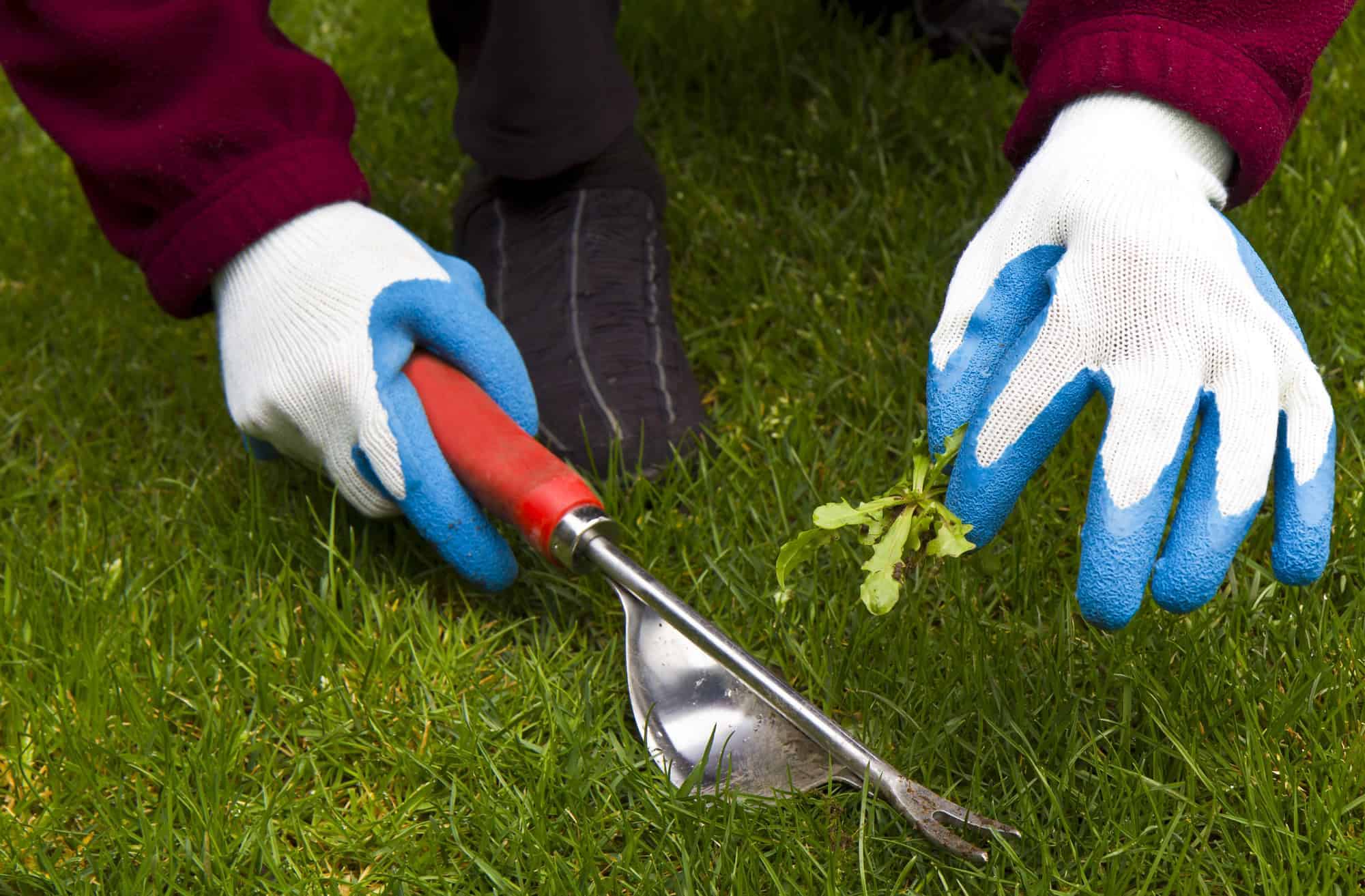
A lawn that has filled with weeds is not really a weed problem. It is a grass problem wearing a disguise. Weeds move in where the turf has thinned, where the soil has hardened underfoot, where the mower has been set too low and the grass has been left hungry. Clear the weeds without fixing what let them in, and they return within a season. The reliable fix is to rebuild thick, dense grass that leaves a weed seed nowhere to land. Late summer is the moment to start that work, so the ground is prepared and new grass can go down as the peak heat breaks and cooler, damper conditions arrive.
Weeds Are a Symptom, Not the Disease
Before you reach for a spray, look down at what the weeds are telling you. Different weeds thrive in different failings, which is why turf specialists call them indicator weeds. Dandelions, plantain and knotweed point to compacted ground. Moss, sorrel and buttercup point to wet, shaded or acidic soil. Clover and speedwell signal grass that is short of nitrogen. Read the pattern and you diagnose the underlying fault rather than just the surface mess.
Jon Trappe, a turfgrass extension educator at the University of Minnesota, puts it plainly: “Most weeds that encroach into lawns can be an indication of some underlying problem. We sometimes refer to these weeds as indicator weeds. In some cases, these problems and the weeds that they cause can be addressed through how the lawn is managed.”
The single most common fault is cutting too short. Scalped grass has a shallow root system and a thin canopy, and that thin canopy lets sunlight reach the soil surface where thousands of dormant weed seeds are waiting. Light is the trigger. Albert Adjesiwor, an assistant professor and extension specialist at the University of Idaho, explains the mechanism: “Mowing too short opens up the canopy for weeds to come up. Most weed seeds are light-sensitive, meaning that once they are exposed to direct sunlight, they get a cue that there’s not much competition and it’s a good time to come up.” Compaction, thin feeding and poor drainage all work the same way in the end, by weakening the grass until bare ground opens up and the seedbank wakes.
Identify What You Are Actually Dealing With
Weed treatments are built to target specific plant families, so a product that clears one group can leave another untouched. Start by sorting your weeds into three broad shapes. Broadleaf weeds have wide, flat leaves and include clover, dandelions, chickweed and ground ivy. Grass-like weeds, chiefly the sedges such as nutsedge and wild garlic, have hollow, three-sided leaves that feel triangular if you roll them between finger and thumb. Grassy weeds resemble your lawn but grow one blade at a time, and cover crabgrass, annual meadow grass, foxtail and quackgrass.
Life cycle changes the plan too. Annual weeds set seed in a single season, so timing a treatment before they seed breaks the cycle. Perennials such as dandelion and dock return from a deep taproot year after year and need the root killed, not just the top growth. Get the identification right at this stage and every step that follows becomes simpler.
Choose and Apply the Right Treatment
Once your lawn is already full of weeds, a pre-emergent product is no use, as those work only on seeds before they sprout. You need a post-emergent treatment. Where there is still decent grass worth saving, a selective lawn weedkiller kills broadleaf weeds while leaving the grass standing. Weedol Lawn Weedkiller concentrate runs about 20 pounds or 26 dollars for a bottle that treats a large lawn, and Resolva Lawn Weedkiller Extra ready to use is around 8 pounds or 10 dollars for spot work. Roundup for Lawns, a selective formula rather than the familiar total killer, sits near 15 pounds or 19 dollars.
Where the lawn is more weed than grass, a non-selective glyphosate product clears the whole plot for a fresh start, at roughly 15 pounds or 19 dollars for a concentrate. That is a drastic step, and worth it only when the grass is beyond rescue or you want to switch to a different turf type. For a stubborn weed sitting right beside a plant you want to keep, Roger Cook of This Old House uses a precise trick: “I like to cut the weed down to the ground and, as soon as it leafs out again, paint the chemical onto the leaves using a foam brush.” Painting the leaf puts the chemical exactly where you want it and nowhere else.
Read the label to the letter, check the forecast so rain does not wash the product off before it works, and match the product to your weeds. Corey Ransom, an associate professor at Utah State University, advises leaning on local knowledge: “Homeowners should seek out local expertise for herbicide recommendations for weed control in lawns. This will ensure that the herbicides selected are effective for controlling the weeds that are most problematic for each specific situation.” Then wait. How long depends on the product, and some carry a residual that blocks new seed for weeks. Hannah Wright-Smith, an extension weed specialist at the University of Arkansas, warns: “Some herbicides have residual activity, meaning they can be active for an extended period of time, while others do not, and seeds can be planted immediately after application. It is important to read the label on the product used and follow the instructions for seeding.” Expect a wait of up to four weeks for the roots to die fully.
Rebuild the Soil Before You Sow a Single Seed
When the weeds and any dead grass have browned off, mow as low as the machine will go, then rake hard to lift the debris. Pull stubborn roots with a fork. This clears the way and starts breaking the thatch, the spongy layer of dead stems between soil and living grass. A thin thatch layer helps insulate roots, but once it passes about 12 millimetres or half an inch it blocks water and invites rot, so take it down with a spring-tine rake or scarifier if it has built up.
Now deal with the compaction that let the weeds in. Pushing a hollow-tine fork, around 25 pounds or 32 dollars, into the ground and rocking it opens channels for air, water and roots. A hired core aerator, about 90 to 120 pounds or 115 to 155 dollars for a day, does the same across a bigger plot in far less time. Leave the little soil cores on the surface to crumble back down. This is also the moment for a soil test. A home kit such as a Luster Leaf Rapitest costs around 18 pounds or 19 dollars, while a full laboratory analysis through a garden society runs closer to 35 pounds or 45 dollars. A test reveals whether low pH or a nutrient shortage has been quietly favouring the weeds. If the reading is acidic, garden lime at about 10 pounds or 13 dollars a bag lifts the pH; if it is short of organic matter, work in compost before you sow.
Reseed and Water for Deep Roots
Timing is everything here. In cooler, northern climates the strong window for sowing lawn grass is early autumn, when the soil still holds summer warmth but the air has cooled and rain returns. That is why late summer suits the clearing and soil work, with seed going down as the heat breaks. Choose a grass suited to your conditions, a hard-wearing ryegrass and fescue blend for a family lawn, a fine fescue for shade, and firm the soil before sowing. Johnsons Quick Lawn seed costs about 15 pounds or 19 dollars.
Set a broadcast spreader, around 40 pounds or 55 dollars, to half the stated rate and sow in two passes at right angles for even cover, using a small drop spreader near borders so seed does not scatter into beds. Aim for roughly 25 to 35 grams per square metre when overseeding thin turf, heavier on bare ground. Rake the seed in lightly, top with no more than 6 millimetres or a quarter inch of dressing, and if your area permits it, use a starter feed higher in phosphorus, sold as a new-lawn or starter fertiliser at about 20 pounds or 25 dollars, as phosphorus drives early root growth. Then water deep and steady. Wright-Smith sets the target: “Most grasses need 1 to 1.25 inches of water per week, and while we can’t control the weather, we can make sure we aren’t over or underwatering when we irrigate.” That is around 25 to 32 millimetres, best split across two morning soakings rather than a daily sprinkle, so roots chase moisture downward and grow deep enough to outcompete any weed.
Keep the Lawn Too Thick for Weeds to Return
All that effort holds only if the grass stays dense. The rule that decides it is mowing height. Cut at the highest or second-highest setting on the mower, never scalping, so the canopy shades the soil and keeps light off the seedbank. John Kaminski, a professor of turfgrass science at Penn State, sums up the whole strategy: “Maintaining a healthy, dense lawn is the best long-term strategy for weed prevention. Mow at the proper height for your grass species to keep the turf strong and resilient.”
Back that up with deep, infrequent watering of 25 to 38 millimetres or 1 to 1.5 inches a week, aeration once a year to stop compaction creeping back, and a balanced feed matched to your grass so it never runs hungry. A pre-emergent applied in early spring stops the next generation of weed seeds germinating, and overseeding any thin patch the moment it appears keeps the door shut. Reclaiming a weedy lawn is real work, but the grass that grows back from it is the best weed control you will ever own.