Pinkish-red threads webbing through pale brown patches of grass are the clearest sign of red thread, one of the most common lawn diseases in cooler, damp climates. It shows up most in wet summers and through the heavy dews of early autumn, which puts late July squarely inside its window. The good news is that red thread looks worse than it is. The fungus behind it, Laetisaria fuciformis, attacks only the leaf tissue and leaves the roots untouched, so the grass recovers. Feeding the lawn and improving air movement through the turf clears it, and no home fungicide is needed or even sold for the job.
How to Spot Red Thread on Your Lawn
The first sign is a reddish tinge across small areas of grass. Within days those areas fade to light brown, then to an almost bleached straw colour. Patches run from about 7.5cm (3in) to 25cm (10in) across, though several can merge into one larger affected zone. Look closely, ideally with a hand lens, and you can pick out two kinds of fungal growth on the leaves, both easier to see when the grass is wet or the air is humid. The first is a small, pink, cotton-wool-like growth that can be mistaken for the fungus behind snow mould. The second is the one that names the disease: pinkish-red, gelatinous threads, called stromata, one to two millimetres (under a quarter of an inch) long, that grow from the leaf tips and can bind blades together.
Some grasses suffer more than others. Red fescue (Festuca rubra) is hit hardest, with other fescues, bent grasses (Agrostis species), perennial ryegrass (Lolium perenne) and annual meadow grass (Poa annua) also open to attack. Most garden lawns are sown with a mix of these grasses, which is why red thread turns up so readily on ordinary turf rather than only on fine ornamental swards. It also helps to rule out the look-alikes. Dry patch leaves the soil water-repellent and the grass parched even in wet weather, snow mould shows the pink cottony growth without the tell-tale red threads, and rust coats the leaves in a yellow-orange dust. The red, thread-like stromata are what confirm red thread rather than any of these.
Why Red Thread Takes Hold When It Does
Red thread needs one thing above all: long spells of leaf wetness. The spores spread on wind and water, and on shoes and tools carried across the grass, but they can only infect a leaf that stays damp long enough for the fungus to enter. That is why wet summers and dew-soaked autumn mornings bring it out, while dry weather holds it back.
The second trigger is low nitrogen. Red thread settles on hungry, slow-growing turf. When grass is short of nitrogen it cannot push out fresh leaf fast enough to grow past the infected tips, so the fungus gains ground. Poor aeration makes it worse, as compacted, thatch-choked turf stays damp and airless at the base. On light, free-draining soils the problem compounds, as heavy rain washes nitrogen down below the root zone and leaves the grass hungry even after a feed.
There is a reassuring side to the biology. The fungus does not touch the roots, so affected grass is not dying at the crown. Recovery often begins within a few days to a few weeks once conditions improve, sometimes with no action at all. The threads can survive on dead leaf debris and in the soil for up to two years, though, so clearing the trigger conditions still pays off well beyond this season.
Feed the Lawn to Push the Disease Out
The single most effective response is nitrogen. A feed drives fresh leaf growth, letting the grass outpace the fungus and grow clean new tissue above the infected tips. The RHS recommends sulphate of ammonia at 15g per square metre (about half an ounce per square yard), watered in if no rain is forecast.
Timing carries a catch. Stop feeding nitrogen after the end of August. Late feeding forces soft, sappy growth going into autumn, and that soft growth is exactly what snow mould, another patch disease, feeds on through winter. A nitrogen feed now, easing off as summer ends, gets the timing right and treats one disease without setting up the next.
Straight sulphate of ammonia is cheap and fast-acting. A 1.5kg tub runs about £8 ($10), while larger 5kg to 25kg sacks bring the cost per application down further, roughly £20 ($26) for a 5kg tub. It carries around 21 percent nitrogen plus sulphur, and it acidifies the soil slightly over time, which suits most lawn grasses. Spread it evenly and lightly, as a concentrated dose can scorch the grass it is meant to save. If you would rather use a balanced summer lawn feed, pick one with nitrogen as the lead nutrient, such as a 20-plus nitrogen granular feed, and follow the box rate to the gram.
Open Up the Turf So It Dries Faster
Feeding tackles the hunger; aeration tackles the damp. Both problems drive the disease, so clearing them together gives the fastest and most lasting result.
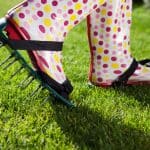
Scarifying is the first job. Dragging a spring-tine lawn rake through the grass, or running an electric scarifier over it, pulls out the layer of dead thatch and moss that traps moisture at the base of the sward. A powered scarifier costs about £70 to £120 ($90 to $155) to buy, or roughly £30 ($40) a day to hire, and it does in an hour what hours of hand-raking would. Thinning the thatch lets air reach the crowns and lets the surface dry between wet spells, which breaks the leaf-wetness cycle the fungus depends on.
Next comes aeration for compaction. Pushing a garden fork 10 to 15cm (4 to 6in) into the turf every 15cm or so, then easing it back to open the holes, relieves the compaction that keeps water sitting in the root zone. On heavier ground a hollow-tine aerator, which pulls out plugs of soil rather than just slitting it, gives longer relief. Hollow-tine hand tools cost around £25 to £35 ($32 to $45); powered or towed aerators can be hired for larger lawns.
One more habit helps. Collect and bin the clippings from an affected lawn rather than composting them or leaving them on the surface. The clippings carry live fungus, and taking them away cuts the amount of disease left to reinfect the grass next time the leaves stay wet.
How Long Recovery Takes, and What to Avoid
Once the lawn is fed and opened up, patience does the rest. Grass usually greens back over within a few days to a few weeks as the fresh growth masks the bleached tips. Keep mowing on a regular cycle through this period, and raise the cut height a little, as slightly longer grass shrugs off stress better and dries faster after rain. Mow with a sharp blade too, as a clean cut heals quickly while a torn tip gives the same fungus an easy way back in.
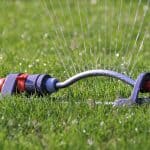
Watering habits make a difference. If you water at all in dry spells, do it early in the morning so the surface dries through the day, rather than in the evening when the grass sits wet overnight and hands the fungus the long leaf-wetness it needs. Brushing off heavy dew with a besom or a length of hose on autumn mornings works on the same principle, cutting the hours the leaves stay damp.
For a lawn that catches red thread year after year, there is a longer fix the RHS points to: grass choice. Overseeding thin, prone areas in early autumn with a modern ryegrass or fescue mix bred for disease resistance builds turf that shrugs the fungus off in the first place. Sow into a scarified, aerated surface as the peak summer heat breaks, and the new seedlings knit in before winter.
Skip the fungicide hunt. No fungicides are sold to home gardeners for lawn disease, so the shelf products that promise a cure are not antifungal treatments. Some professional lawn-care firms can apply trade fungicides, though strict rules govern their use on domestic gardens, and for a disease that clears with feeding and aeration the cost rarely stacks up.
Red thread is a signal, not a disaster. The pink threads are the lawn telling you it is hungry and sitting too wet. Feed it with a nitrogen-led fertiliser at the RHS rate, ease that feed off by the end of August, scarify out the thatch, spike the compaction and bin the clippings from affected areas. Do that and the patches fade on their own, and the same routine keeps the disease from settling back in the next wet spell.