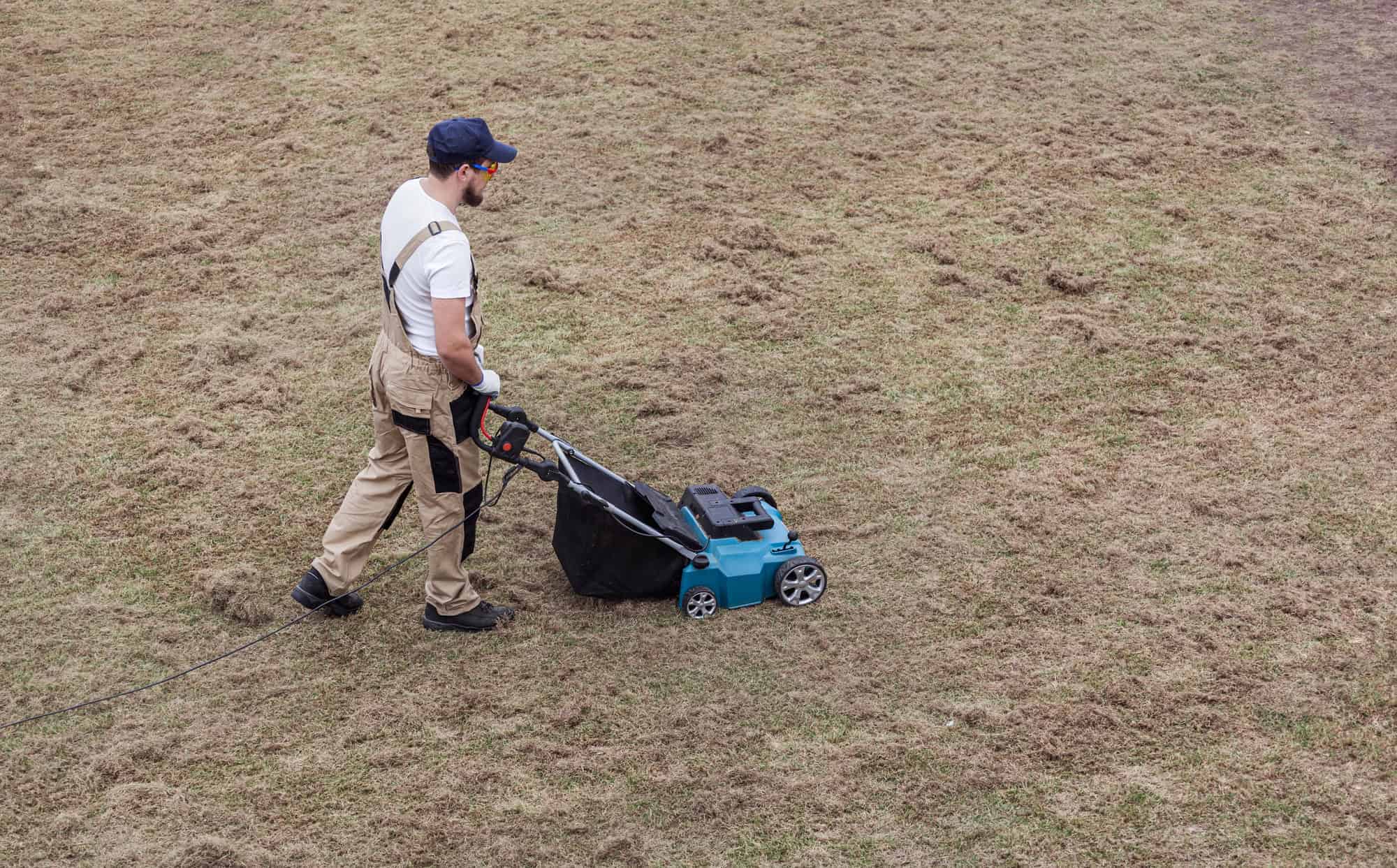
The weeks after peak summer give you the best chance of the year to reset a tired lawn. Hot spells, foot traffic and drought leave grass thin, patchy and full of dead material, and the mild damp spell of early autumn is when it recovers fastest. Three jobs do most of the work: raking out the thatch that has built up at the base of the grass, spiking the soil to break up compaction, and brushing in a light top dressing. Done in the right order over a weekend, they set the lawn up to green up strongly the following spring rather than limp into winter.
What Thatch Is and Why It Builds Up
Thatch is the brown, spongy layer of living and dead material that sits between the green blades and the soil surface. It is made of old grass stems, roots, runners and clippings that break down more slowly than the soil can absorb them. A thin layer of around 6mm (a quarter inch) is healthy and protects the crown of the grass. Once it passes about 1cm (half an inch), it starts to work against you.
A thick thatch layer acts like a sponge on top of the soil. Rain and feed sit in it instead of soaking through to the roots, so water runs off in heavy showers and the grass roots stay shallow and dependent on frequent watering. That same trapped moisture keeps the leaf bases damp for hours, which is the exact condition fungal diseases such as red thread and fusarium patch need to take hold. The RHS gives a simple test: if you cannot see the soil between the blades of grass, the lawn will benefit from scarifying.
How to Scarify Out the Thatch
Scarifying means raking the lawn hard enough to tear the thatch and moss up out of the base of the sward. On a small lawn a spring-tined rake does the job. These cost around £8 to £15 ($10 to $19) from Wickes, B&Q, Home Depot or Amazon. Drag it through the grass under firm pressure, working first in one direction and then across it at right angles, so the tines catch material the first pass missed. You are aiming to pull out the loose debris without ripping healthy grass out by the roots.
On anything larger than a small back garden, hand raking becomes hard work fast, and a powered scarifier earns its keep. These run from about £70 to £150 ($90 to $190) to buy, or roughly £30 to £40 ($40 to $50) a day to hire from a tool depot. A powered machine uses vertical blades that slice down into the sward and lift the mat out cleanly. Set the blades shallow on the first pass and drop them lower only if the lawn is heavily matted. Rake up everything you pull out and add it to the compost heap. The lawn will look thin and scruffy straight afterwards, which puts a lot of people off, but the cutting also nicks the grass runners and triggers fresh side shoots, so the sward grows back denser than before.
Aerating to Relieve Compaction
Once the thatch is gone, the next job tackles the soil underneath. A summer of footfall and dry weather packs the ground down, squeezing out the air pockets that grass roots rely on. Roots breathe through those pockets, and without oxygen they cannot draw up water and nutrients properly, so a compacted lawn stays weak even when you feed and water it. Compaction also stops rain draining, which is why puddles linger on a well-used lawn after the first autumn downpours.
The simplest fix is a garden fork, around £20 to £30 ($25 to $38). Push it in to the full depth of the tines and rock it to and fro to open the holes, spacing each set about 10 to 15cm (4 to 6in) apart. On a large lawn, spike only the worn and compacted areas rather than trying to cover the lot. For most lawns this is worth doing every two to three years. On heavy clay or ground that waterlogs, a hollow-tine aerator does more. The hollow tines, sold as hand tools from about £25 to £35 ($32 to $45), pull out plugs of soil rather than just pushing the sides apart, which relieves compaction far more effectively. Sweep up the cores, then rake in a top dressing.
Brushing In a Top Dressing
Top dressing is the step that turns aeration into a lasting improvement. Working a gritty soil mix into the holes keeps them open, feeds structure into heavy ground and levels out the small dips and bumps that make mowing uneven. You can buy ready-made lawn top dressing for around £10 to £15 ($13 to $19) a 25kg bag, or mix your own from three parts sandy loam, six parts sharp sand and one part well-rotted compost. Sharp sand, the washed gritty type sold for gardening rather than builders’ sand, costs around £5 ($6) a bag.
Spread the mix at roughly 2 to 3kg per square metre (about 4 to 7lb per 10 square feet), which works out at around a shovelful at a time. Work it into the holes and across the surface with the back of a rake or a stiff broom until the grass blades stand clear of it. The dressing should mostly vanish into the sward within a day or two. If a lot sits on top, you have applied too much and should ease off; if it disappears at once, the soil will take a little more. Never bury the grass under a thick layer, as smothered blades yellow and thin.
Feeding and Reseeding to Finish
Most lawns recover from summer without any feed and green up again on their own. If yours looks clearly starved, reach for a feed sold specifically for autumn use, such as Miracle-Gro EverGreen Autumn Lawn Care, priced around £10 to £16 ($13 to $20) a box. The reason the season of the feed changes is the balance of nutrients. Spring and summer feeds are high in nitrogen to push leafy top growth, and that soft growth is exactly what you do not want heading into frost, as it flops and invites snow mould. Autumn feeds are low in nitrogen and higher in potassium, which stiffens the cell walls, hardens the grass against cold and drives root growth through the winter. Scatter it at the rate on the pack, about a handful per square metre, just before rain is forecast, or water it in if the rain does not come.
Scarifying always opens up bare patches, and early autumn is the ideal time to reseed them while the soil is still warm. Loosen each bare area with a rake, sow a hard-wearing ryegrass and fescue mix at 25 to 35g per square metre (around 1oz per square yard), then rake lightly and keep it damp. A 1kg box of good seed runs about £10 to £20 ($13 to $25). Warm soil under cooling air is the germination sweet spot, so seed sown now roots in fast, well before the first frosts.
Getting the Timing Right
The whole sequence hinges on soil temperature rather than the calendar. Grass roots keep growing while the soil stays above about 5 to 6°C (41 to 43°F), and seed germinates reliably once it holds above 8 to 10°C (46 to 50°F). In cooler northern regions the ground cools sooner, so the window to scarify, aerate and reseed opens as the peak summer heat breaks and closes through mid to late autumn. Get the work done while the soil is still warm and moist and the lawn knits back together in weeks. Leave it too late and cold, wet ground stalls recovery, so the bare patches you opened up sit exposed all winter and fill with moss and weeds instead of grass.
Mow the lawn a day or two before you start so the grass is short enough to rake through, and tackle the jobs in order: scarify, aerate, top dress, then feed and reseed. None of them has to be done every single year, so if time is short, pick the one your lawn needs most. A lawn you cannot see the soil through needs scarifying; a lawn that puddles or feels rock hard needs aerating. Reset the ground now and next year’s growth does the rest.