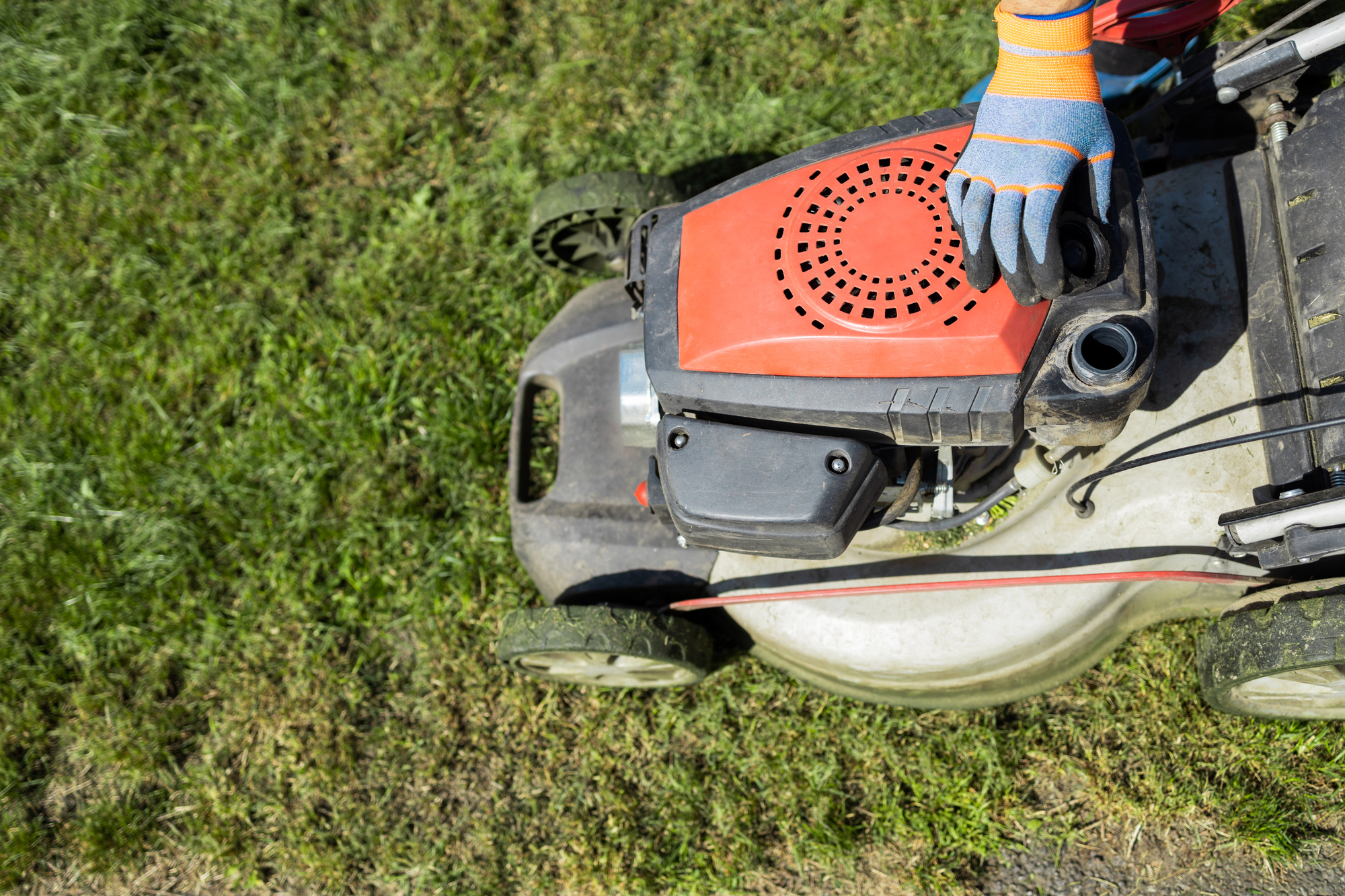
A mower that started first pull in June can refuse to fire after sitting through a dry summer, and stale petrol is usually the reason. Grass stops growing in a drought, the mower goes untouched for weeks, and the fuel left in the tank quietly goes off. Modern petrol degrades faster than most people expect, and the small engine on a mower is the worst kind of victim. A cheap bottle of fuel stabiliser, added to fresh petrol before a spell of storage, keeps the fuel burnable and the carburettor clean. Here is how it works and how to use it properly.
Why Petrol Goes Off in a Mower
Petrol and diesel are perishable. Left standing for more than about three months, fuel starts to lose the qualities that let it ignite cleanly. Two things drive that decline. The light, volatile parts of the petrol evaporate, leaving behind heavier fractions that do not vaporise or ignite well, so the engine cranks and refuses to catch. At the same time the fuel oxidises, and that reaction leaves gummy, varnish-like deposits in the fuel system.
Standard petrol makes this worse. E10, the common grade, contains up to 10 percent ethanol, and ethanol is hygroscopic, meaning it pulls moisture straight out of the air. Water builds up in the tank, and once enough collects the mix can split apart, a process called phase separation. A layer of water and ethanol settles at the bottom of the tank, which is exactly where the carburettor draws its fuel. That watery layer will not burn and it corrodes metal on contact.
Small engines suffer far more than a car. The passages and jets inside a mower carburettor are a fraction of a millimetre wide, so it takes very little gum or varnish to block them. The fuel system is vented rather than sealed, so air and moisture reach the fuel freely, and the machine typically sits unused for long stretches. Fail to protect the fuel and the result is poor running or, at worst, an engine that will not start at all after a few months. As Chris “Moose” Pyle, an automotive expert with JustAnswer, puts it, older fuel still burns but “newer fuel will burn cleaner and easier, ignite better and leave behind less varnish and carbon.”
What a Fuel Stabiliser Is and Whether It Works
A fuel stabiliser is a chemical additive that preserves the quality of petrol or diesel through a spell of storage. Poured into the tank, it slows the oxidation that forms gum and varnish, helps hold back water accumulation, and lets older fuel keep burning acceptably until the next fill. Good ones keep fuel usable for up to two years in store, and the better small-engine formulas add protection against the corrosion and phase separation that ethanol brings.
It is not a miracle in a bottle, and it helps to be clear about that. “Know that this is not a miracle additive,” Pyle says. “It only helps slow the aging process and it will only provide a couple more months. Fuel that is three or 30 or 300 days old will burn, but newer fuel will burn cleaner and easier, ignite better and leave behind less varnish and carbon.” The lesson is that a stabiliser buys time and protects the fuel system, but the fresher the petrol you start with, the better it performs.
How to Use It on a Mower
The trick that catches people out is adding stabiliser to old, tired fuel and expecting it to revive. It cannot. The additive protects fresh fuel, so it works best poured in when you fill up. “Adding the stabilizer to fresh fuel ensures maximum effectiveness in preserving fuel quality,” says Xavier Sabastian, an automotive expert with Way.com. Work through it like this:
- Start with a cold engine, outdoors or in a well-ventilated space, with no naked flame nearby. Keep any petrol you store in an approved can.
- Measure the dose from the bottle. The quantities are small: a tablespoon or two treats a full mower tank, and one small bottle covers many refills.
- Add the stabiliser to a tank that is less than full, then top up with fresh petrol so the additive mixes through.
- Start the engine and let it run for about 10 minutes. This pulls the treated fuel through the carburettor and coats the internal passages, which is what stops gum forming in the jets while the machine sits.
- If you are storing petrol in a can rather than the mower, add the dose to the empty can first, then pour the fuel in and seal the cap.
One extra choice helps stored equipment. Super unleaded is often sold as E5, with only 5 percent ethanol, and it stays stable longer than E10, so buying a tank of super for the mower’s last fills of the season is a small, sensible edge. For long layups, ethanol-free alkylate petrol, sold in 5-litre cans for around £25 to £30 ($32 to $38), sidesteps the ethanol problem entirely.
Which Product and How Long It Lasts
Fuel stabilisers suit all grades of petrol, including ethanol blends, and there are versions for two-stroke engines as well. Some are petrol-only or diesel-only and some are dual purpose, so read the label before you buy. Two names cover most mowers:
- STA-BIL Storage E10 is the one most often recommended for small engines. A 236 to 250ml bottle costs about £10 to £13 ($12 to $16), treats a large volume of fuel, and is formulated to protect against gum, varnish, corrosion and phase separation in ethanol fuel, with fuel preserved for up to 24 months.
- Briggs and Stratton Fuel Fit is the engine maker’s own additive, around £8 to £10 ($10 to $13) for 250ml, and claims to keep the carburettor clean and hold fuel stable for up to three years.
Both are stocked through Screwfix, B&Q, Amazon and mower specialists, and the equivalents sit on the shelves at Home Depot and Lowe’s in warmer regions. Whichever you choose, treat the timing as the active ingredient. Stabilised petrol keeps for up to 12 months, but it runs best if you use it within six to eight months, so date the can and do not let it linger.
Skip the step and the bill arrives later. A carburettor gummed by stale ethanol fuel needs stripping and cleaning, which runs to £40 to £80 ($50 to $100) at a repair shop, and a replacement carburettor is £15 to £40 ($19 to $50) if you fit it yourself. Against that, a tablespoon of additive and a fresh top-up is cheap insurance.
Store Full or Run It Dry
There are two schools of thought on putting a petrol mower away for a long break, and engine makers themselves disagree. Some, such as Honda and John Deere, point owners toward completely draining the fuel, while others favour filling the tank with fresh, stabilised petrol. Each approach answers a different risk. Running the tank dry removes the fuel that would otherwise oxidise, but petrol still lingers in the carburettor bowl, where it varnishes and blocks the jets, and an empty system can let rubber seals and diaphragms dry out and crack. Storing the mower full of stabilised fuel leaves less air space in the tank, so less moisture condenses inside, though the fuel is still ageing slowly the whole time.
The practical middle path covers both risks. Treat a nearly full tank with stabiliser, run the engine for 10 minutes so the protected fuel reaches the carburettor, then either leave it full for storage or run it down until it stops. Either way the carburettor is coated with treated fuel rather than raw ethanol petrol, which is the part that gums up and causes the hard starts in the first place. Check the mower handbook, as the maker’s method is the one to follow for that specific engine.
What to Do Now
If the mower has been standing all summer, do not simply try to start it on the old fuel. Drain the stale petrol into an approved can for correct disposal, add fresh E5 super unleaded with the right dose of stabiliser, run the engine for 10 minutes, and it will start cleanly for the autumn cuts. Doing this now also sets the machine up for winter: a full tank of stabilised fuel, run through the carburettor, is the simplest way to make sure the mower fires first pull again next spring rather than heading to the repair shop.