A summer of paddling pools, garden chairs, football and hot dry spells leaves most lawns with a few bare or worn patches by late August. The good news is that the next few weeks are the best window all year to fix them. Patch now and the new grass knits into the surrounding turf before winter, so the lawn looks whole again by spring rather than scarred well into next summer. You have two routes: sow grass seed, which is cheap and lets you match the mix to the spot, or drop in a piece of turf for an instant green fix. Both work in early autumn, and both take about half an hour per patch.
Why early autumn beats every other time to patch a lawn
Grass seed does not respond to the calendar. It responds to soil temperature and moisture. Cool-season lawn grasses, the fine fescues, bents and perennial ryegrass that make up most lawns in cooler northern climates, germinate fastest when the soil sits between roughly 10C and 18C (50F to 65F), measured a few centimetres down rather than in the air above. Early autumn hits that band cleanly. The ground still holds warmth banked from months of summer sun, the fierce midday heat has eased, and rain is returning to keep the surface damp. Warm soil plus reliable moisture plus cooler nights is the exact combination that pushes seed up and gets roots down quickly.
Spring can do a similar job, but it comes with competition. Weed seeds fire into life at the same time, and a dry, hot spell in late spring can cook a young patch before it roots. Sow in autumn and your new grass has the cool, moist months ahead to establish while most weeds are winding down. Wait much later, though, and the maths turns against you. Once soil drops below about 10C (50F) germination stalls, and below roughly 4C (40F) seed simply sits dormant and can rot before it ever sprouts. That is the real deadline: get seed down while the ground is still warm.
There is a second reason to move now rather than ignore the gaps. Bare soil never stays bare for long. Moss and weeds colonise open ground fast, so an untended patch in September is often a weed patch by October. Filling it with grass shuts the door before that happens.
How to reseed a bare patch, step by step
Reseeding is the cheaper option and the right one if you have no spare turf. It takes a few months to fully establish, so patience is part of the deal, but the result blends in better than most people expect.
Start by cutting out the damaged area in a rough square, using a half-moon edging iron or a flat-bladed spade. Slice underneath and lift the dead turf to a depth of about 5cm (2in). Lightly fork or dig over the soil in the base of the square and work in a couple of handfuls of topsoil or garden compost. This step counts for more than it looks: loosened soil lets the new roots drive down, and the added organic matter holds moisture around the germinating seed. Firm the surface gently with your feet until it sits level with the lawn around it. Firming removes air pockets, and air pockets are what leave you with a sunken patch that the mower scalps next year.
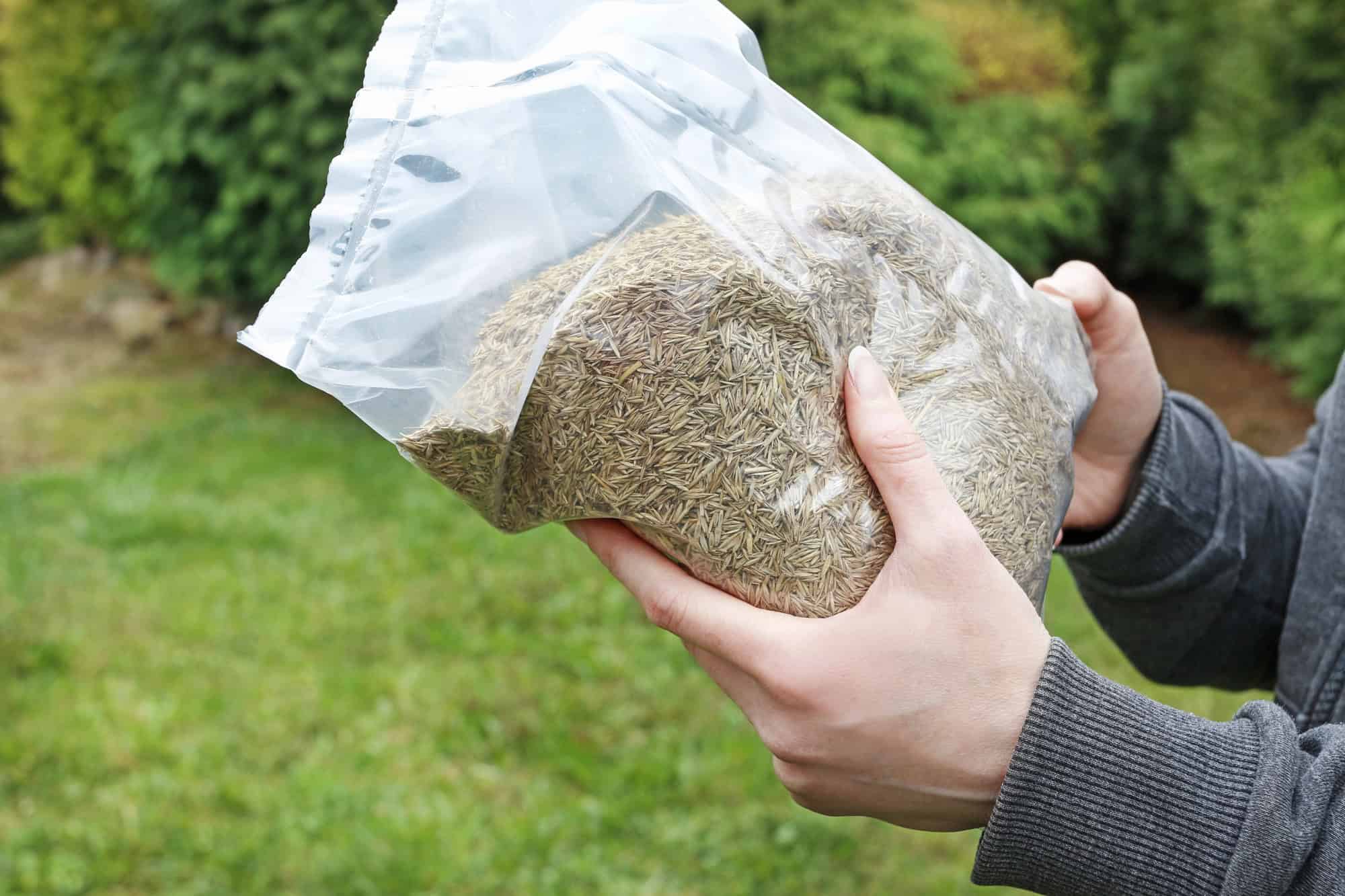
Scatter the seed evenly at the rate on the packet, usually about 15 to 25g per square metre (½ to ¾ oz per square yard) for a repair. A useful trick from the growers is to split the seed into two halves and sow one half walking in one direction, the second half walking across it at ninety degrees. Two passes at right angles give even cover and a denser, more uniform knit than a single scattered handful. Match the mix to the spot while you are at it. For a patch under trees or along a fence, use a shade seed mix; for a heavily walked route across the lawn, use a hard-wearing utility mix built on tougher ryegrass.
Cover the seed with a light sprinkling of topsoil or compost to hide it, then water with a watering can fitted with a fine rose so you do not wash the seed into a corner. Birds are the main thief of newly sown grass, so peg a sheet of netting, horticultural fleece or a piece of clear polythene over the patch. The polythene has a bonus: it traps warmth and moisture and speeds germination in the same way a cloche does. Lift it once the grass is up.
If you want a head start, pre-germinate the seed indoors. Mix it into a bucket of moist peat-free multi-purpose compost, cover it, and keep it somewhere warm but no hotter than 15C (60F). After about three days, small white roots appear, and you then sow the whole mixture as above. Seed that has already chitted races ahead of anything you scatter dry.
Expect green fuzz within one to two weeks from ryegrass mixes, a little longer from fescues. Keep the patch damp the whole time. New grass and young roots dry out fast, and a single hot, rainless week can undo the lot, so water whenever the weather turns dry over the following months.
The turf patch method for an instant fix
If you cannot wait, patch with turf instead. Cut and lift the damaged square exactly as above, to about 5cm (2in) deep, then fork over the base and work in topsoil or compost and firm it level. Now cut an identical square of healthy turf, either from a spare piece or from an out-of-sight corner of your own lawn where the gap will not show. Drop it into the prepared hole and press it down so it sits at exactly the same height as the grass around it, then compress the edges with the back of a rake.
Brush a sandy top-dressing into the joins around the patch to knit it to the lawn and stop the edges drying out and shrinking back. You can buy top-dressing ready-made, or mix your own from three parts sandy loam, six parts sharp sand and one part peat-free compost. Water the patch thoroughly and keep it damp until it roots, which usually takes two to three weeks. One warning worth heeding: a turf patch from a shop can end up a slightly different green from your existing lawn. Lifting turf from your own garden avoids the colour clash, and if you must buy, try to get the same product from the same supplier you used before.
Two more autumn repairs worth doing at the same time
While you have the spade out, deal with the two other faults that make a lawn look tired: crumbling edges and shallow bumps or hollows.
For a broken edge, cut out the damaged section with square cuts on three sides and slice underneath to lift it as one intact piece that includes both the worn strip and some healthy turf behind it. Turn that square a full 180 degrees and drop it back in, so the healthy cut edge now forms the clean outer line of the lawn and the damaged part faces inward. Seed the small bare strip left on the inside. It is the neatest trick in lawn repair and it costs nothing.
For a bump or a dip that catches the mower, cut an H-shaped slit through the turf with a flat spade and peel back the two flaps. Fork over the base, then either scrape away the excess soil under a bump or add topsoil to lift a hollow. Firm it level, fold the flaps back, brush top-dressing into the cuts and water. Sorting these now means an even surface for next season, and an even surface is what stops the mower shaving the high spots down to bare earth.
Fix the cause, or the patch comes straight back
A repaired patch is only half the job. Work out what killed the grass in the first place, or you will be back with the spade next autumn. Shade from a tree or fence calls for a shade seed mix and a light autumn feed to help thin grass recover. A worn route where everyone cuts the corner needs a stepping stone or a tougher mix, not just fresh seed. If the gap was a drought scar from summer, resist the urge to drench it: parched lawns green up on their own once rain returns, and the surrounding turf will knit back in. If the ground was waterlogged for long spells, the fix is drainage and aeration, not seed.
Give the new grass its first cut only once it reaches about 5 to 7cm (2 to 3in) tall, and take off no more than the top third with a sharp blade so you do not rip the young plants out by the roots. A blunt blade tears rather than cuts and can pull unrooted seedlings clean out of the ground.
The cost is small. A 1kg to 1.5kg box of hard-wearing lawn seed runs about £8 to £18 ($10 to $23) and covers far more patching than most gardens need, a 25-litre bag of topsoil is around £4 to £6 ($5 to $8), and a roll of bird netting or fleece is £5 to £8 ($6 to $10) from the likes of B&Q, Wickes, Amazon, Home Depot or Lowe’s. Half an hour, a few pounds and a bit of autumn rain is all it takes to send the lawn into winter whole and have it come back thick in spring.