A broken lawn edge pulls the eye faster than almost anything else in a garden. The grass in the middle can be thick and green, but a crumbling border or a scalloped bite out of the edge makes the whole plot look neglected. The fix takes about half an hour and one tool. Early autumn is one of the two best windows in the year to do it, when the soil still holds summer warmth and steadier rain has returned to settle new roots.
Gardeners at BBC Gardeners’ World rate autumn alongside spring for edge work, noting that warmer weather and frequent showers make both seasons a good time for sowing grass seed, laying turf and repairing lawn edges and bare patches. Here is how to mend a broken edge, cut a crisp new line around the whole lawn, and stop the problem coming back.
Why a Lawn Edge Falls Apart in the First Place
Grass at the edge of a lawn lives a harder life than grass in the centre. It dries out faster, gets trodden on more, and has nothing beyond it holding the soil together. Three things wear an edge down. Foot traffic and mower wheels running along the same line crush the turf and compact the soil beneath it. Plants flopping over from a border shade and smother the grass under them until it thins and dies back. And a long dry summer bakes the exposed soil at the edge into a crumbly crust that breaks away when anyone steps near it.
Once the soil support goes, the turf above it has nothing to grip and starts to collapse into the border. Cutting the same edge line year after year makes it worse, shaving a little more soil away each time until the lawn has visibly shrunk. The repair below fixes the damage without buying a single roll of turf.
The Turf Rotation Trick for a Broken Edge
The neatest repair for a bitten or crumbled edge uses grass you already own. You lift a square of healthy turf that includes the damaged edge, spin it around, and drop it back so the good grass now forms the border and the bare gap sits inside the lawn where new seed can fill it.
Work through it like this. Mark a rectangle of turf that takes in the broken section, then push a sharp spade straight down to make vertical slits about 5 to 7cm (2 to 3in) deep. Slide the spade under the turf and cut it free in one piece, keeping a good pad of soil and root on the underside. Lift the square out and rotate it 180 degrees, so the solid, undamaged grass swings out to become the new edge and the damaged part faces inward. Tamp it down firmly with the back of the spade or the heel of your boot so the roots press into the soil below and no air pockets remain under the turf.
Firming down is the step people skip, and it is the one that decides whether the patch takes. Roots cannot pull water from soil they are not touching. An air gap under a lifted turf dries the roots out within days and the whole square browns off. Press it flat, then check the level against the grass around it. If the rotated turf sits low, lift it and add a little sieved soil underneath; if it sits proud, tread it down harder.
You are left with a bare strip where the damage now sits inside the lawn. Fork over the exposed soil to break the surface, work in a handful of compost to hold moisture, then firm and level it. Scatter a hard wearing grass seed across the gap at 15 to 25g per square metre (about half to three quarters of an ounce per square yard), which works out to a light, even covering rather than a thick mat. A small box of a rye based hard wearing mix such as Johnsons or Miracle-Gro runs about 8 to 15 pounds (10 to 19 US dollars) and covers far more than one repair. Water it in and lay a sheet of clear polythene over the top until the seedlings show, which traps warmth and keeps birds off the seed.
Timing helps you here. Grass seed germinates fastest when the soil sits between 10 and 18C (50 to 65F), and early autumn soil holds exactly that after a summer of heat. Sow the same seed in the cold of midwinter and it can sit dormant for weeks, long enough for rot to set in before a single blade appears.
How to Cut a Clean New Edge Around the Whole Lawn
Once the repair has taken, a fresh cut edge around the entire lawn ties the whole thing together. The tool for the job is a half-moon edger, a flat semicircular blade on a long handle that slices a clean vertical face into the turf. A grass shear or a mower cannot do this; only a straight downward cut gives the sharp shoulder that reads as tidy from across the garden.
For a straight edge, lay a scaffold plank or a length of timber along the line you want and cut against it, moving the edger along the board in overlapping bites. For a curve, lay a hosepipe or a rope on the ground and follow it, or simply trace the existing sweep of the lawn. Push the blade straight down to a depth of about 5cm (2in), keeping it vertical rather than angled, so the edge does not undercut and collapse later.
A decent half-moon edger costs around 18 to 28 pounds (23 to 35 US dollars). The Roughneck Edging Head at Screwfix and the RHS endorsed Burgon and Ball half-moon edger both hold a sharp face through heavy soil. Keep the blade clean and give it an occasional pass with a file, as a blunt edger tears the turf instead of slicing it, leaving a ragged line that browns at the cut.
Resist the urge to recut the very same line every year. Each pass removes a sliver of lawn, and over a decade that adds up to a border that has crept inward by a hand’s width or more. Cut a new edge only when it has actually broken down, and tidy the existing line the rest of the time with shears.
Trimming and Finishing After the Cut
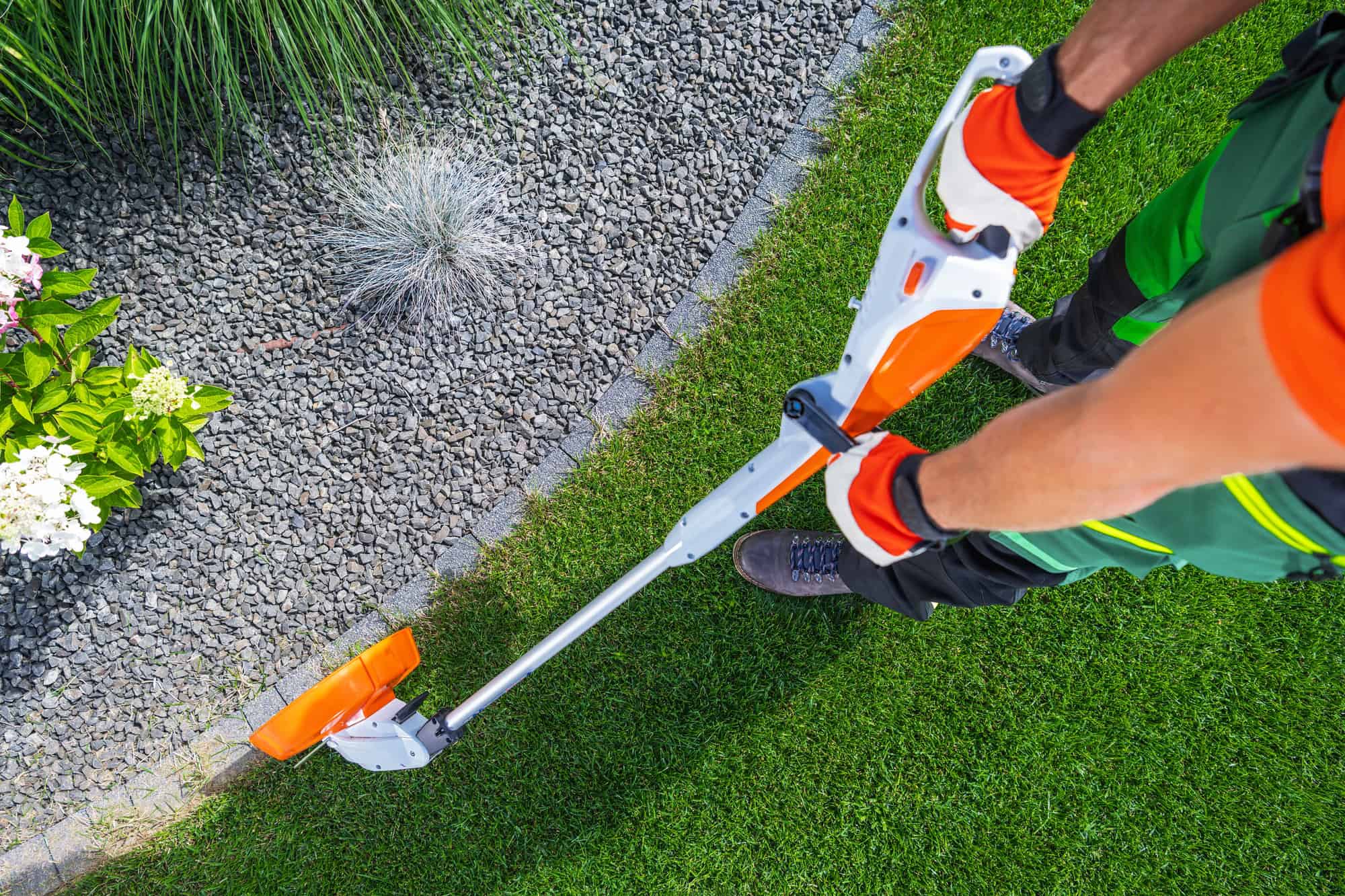
The mower always leaves a fringe of longer grass the wheels could not reach right at the edge. Long-handled edging shears finish that fringe off. These are shaped like scissors turned on their side, letting you snip the overhanging grass flush while standing upright. A pair with carbon steel blades and a telescopic handle runs about 20 to 35 pounds (26 to 45 US dollars); models from Spear and Jackson and Kent and Stowe are widely stocked at B&Q, Amazon and Argos.
Where grass has crept over a path or patio, a sharp knife lifts the invading turf cleanly. Slide the blade under the runners and pul the strips away. For a lawn that sits flush with a hard path, long-handled grass shears drop right down to path level and clip a clean line where an edger cannot reach.
Sweep or rake up every clipping and put it on the compost heap rather than leaving it on the border soil. Fresh grass clippings left piled against the new edge mat down, hold water, and can rot the very grass you just cut, undoing the tidy finish within a week.
Stop the Edge Breaking Down Again
If you are tired of repairing the same border every autumn, a physical edging strip holds the line for years. Spiked metal or hard plastic sheeting pushes into the ground along the lawn edge and stops the grass creeping into the border while holding the soil from crumbling out the other way. Galvanised or corten steel strips cost roughly 12 to 20 pounds per metre (16 to 26 US dollars per 3ft) at B&Q and Wickes; flexible plastic edging is cheaper still.
Set the strip so its top sits about 1 to 2cm (half to three quarters of an inch) below the grass surface. Sit it too high and the mower blade clips it, which blunts the blade and can throw the strip loose. Sit it flush and you can run the mower wheel straight along the top, cutting the edge grass as you go and saving the shears work entirely.
Watering the edge through dry spells also keeps it alive. The strip of turf nearest a border or path dries out first and browns first, so a can of water along the edge in a heatwave holds the roots together and keeps the soil from turning to the crumbly crust that starts the collapse all over again.
Your Next Steps
Walk the perimeter of your lawn and mark the worst broken sections. Rotate a turf square into each one and seed the gaps this week, while the soil is still warm enough to germinate the seed fast. Give the whole lawn a fresh cut edge with a half-moon edger against a plank or rope, finish the fringe with long-handled shears, and clear every clipping. If one stretch breaks down every single year, sink an edging strip along it and be done with the repair for good.