- A thick blanket of fallen leaves blocks light and traps damp air against the grass, and a lawn can turn yellow and thin in about a week under one.
- Clearing little and often beats one big autumn tidy, and a rotary mower shreds a light scattering of leaves into free mulch so you skip the bagging.
- Get the leaves off before winter, keep the grass cut to around 4cm (1.5in), and pile the rest into leaf mould, a soil improver that costs nothing to make.
A Week Under Wet Leaves Is All It Takes to Yellow the Grass
Walk back inside after the first proper leaf fall and the lawn looks buried. The fix is simpler than the pile suggests. Rake or blow the leaves off the grass and onto a sheet or into a bag, and do it every few days rather than waiting for every last leaf to drop. A light scattering can go straight under the mower, which chops the leaves into confetti you can leave as a thin mulch or add to the compost heap. Anything you gather rots down into leaf mould, one of the best free soil improvers a garden produces.
The reason to move fast is what happens underneath. Grass keeps growing well into autumn, and it needs daylight to keep feeding itself. A solid layer of leaves cuts that light off. Starved of it, the blades stop making sugars, lose their colour and go pale and limp, the same way a plank left flat on a lawn prints a yellow rectangle after a few days. The longer the cover stays, the harder the grass finds it to recover once you clear the leaves away.
Wet leaves make a second problem. They hold water like a sponge and press it down onto the grass and soil. Warm, still, damp air sitting on the turf is the exact condition lawn diseases want. Fungal problems such as fusarium patch spread fastest under a wet, airless cover, and a lawn that goes into winter smothered often comes out of it patchy and thin. Clear the leaves and you remove the disease blanket at the same time as the shade.
Clear Little and Often, and Match the Tool to the Job
One marathon session with a rake at the end of November is the hardest way to do this. A few short passes through the heaviest weeks of the drop keep the grass in the light and stop the pile turning into a sodden mat that is miserable to lift. Aim to go over the lawn every three or four days once the leaves start coming down in earnest.
A spring-tine rake, the fan-shaped one with springy wire prongs, flexes over the grass and lifts leaves without gouging the turf. It runs about £10 to £18 (roughly $15 to $25) and will outlast a decade of autumns. For a gentle daily sweep, a flat-tined plastic or rubber rake glides over the surface and gathers leaves off both lawn and gravel. Lightweight leaf grabbers, or two old seed trays used as giant hands, scoop a huge armful in one go and save your back on the bending.
On a big lawn a leaf blower earns its place. Choose a cordless model that switches from blowing to sucking and shreds what it collects, and you clear awkward corners and borders far quicker than a rake manages. These start around £60 and climb past £180 for higher-capacity machines (about $80 to $180). Battery blowers run quieter and cleaner than petrol ones, which helps if your neighbours are close. Work with the wind rather than against it, push the leaves into loose piles on a hard surface, and lift them into woven bags that stay light even when full. Do not blast wet leaves hard into the base of the grass, where they lodge in the crown and rot.
Let the Mower Turn Leaves Into Free Mulch
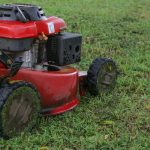
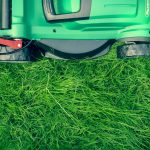
The quickest trick on a dry day is to let the mower do the gathering. Sweep a light scattering into the middle of the lawn, set the cutting height high, and run a rotary mower over it with the grass box on. The blade chops the leaves and the last of the autumn clippings into small flakes and drops them in the box. That mix of leaf and green clipping rots faster than leaves alone, as the fresh grass adds the nitrogen that fungi need to break the tougher leaf carbon down.
You do not have to collect it at all. A thin layer of shredded leaf flakes left on the lawn is a mulch, and earthworms pull the pieces down into their burrows and feed the soil with them over winter. This is how a woodland floor feeds itself, and a lawn can borrow the same idea. The limit is depth. A light dusting of shredded leaf disappears into the sward and does good. A thick, wet mat smothers the grass as surely as whole leaves do, so only mulch-mow a truly light covering and clear a heavy fall by hand first.
Damp leaves are hard on the mower itself. They clog the discharge chute and cake the underside of the deck, where they set like papier-mache and hold moisture against the metal until it rusts. After a run through leaves, scrape the deck clean with a plastic tool once the engine is off and the plug lead is disconnected, and let it dry before you put the mower away. A clean deck cuts better and lasts longer.
Get Ahead of the Drop and Turn the Rest Into Leaf Mould
Staying ahead of the leaves is the whole game. Clear the lawn every few days through the peak of the fall, and sweep leaves off paths and patios too, where they turn slippery and dangerous underfoot. The worst build-ups collect along fences, under trees and in the lee of the house, so start there. Give the grass one last cut before growth stops for the year and leave it around 4cm (1.5in) tall. Long grass matted flat under winter leaves is an invitation to disease; grass shaved too short goes into the cold stressed and bare. That middle height carries a lawn through to spring in the best shape.
Do not bin the leaves you rake up. Piled on their own, they rot into leaf mould, a dark, crumbly material that improves any soil and makes a fine medium for sowing seed. Leaf mould is made by fungi working slowly in the cold, not by the fast bacterial heat of a compost heap, so it takes a year or two rather than a few months. Pack the leaves into a simple cage of 1m (3ft) chicken wire held up by four stakes, or stuff them damp into black bin bags with a few holes punched in the sides, and forget about them. Splitting fast-rotting leaves such as oak, beech and hornbeam from slower, thicker ones helps the whole batch finish at the same time.
A recently seeded patch or a newly laid area of turf needs the leaves off it most of all. Young grass has a small root system and little in reserve, and a week in the dark under a wet leaf layer can set back or kill a repair you have waited weeks for. Lift leaves off new grass by hand or with a light sweep of a besom broom rather than a heavy rake, which can drag the seedlings out with the leaves. The same care goes for the fine grass along lawn edges, which tends to be thinner and quicker to yellow than the middle.
Once you have a stock of leaf mould, it works in more places than the lawn. A year-old batch spread as a thin mulch feeds the soil and holds moisture around borders, and a two-year-old, well-rotted batch, sieved, makes a low-cost base for sowing seed or potting on. One thing to hold back: leaves from plants hit hard by fungal disease, such as rose leaves covered in black spot, are best kept out of both leaf mould and the lawn mulch, as the spores can carry over. Healthy tree leaves are the ones you want.
Leave a few drifts where they fall on purpose. A pile swept under a hedge gives hedgehogs, beetles and overwintering insects somewhere to shelter through the cold months, and the leaves break down into the hedge bottom on their own. The aim is not a garden scrubbed bare of every leaf. It is a lawn kept clear enough to stay in the light and dry enough to stay healthy, with the leaves you remove put to work rather than thrown away.