- A mower that sat all season with petrol in it and now won’t start, needs a dozen pulls, or fires then dies a second later almost always has a carburettor gummed up by stale fuel, not a dead engine.
- A one-second squirt of carburettor cleaner down the throat tells you in a single pull whether fuel is the fault, before you undo one bolt.
- Two bolts get the carburettor off, an hour soaking in cleaner clears the blocked jets, and you keep the sixty-pound-plus repair bill in your own pocket.
Stale Petrol Is Almost Always the Culprit
Ask yourself one question before you touch a tool. Did the mower sit for months with fuel in the tank, over winter or through a long dry summer when the grass stopped growing? If it did, and now it will not start, takes far too many pulls, or coughs into life and dies a second later, the fault is almost certainly a gummed-up carburettor. Repair shops know this better than anyone. A large share of their small-engine work is nothing more than cleaning or swapping carburettors killed off by old fuel, and the bill for it starts around £60 to £80 (roughly $80 and up) once you add labour and parts.
You can do the same job on a kitchen roll and an old baking tray in a morning. The trick is to prove the carburettor is the problem first, then take it off, clean out the tiny passages that stale fuel has blocked, and put it back. What follows walks through the diagnosis, the strip-down and the point at which it is smarter to stop and pay someone.
Why Stale Fuel Wrecks a Carburettor
Petrol does not keep. Left standing, it oxidises and its lighter parts evaporate, and what stays behind thickens into a sticky varnish and gum. That residue settles in the worst possible place: the carburettor’s jets and fuel passages, some no wider than a pin. The pilot jet, the smallest one that feeds the engine at idle and low speed, blocks first. That is why a mower so often fires on the initial squirt of fuel, runs for a second, then stalls the moment it has to draw through the clogged jet. The engine is not dying, it is starving.
Modern pump petrol makes it worse. The ethanol blended into most fuel draws in moisture from the air, and over a few months that water can separate out and corrode the aluminium and zinc inside the carburettor while the ethanol softens old gums into a stubborn glaze. This is the mechanism behind every “it ran fine when I put it away” story. Nothing broke. The fuel quietly turned into glue.
Prove It Is Fuel Before You Start Undoing Bolts
Two minutes of checking saves an hour of pointless spanner work. First the basics: the fuel tap is on, there is fresh petrol in the tank, and the spark plug is clean and connected. Then the test that tells you almost everything. Pull the plug lead off for safety while you set up, take a can of carburettor cleaner, and shoot a one-second burst straight down the throat of the carburettor where the air filter sits. Refit the lead, then pull the cord.
Read the result. If the engine runs, even a rough splutter, and then dies, you have your answer: it will burn fuel you feed it directly, so the problem is fuel delivery through the carburettor. If there is no life at all after a few tries, stop. That points to something deeper than a dirty carburettor, an ignition or compression fault, and cleaning the carb will not touch it. To confirm the fuel is not even reaching the carburettor, clamp the fuel line, slide the spring clip back, pull the tube off the carburettor spigot and catch what comes out in a small bowl. No fuel flowing means a blocked fuel line or a clogged fuel filter, a cheaper fix than the carburettor itself.
Getting the Carburettor Off and Cleaned
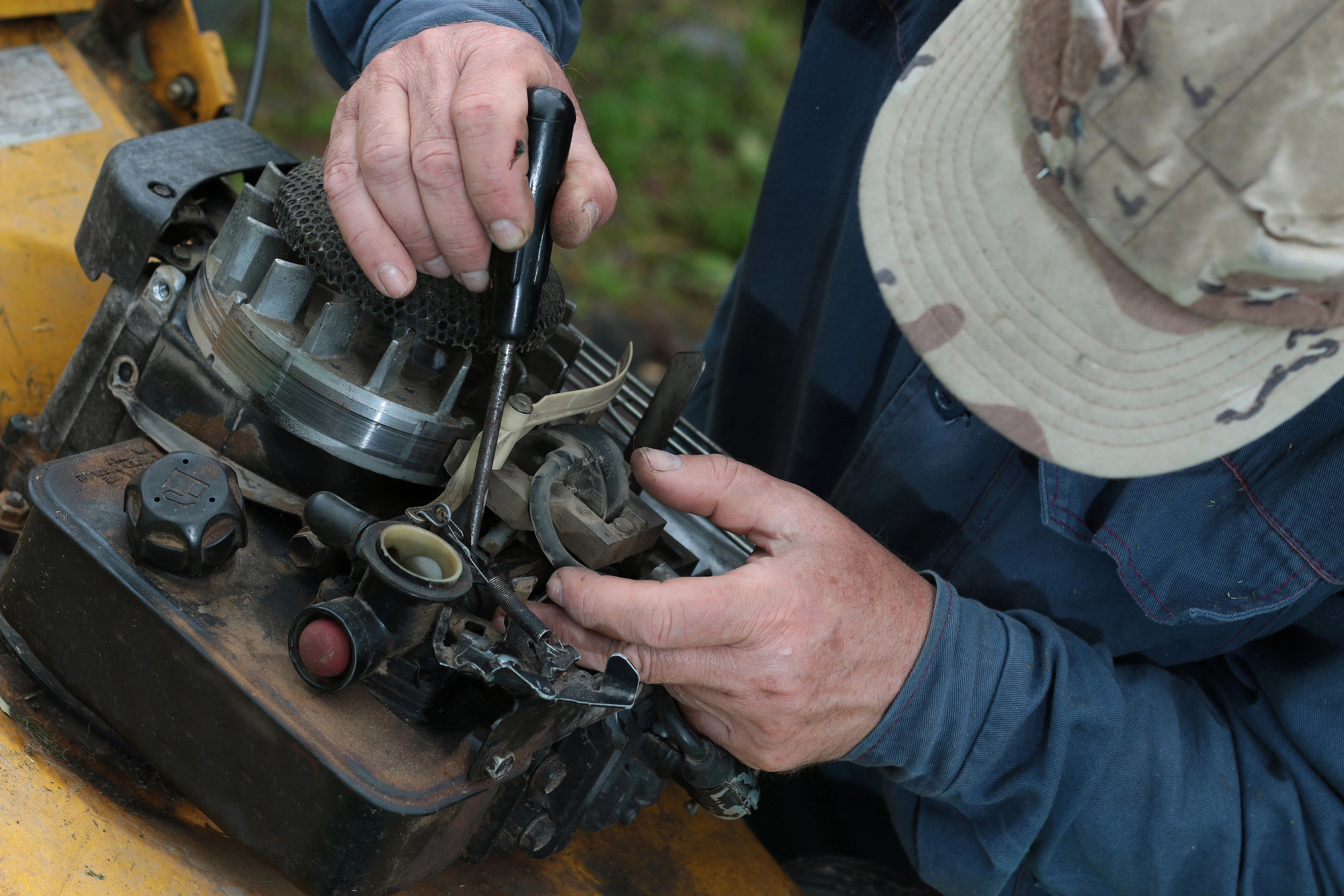
Work outdoors or with the door open, keep a bowl under the carburettor to catch petrol, and keep naked flames well away. The carburettor sits near the top of the engine, next to the air filter and linked to the fuel tank. In most walk-behind mowers two bolts hold it on. Undo them with a socket or nut driver, unhook the throttle cable from the linkage, and lift it clear, tipping the fuel into your bowl as you go. Take a photo on your phone before anything comes apart, so reassembly is a matter of matching the photo rather than guessing.
Open the float bowl on the bottom first and look inside. Fine white powder or crusty deposits mean corrosion, and a corroded carburettor is a lost cause: even scrubbed clean, the pitting keeps shedding grit into those pin-sized jets and it will block again. In that case, buy a replacement. A new carburettor for a common engine runs about £15 to £35 (around $20 to $45), often close to the price of a rebuild kit and a can of chemicals, which is why many people fit new rather than fight the old one.
If the inside is only gummy, not corroded, clean it. Strip it from the bottom up, keeping the bowl, float, needle and seat in order as they come off. Wire the larger metal parts together, drop them in a tub of carburettor cleaner, and put the small parts in a fine mesh basket so nothing tiny is lost. Leave them to soak for an hour. Rinse everything with water, blow it dry with compressed air, and clear any jet that still looks blocked by passing a fine wire through it. Reassemble, fit any new gaskets and O-rings from a rebuild kit, and set the idle and mixture screws as the kit instructs. A can of carburettor cleaner is about £5 to £9 (around $6 to $11) for a general one, or roughly £13 (around $17) for a mower-brand version from Screwfix, Amazon or a mower dealer, and a rebuild kit is about £8 to £20 (around $10 to $25). If you would rather not take it fully off, you can undo the float bowl in place and flood the fuel passages and bowl with cleaner, which clears milder gumming without a full strip.
One mistake trips people up more than any other: pouring the same old fuel straight back in. Drain the tank of the stale petrol that caused the trouble and refill with fresh, or you will re-varnish the jets you just cleared within a few cuts. While the carburettor is off, glance at the air filter too. A clogged filter chokes the engine and can mimic a fuel fault, and a paper one costs only a few pounds to replace. Clearing the carburettor and leaving a blocked filter in place leaves half the job undone.
When to Stop and Pay Someone
Know the point at which this stops being worth it. If the cleaner-down-the-throat test brought no flicker of life, the carburettor is not your problem and a shop needs to look at the ignition or compression. If the bowl showed corrosion and a new carburettor for your engine costs nearly as much as the machine is worth, an older mower near the end of its life might not be worth the parts. And if you strip it, clean it and it still will not hold a steady tick-over, hand it over rather than chasing ghosts; the shop labour you were avoiding is about an hour, roughly the £60 to £80 (around $80) you saved by trying yourself.
Better still, make sure you never do this again. Before the mower goes away for the winter, either run the tank dry until the engine stops on its own, or add a fuel stabiliser, about £8 to £12 (around $10 to $15) a bottle, which keeps petrol usable and holds off the gum and corrosion for up to three years. Where you can buy ethanol-free fuel for garden machinery, it stores far better than pump petrol. Five minutes in autumn spares you a dead mower and a repair bill next spring.