- A strong smell of petrol and an engine that cranks but will not catch almost always means the cylinder is flooded, not that the mower is broken.
- Stop pulling the cord, as every extra pull floods it further; take the spark plug out, dry it, and clear the cylinder before you try again.
- Most flooded mowers start within half an hour with nothing bought and nothing replaced, once you let the excess petrol evaporate.
What a flooded engine is, and why pulling harder makes it worse
If your mower turns over but will not fire and there is a heavy petrol smell around it, the engine is almost certainly flooded. Nothing is broken. There is simply too much liquid petrol and too little air in the cylinder for the spark to light, and the wet fuel has soaked the spark plug so the spark earths out before it can do anything.
The fix costs nothing in most cases. Stop pulling the cord, take out the spark plug and dry it, clear the excess fuel from the cylinder, and let the whole thing air for fifteen to twenty minutes before you try again. Do that and a flooded mower usually starts on the next pull or two.
The one thing that makes it worse is doing what most people do, which is yank the cord again and again. Every pull with the choke on pumps more petrol into a cylinder that already has too much, and keeps the plug wet. Walk away from the cord for a moment and work through the steps below instead.
Why it floods in the first place
A petrol engine fires on a mix of roughly 15 parts air to one part fuel. Flooding tips that balance the wrong way, drowning the cylinder in fuel so the mixture is too rich to ignite. A few everyday habits cause it.
- Leaving the choke on too long. The choke deliberately feeds extra petrol in for a cold start. Leave it on past the first few pulls and it keeps flooding the engine after it no longer needs the help.
- Over-priming. Pressing the primer bulb too many times squirts raw fuel straight into the carburettor throat.
- Pulling the cord repeatedly. Each pull draws more fuel in. On a mower that did not catch in the first few goes, more pulling just deepens the flood.
- Tipping the mower the wrong way. Turn it over with the carburettor side down and petrol and oil run straight into the cylinder and air filter.
Stop and work through this in order
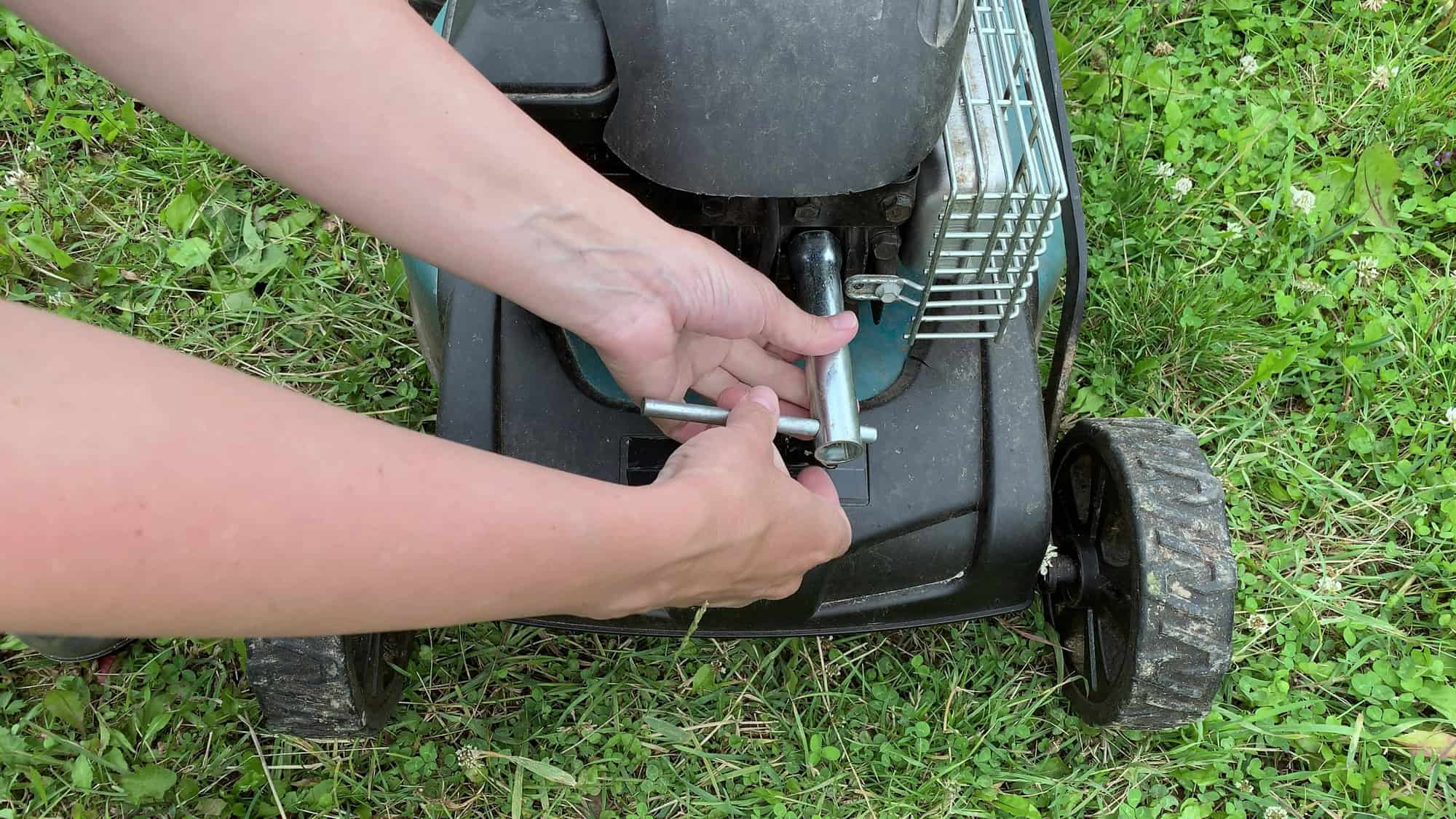
You need a spark plug socket or spanner, a rag and, ideally, a can of carburettor cleaner. Set the choke to off before you start.
- Wait fifteen to twenty minutes. Leaving the mower alone lets the excess petrol evaporate out of the cylinder. For a mild flood, that on its own is often enough to get it going.
- Pull off the spark plug boot. Grip the rubber cap, not the wire, and set it clear of the plug. This stops any chance of the engine firing while your hands are near the blade.
- Take the plug out and look at it. Unscrew it with a plug socket (around £5 / $7). A tip that is wet and reeks of petrol confirms the flood. Clean it with carburettor cleaner spray (about £6 / $8 at Screwfix, B&Q, Amazon, Home Depot or Lowe’s) and dry it fully with a rag. Compressed air alone will not do it, as the oily fuel film needs a solvent to lift it. If the plug is also caked with black, sooty deposits, clean those off or fit a fresh plug (£4 to £6 / $5 to $8).
- Clear the cylinder. With the plug still out and the boot disconnected, pull the starter cord five or six times. That pushes the trapped fuel vapour out of the open cylinder and dries it. Keep the ignition switched off while you do this.
- Check the air filter. If it is soaked with petrol, take it out and let it dry, or replace a paper filter that is wet through. A fuel-logged filter chokes off the air the engine needs and holds the mixture too rich to light.
- Refit and restart. Screw the dry plug back in, push the boot on, and start the mower with the choke off, or on half at most. It should catch within a pull or two.
What the spark plug is telling you
The plug is the quickest read you have on what went wrong, so it pays to look before you wipe it. A spark jumps the gap at the tip to light the fuel, and it can only do that across a dry gap. When the tip is wet with petrol, the fuel carries the spark away to earth, so you get a crank with no fire however hard you pull. That wet tip is the proof you were flooded rather than out of fuel or short of a spark.
The colour tells you more. A dry, light tan tip is a plug doing its job. A black, sooty, oily tip is an engine that has been running rich for a while, often from a clogged air filter or too much choke, and that one is worth replacing rather than only cleaning. A plug that is wet but otherwise clean has simply been drowned this once, and a wipe and a dry is all it needs.
When it is more than a flood, and when to hand it over
If the mower still will not fire after you have dried everything, the fault has moved on from a simple flood. The usual next suspect is the fuel itself. Petrol left standing in the tank for a few weeks pulls in moisture and goes stale, and the ethanol in modern fuel separates out, so the engine is trying to burn something closer to weak varnish than clean petrol. Drain the old fuel and refill with fresh, then run through the starting steps again.
If the mower sat all summer with petrol in it, that stale fuel will likely have gummed up the carburettor. A float stuck open keeps letting fuel into the cylinder and floods the engine no matter what you do, and a jet blocked with varnish starves it the other way. A careful carburettor clean can bring it back, but if you are not comfortable stripping one down, or the float keeps flooding after a clean, that is the point to hand it to a small-engine shop. The same goes if you are at all unsure working around the blade. A repair here is cheap next to an injury.
How to stop it flooding again
Flooding is nearly always a habit rather than a fault, so a few changes keep it from happening.
- Go easy on the choke. Use it for about five pulls on a cold start, then knock it to half or off. Leaving it fully on floods the engine every single time.
- Keep the fuel fresh. Use petrol less than a month old, and add a fuel stabiliser (around £8 / $10 a bottle) if the mower is going to stand for weeks. Stabiliser slows the moisture-pulling and separating that ethanol fuel does as it ages, which is what gums carburettors and makes mowers flood when you next start them.
- Tip it the right way up. When you turn the mower over to clear the deck, keep the spark plug and carburettor side pointing up. Tip it the other way and oil and petrol pour into the cylinder and air filter, so you flood it before you have even pulled the cord.
- Do not over-prime. A couple of presses of the primer bulb is plenty on a warm day; save the full set of presses for a cold morning.
A flooded mower feels like a dead one, with its petrol stink and its refusal to catch, but it is one of the few faults you can clear in your own shed with a rag and a dry plug. Learn the choke-and-fuel habits that cause it and you will spend far more time cutting the lawn than kneeling over the engine.