- Thatch is the spongy brown layer of dead stems, old roots and flattened moss that builds up between the green grass and the soil, and a thin layer of it is normal and even useful.
- Scarifying rakes that layer out so water, air and feed reach the roots again, but drag it too hard or at the wrong time of year and you tear living grass out along with the dead stuff.
- The honest answer is that most lawns want a firm autumn rake every year or two rather than an annual shredding, and some thin, weak lawns are better left untouched until spring.
The spongy feel underfoot is telling you something
Walk across the lawn and notice how it feels. If the surface gives like a thin mattress and your shoes sink slightly before they hit anything firm, the grass is sitting on a cushion of dead material rather than on soil. That cushion is thatch, and most people only meet the word when a lawn starts going wrong. The common advice swings between two extremes. One camp says rake the lawn to within an inch of its life every autumn. The other says never touch it and let nature sort it out. Both are wrong, and the truth sits in the middle, which is where the useful part of this job lives.
Here is the short version before the detail. Get down and part the grass with your fingers. If you can see bare soil between the blades, the thatch is thin and the lawn is fine. If a dense brown mat hides the soil completely, that mat needs raking out, and autumn is the time to do it. A spring tine rake and some effort will clear it. The skill is knowing how hard to go and when to stop, so you remove the dead layer without ripping out the grass you are trying to help.
What thatch actually is, and why it builds up
Thatch is not grass clippings, whatever you might have read. Short clippings from regular mowing are mostly water and rot away within days. Thatch is the tougher stuff: dead stems, the fibrous bases of old grass plants, runners and roots, with flattened moss and leaf debris worked in. These parts contain lignin, the woody material that gives plant stems their stiffness, and lignin breaks down slowly. When grass sheds this material faster than the worms and microbes in the soil can digest it, the leftovers pile up into a felt like layer at the base of the lawn.
Several things tip the balance toward a build up. Infrequent, high cutting that leaves long, stemmy growth adds more woody material. A thin, compacted or waterlogged soil holds fewer of the worms and microbes that would eat the thatch, so it lingers. Moss makes it worse, matting into the layer and adding bulk that never rots down at all. Over a few seasons a harmless skin of dead material can thicken into a mat a centimetre or more deep, and that is the point where it stops being background and starts to choke the lawn.
What scarifying does for the grass
A thick thatch layer works like a sponge laid over the soil. It soaks up rain and feed and holds them at the surface, so water never reaches the roots and the lawn stays thirsty even after a downpour. In a dry spell the same sponge bakes hard and turns water repellent, shedding rain sideways instead of letting it soak in. The grass responds by rooting into the thatch itself rather than the soil beneath, which leaves it shallow rooted and fragile, the first to brown off when the weather turns.
The damp, airless mat is also a home for trouble. Fungal diseases that cause brown and straw coloured patches thrive in the still, humid conditions a thick layer holds against the crowns of the grass, and lawn pests shelter in it through the year. Raking the layer out reopens the surface. Water and feed get down to the roots, air moves around the base of the plants, and the grass is pushed to root into proper soil. Clearing thatch improves a lawn’s ability to cope with drought and cuts down the fungal problems that take hold in a sodden, matted surface. The lawn can look thin and scruffy for a week or two afterwards, then fills back in thicker than before.
How to scarify without wrecking the lawn
For an average lawn, a spring tine rake does the job and costs very little, around £12 to £15 (about $15 to $20). It has springy, fan shaped wire tines that comb through the grass and pull the dead material up without gouging the soil. Work with a vigorous pulling action, dragging the thatch and moss up and out, then rake again at right angles to the first direction so you catch what the first pass flattened rather than lifted. The amount of brown debris that comes up from a neglected lawn is startling the first time. Gather it as you go and add it to the compost heap.
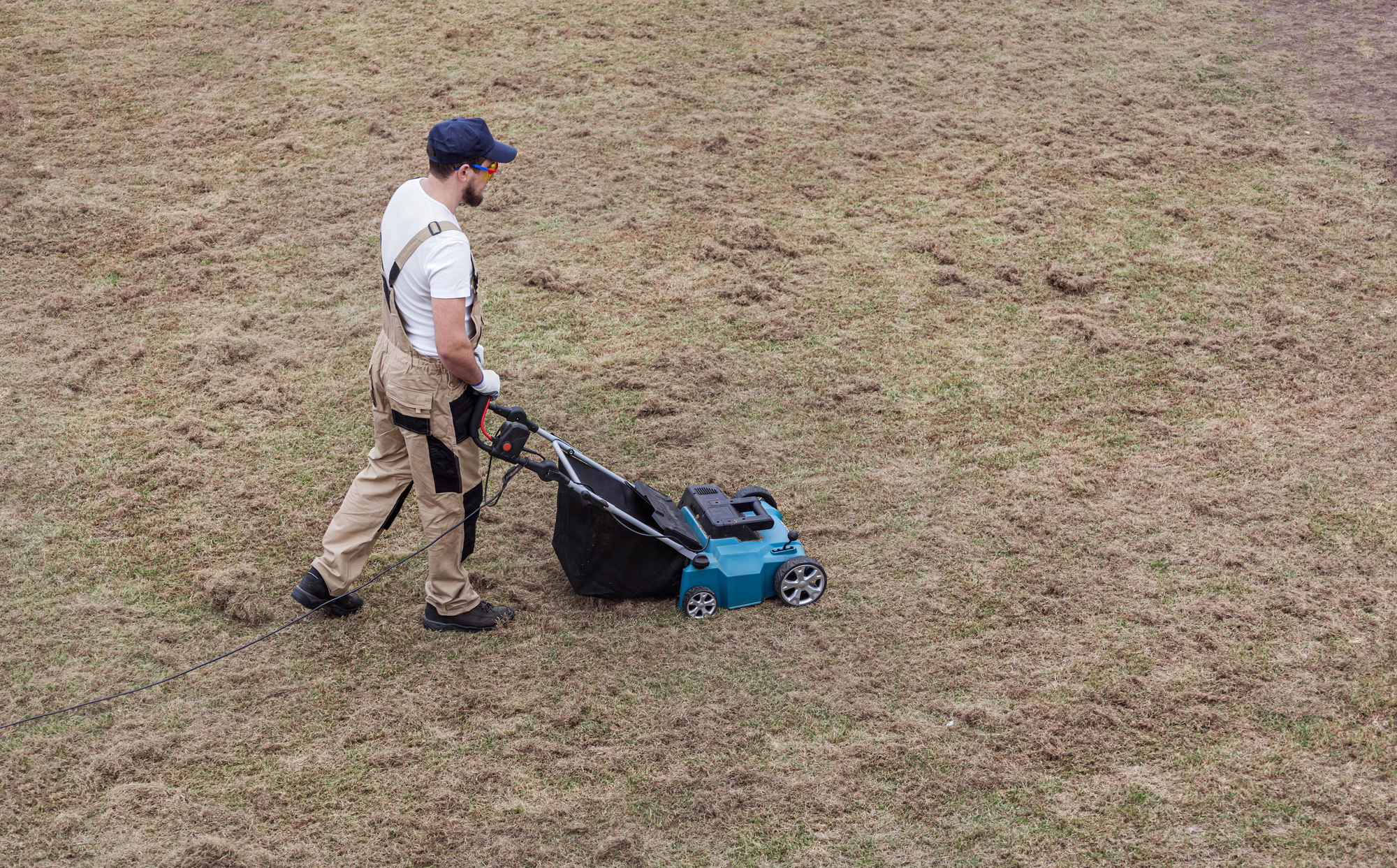
On a larger lawn, hand raking turns into a punishing afternoon, so a powered scarifier earns its place. An electric model from a maker such as Einhell or Bosch runs around £60 (about $75) and has a drum of steel blades that slice through the thatch at a set depth. Set the blades shallow to start, just nicking the surface, and lower them on a second pass if the lawn needs more. A scarifying cassette that clips onto some mowers does the same work on a smaller scale. Whichever tool you use, keep the cut light. The aim is to lift the dead layer, not to carve into the soil and shred the living grass, which is the mistake that leaves a lawn looking wrecked rather than refreshed.
Timing counts as much as technique. Early autumn is the window: the soil is damp and still warm, the grass is growing and can heal fast, and the weeds that a spring rake would spread are not on the move. Scarify only when the ground is neither waterlogged nor very wet, and not when it is very dry or frosty. Rake a soaked lawn and you pull out live grass and leave a muddy mess. Rake a frozen or drought stressed one and you injure plants that have no energy to recover.
When to leave the thatch alone
This is the part the rake it hard every year camp gets wrong. A thin layer of thatch, up to around a centimetre or under half an inch, does the lawn good. It insulates the crowns of the grass against cold and heat, cushions the surface against wear and helps hold a little moisture at root level. Strip that away and you expose the plants and lose the protection. If you part the grass and already see soil between the blades, put the rake down. There is nothing to remove, and scarifying a lawn that does not need it only sets the grass back for no gain.
Leave it alone, too, on a lawn that is already thin, weak or newly laid. Scarifying thins the grass further before it thickens, and a lawn with little grass to spare cannot afford the loss going into winter. The same holds once the cold sets in. If autumn has slipped away and the first frosts have arrived, wait. A hard rake in late autumn opens the surface at the one time the grass cannot knit back together, and you are better off holding the job over to early spring when growth returns.
What to do with the lawn afterwards
A freshly raked lawn looks bare in patches, and that open surface is an opportunity rather than a worry. While the soil is exposed and still warm, scatter grass seed over the thin areas so new plants fill the gaps before winter. A box of hardwearing lawn seed costs around £15 (about $20), and seed dropped onto a scarified lawn makes contact with soil instead of bouncing off a thatchy mat, so far more of it takes. On heavy or worn ground, this is also the moment to put a fork through the lawn and open the soil below, which works hand in hand with clearing the thatch above. The two jobs together, raking the dead layer out and loosening the packed soil, reset a tired lawn in a single autumn.
Finish with a light autumn feed if the grass is growing poorly, one high in potassium and phosphorus rather than a nitrogen rich summer product, to drive root growth through the cold. Then leave the lawn to recover. Within a couple of weeks the thin, scruffy look gives way to denser growth, and the grass heads into winter sitting on open soil rather than a smothering mat. Do it once every year or two, judge each autumn by what you find when you part the grass, and the lawn tells you plainly whether the rake is needed or whether the thatch is better left where it is.