- A mower that fires on the pull then dies within a few seconds is almost always starved of clean fuel, not short of a spark.
- The usual culprit is stale petrol that has turned to gum inside the carburettor, with a blocked fuel-cap vent and a clogged air filter close behind.
- Draining the old fuel, clearing the vent and cleaning out the carburettor bowl fixes most of these on the bench for about the price of a can of carburettor cleaner.
A mower that starts and stops is reaching fuel once, then failing to draw any more
It is one of the most maddening faults a mower throws at you. You prime it, pull the cord, the engine barks into life for two or three seconds, then falls dead. Pull again and you get the same short bark and the same silence. The machine clearly has spark and compression, or it would not fire at all. What it cannot do is keep feeding itself fuel. Nine times out of ten the fault sits in the fuel system, and nine times out of ten you can clear it on the bench with a screwdriver and a can of cleaner. Here is how to work through it in order, from the thirty-second check to the one job worth doing properly.
What starts then stalls is telling you
When an engine starts and dies straight away, read it as a fuel-supply fault rather than an ignition one. The engine fires on the small charge of fuel already sitting in the carburettor bowl, topped up by the rich shot from the primer bulb or choke. Once that charge burns off, the engine needs a steady draw of fresh fuel pulled up through the carburettor to keep turning. Block that draw and the engine starves and cuts out within seconds. It is the mirror image of a flooded engine, which will not catch at all and reeks of raw petrol.
Work from the cheap, quick checks toward the fiddly one, rather than stripping the carburettor first. And before you touch anything, pull the spark-plug cap off the plug, or lift out the safety key on a battery-start model, so the engine cannot turn over while your hands are near the blade.
The two-minute checks: fuel cap, fuel and air filter
Start with the fuel-cap vent. The cap has a tiny vent hole that lets air into the tank as the fuel level drops. Grass dust and debris can block it, and once it is blocked a vacuum builds in the tank that stops fuel reaching the carburettor, so the engine runs for a few seconds and stalls. There is a neat test for it: start the mower, and when it dies, loosen the fuel cap and restart. If it then runs noticeably longer with the cap loose, the vent is the fault. Clear the hole with a pin or a puff of compressed air, or fit a new cap for around £8 to £15 ($10 to $18).
Next, ask how old the petrol is. Modern pump petrol blended with up to 10 percent ethanol, sold as E10, starts to go off in as little as three to four weeks. It oxidises, loses the volatile part that makes it easy to light, and draws in water from the air. Old fuel gives exactly the delayed, sputtering, stall-prone starting you are looking at. Drain the tank into a suitable container and refill with fresh petrol before you go any further.
Last of the quick checks, lift the air-filter cover. A paper filter that has gone grey and clogged chokes the airflow, the mix runs too rich and the engine loses power and stalls. Tap a paper filter clean or fit a new one for about £5 to £10 ($6 to $14). Wash a foam filter in warm soapy water, let it dry fully, then work a light film of clean oil through it. If the mower runs on after those three checks, you are done. If it still starts and dies, the carburettor is the problem.
The real culprit: a gummed-up carburettor
Stale fuel is the usual reason a mower starts then stalls, above all after it has stood over winter or through a long dry spell with petrol left in it. The mechanism is worth knowing, as it tells you why the fix works. As petrol oxidises it leaves behind a sticky gum and a hard varnish. The ethanol in E10 makes it worse, pulling in water that corrodes alloy and separates out as a layer in the bowl. A carburettor meters fuel through passages and jets that are a fraction of a millimetre across, so it takes only a trace of varnish in the main jet to choke the flow. The engine fires on what is left in the bowl, then starves the instant it needs more.
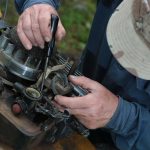
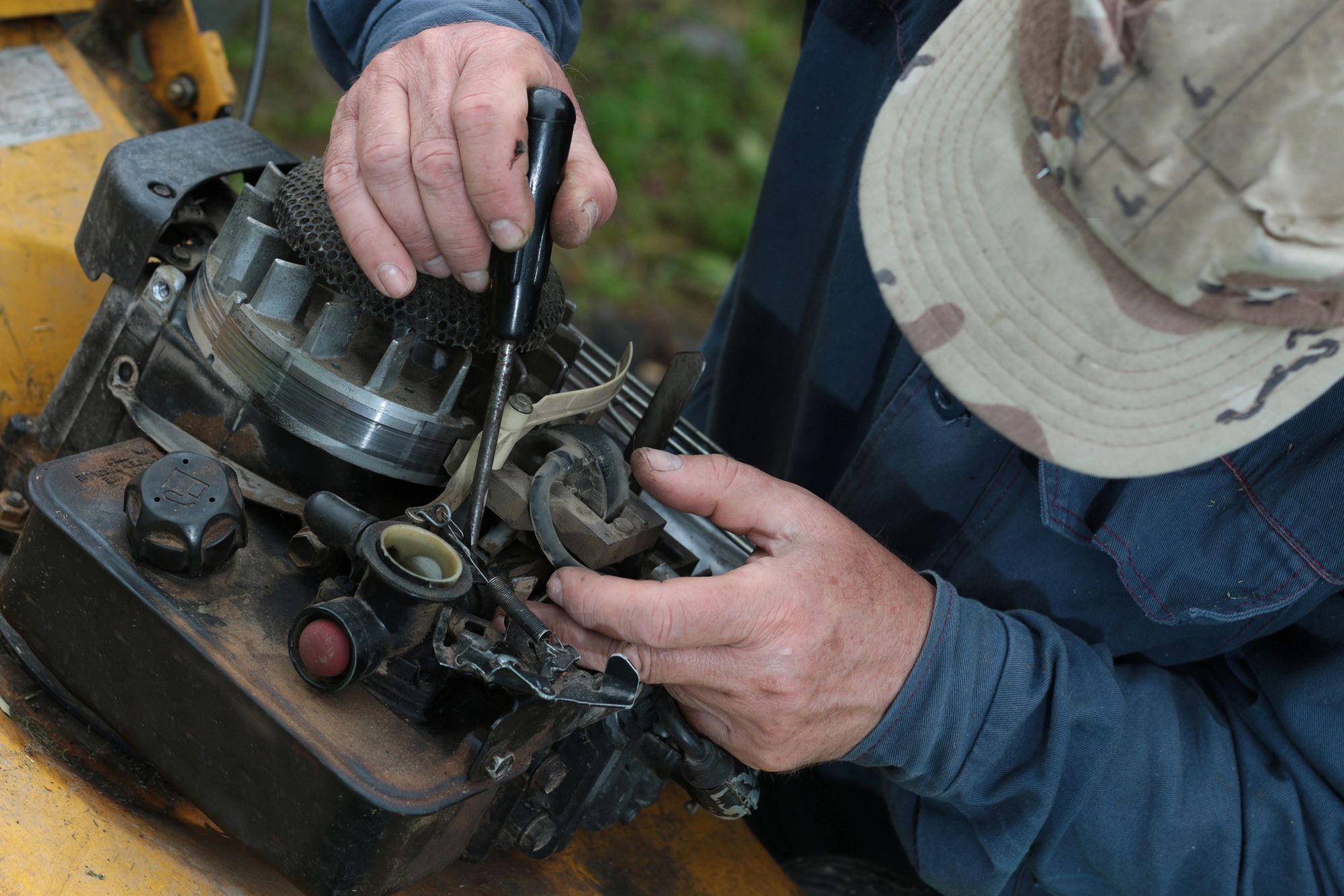
Cleaning the carburettor bowl clears most of this without a full strip-down. Work through it in order:
- Drain the petrol from the tank first, into a container you can seal.
- Find the bowl at the base of the carburettor and undo the single bolt holding it on, which on many engines is the main jet itself. Drain what comes out and look for a green, crusty or jelly-like residue, the tell-tale sign of stale fuel.
- Spray carburettor cleaner, about £5 to £9 ($6 to $12) a can, up into the bowl and through the jet hole. Clear a blocked jet by passing a single strand of wire or a fine bristle through it, then spray again until it runs clear.
- Refit the bowl, add fresh petrol and try to start the engine.
If it still stalls after a bowl clean, a carburettor rebuild kit with new gaskets, a needle and a float valve costs around £10 to £20 ($12 to $25) and lets you strip and reseal the whole unit. A complete replacement carburettor for a common Briggs & Stratton or Honda engine is often only £15 to £30 ($20 to $40) and bolts straight on, which is frequently quicker and cheaper than a workshop bill for the same job.
Stop it coming back
Almost all of these faults trace back to fuel left to go stale, so the cure and the prevention are the same. At the end of the cutting season, pick one of two routes. Either run the tank dry: shut off the fuel tap if the mower has one and let the engine run until it cuts out on its own, so no petrol is left standing in the carburettor over winter. Or treat the fuel: add a fuel stabiliser, about £8 to £15 ($10 to $18) a bottle, to a full tank and run the engine for a few minutes to pull the treated petrol through into the carburettor. Stabiliser keeps fuel usable for roughly 12 to 24 months.
A few habits keep the fuel system clean year-round. Buy petrol in small amounts you will get through within a month. For a machine you use only now and then, an ethanol-free alkylate fuel is worth the extra outlay, as it stores for years and leaves far less gum. And keep fuel in a sealed, approved can out of direct sunlight, where it holds its edge for longer.
When to stop and call someone
Most starts-then-stalls faults are well within reach of a home fix, and the parts cost less than a single call-out. Hand the machine to a small-engine shop when you have already put fresh fuel in, cleaned or replaced the filter and cleaned the carburettor and it still dies within seconds. Hand it over too if you see signs of deeper trouble, such as metal flecks in the oil, an engine that will not hold compression, or heavy smoke. And weigh up the economics: a petrol mower is typically good for eight to ten years, so if the machine is near the end of that and a new carburettor plus your time is edging toward the price of a replacement, a new mower is the better call.