

Every lawn problem that recurs year after year, from patchy growth and bare spots to disease, moss invasion, and poor drought recovery, can usually be traced back to a mismatch between the grass species in the ground and the conditions it is expected to cope with. The soil type, the amount of shade, the level of foot traffic, the available budget for feeding and watering, and the visual standard the gardener expects all play a part in determining which grass species will thrive and which will struggle. Choosing the right grass, or more accurately the right combination of grasses, is the single most consequential decision in lawn management, because it determines the upper limit of what the lawn can become and the lower limit of what it will demand in return.
Lawns are not single-species surfaces. Almost every bag of lawn seed sold contains a blend of two to five grass species, each selected for a specific contribution to the finished sward. One species might provide rapid establishment, another self-repair, a third shade tolerance, and a fourth drought resilience. The proportions in the mix vary depending on the intended use of the lawn and the site conditions it will face. Understanding what each species does, and what it needs, gives the gardener the ability to read a seed mix label with confidence and to diagnose problems in an existing lawn by identifying which species is thriving and which is not.
There are six grass species that account for the vast majority of lawn seed sold for domestic and amenity use: perennial ryegrass, creeping red fescue, Chewings fescue, hard fescue, browntop bent, and smooth-stalked meadow grass. Beyond these, several other species appear in specialist mixes or establish themselves uninvited. This guide covers all of them, explains how they relate to one another in seed mixes, and provides the information needed to choose the right combination for any lawn situation.
The Six Core Lawn Grass Species

Perennial Ryegrass (Lolium perenne)

Perennial ryegrass is the workhorse of lawn seed mixes and the most widely used grass species in domestic and amenity turf. It germinates faster than any other common lawn grass, typically within 5 to 10 days at optimal soil temperatures, and provides visible ground cover within two to three weeks of sowing. This rapid establishment makes it the default choice for new lawns, repairs, and any situation where quick results are needed.
The species is identified by its broad, shiny, dark green leaf blade with prominent veins on the upper surface and distinctive claw-like auricles at the base of the leaf where it meets the sheath. It grows from a basal crown, producing tillers that thicken the plant over time but do not spread laterally; perennial ryegrass stays where it is sown and does not fill bare ground by creeping. This makes it reliant on high sowing rates and companion species for long-term sward density.
Perennial ryegrass has the highest wear tolerance of any common lawn grass, which is why it dominates sports turf mixes for football pitches, cricket outfields, and school playing fields. It also has the highest nitrogen requirement of the standard lawn grasses; a ryegrass-dominant lawn needs three to four fertiliser applications per year to perform at its best, compared with one or two for a fine fescue lawn. It is moderately drought tolerant, performing less well than any of the fine fescues in extended dry spells, and it does not tolerate very close mowing below about 20mm without thinning.
Modern turf-type ryegrass cultivars bear little resemblance to the coarse, agricultural ryegrasses of previous decades. Breeding programmes have produced varieties with finer leaf texture, improved density, darker colour, and better disease resistance. The STRI evaluates these cultivars annually and publishes a recommended list for amenity use; specifying a seed mix containing STRI-listed ryegrass cultivars rather than unspecified agricultural varieties produces a noticeably finer, denser lawn.
Creeping Red Fescue (Festuca rubra subsp. rubra)

Creeping red fescue is the most versatile of the fine fescues and the species that bridges the gap between the hard-wearing ryegrass mixes and the premium fine lawn blends. It spreads by short rhizomes that extend through the upper soil layer, producing new shoots at intervals and gradually filling bare ground. This rhizomatous self-repair sets it apart from the other fine fescues, all of which are non-spreading, and makes it the fine fescue of choice for lawns that need to recover from wear, drought damage, or localised disease without annual overseeding.
The leaves are fine, 1 to 2mm wide, and mid to dark green. The species tolerates shade better than any other common lawn grass except rough-stalked meadow grass, making it a primary component of shaded lawn mixes. It is drought tolerant, low in its nitrogen requirement, and tolerates mowing down to 10 to 15mm on improved cultivars. On the debit side, creeping red fescue is slower to establish than ryegrass, less wear tolerant under heavy foot traffic, and performs poorly on waterlogged or very heavy clay soils.
In seed mixes, creeping red fescue commonly appears at 20 to 40 per cent of the blend. In fine lawn mixes without ryegrass, it provides the self-repair component alongside Chewings fescue and browntop bent. In standard domestic mixes with ryegrass, it contributes shade tolerance and drought resilience while the ryegrass handles the establishment speed and wear tolerance. The reddish-pink colouration at the base of each tiller gives the Festuca rubra group its common name and is a useful identification feature when examining the plant at ground level.
Chewings Fescue (Festuca rubra subsp. commutata)
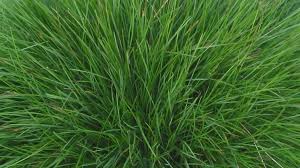
Chewings fescue is the finest-textured of the red fescues and the primary species in premium ornamental lawn mixes. Named after Henry Chewings, a New Zealand seed producer who commercialised the variety in the late nineteenth century, it is a non-creeping grass that forms tight, upright bunches rather than spreading by rhizomes or stolons. This compact growth habit produces the dense, uniform texture that defines a high-quality fine lawn, but means the species cannot self-repair bare patches and relies on companion species such as creeping red fescue to fill gaps in the sward.
The leaf blade is very fine, typically 0.5 to 1mm in diameter, inrolled in cross-section, and mid to dark green. Chewings fescue tolerates very low mowing heights, down to 10mm on improved cultivars, which makes it suited to ornamental lawns, golf approaches, croquet lawns, and formal garden settings. Like all the fine fescues, it has low nitrogen requirements and good drought tolerance, but performs poorly on fertile, heavy, or waterlogged soils where ryegrass and annual meadow grass outcompete it.
In fine lawn seed mixes, Chewings fescue typically forms the largest component at 40 to 60 per cent of the blend, providing the bulk of the sward density and fine texture. In standard domestic mixes that include ryegrass, it appears at lower rates of 10 to 20 per cent, contributing fine texture in the areas of the lawn that receive less wear. Seed mix designers favour Chewings fescue over creeping red fescue in situations where lateral spread into beds and borders is undesirable, because its non-creeping habit keeps it contained within the sown area.
Hard Fescue (Festuca brevipila)

Hard fescue is the specialist of the fine fescue group: the most drought tolerant, the most tolerant of poor and acidic soils, and the lowest in its nitrogen requirement. It is a non-creeping, tufted grass with a distinctive blue-green colouration that intensifies in dry conditions and distinguishes it from the greener-toned red fescues at a distance. The leaves are fine and bristle-like but slightly stiffer and coarser to the touch than those of Chewings fescue or creeping red fescue, which gives the species its common name.
Hard fescue is not a red fescue. It belongs to a separate species group (Festuca brevipila, also listed as Festuca trachyphylla) within the fine fescue complex, and does not share the reddish-pink sheath colouration of the Festuca rubra subspecies. Its root system is notably deep for a fine-leaved grass, penetrating to 40 to 60cm in suitable soils, which underpins its drought tolerance and allows it to access moisture reserves well below the surface layers that dry out first in summer.
In seed mixes, hard fescue appears primarily in low-maintenance and utility blends for road verges, amenity grasslands, slopes, banks, and gardens with very dry or poor soils. It is not typically included in premium fine lawn mixes, where its blue-green colouration and slightly coarser texture are considered less desirable than the uniform dark green of Chewings fescue. For gardeners on sandy, chalky, or thin soils where irrigation is impractical and management input will be minimal, hard fescue is often the most reliable primary species available.
Browntop Bent (Agrostis capillaris)

Browntop bent is the finest-leaved of all common lawn grasses and the species that defines the very best bowling greens, golf putting greens, and championship-standard fine lawns. The leaf blade is extremely narrow, typically 1 to 2mm, flat, and soft in texture. It spreads by short stolons and tillers, producing a dense, carpet-like surface at very low mowing heights that no other species can match. A well-maintained browntop bent lawn mown at 5 to 10mm has a texture and visual quality that is immediately recognisable as a premium surface.
Browntop bent is slow to establish from seed, taking 10 to 21 days to germinate and a full growing season or more to produce a consolidated sward. It is competitive on low-fertility, acidic soils where it can dominate a mixed sward over time, gradually increasing its proportion at the expense of ryegrass and the coarser fescues. It tolerates shade reasonably well and copes with acid soils better than most other lawn grasses, but it does not perform well on alkaline or very fertile soils where annual meadow grass and ryegrass outcompete it.
In fine lawn seed mixes, browntop bent appears at 10 to 20 per cent of the blend alongside Chewings fescue and creeping red fescue. Its role is to contribute the very fine texture and competitive ability at low mowing heights that the fescues alone cannot deliver. On its own, browntop bent requires high management input to maintain: regular mowing at very low heights, careful nitrogen management, and vigilant thatch control through scarifying and aeration. Left unmanaged, it produces a thick, spongy thatch layer that becomes susceptible to disease and scalping.
Smooth-Stalked Meadow Grass (Poa pratensis)

Smooth-stalked meadow grass is the only common lawn grass that spreads aggressively by underground rhizomes, producing a dense, self-repairing network that fills bare ground reliably and makes the established sward resilient to localised damage. Known as Kentucky bluegrass in North America, where it forms the basis of premium lawn seed mixes, its role in domestic seed mixes is more understated: it rarely leads a blend but commonly forms 10 to 20 per cent of standard amenity mixes, where its long-term self-repair complements the rapid establishment of ryegrass and the shade tolerance of the fine fescues.
The leaf tip of smooth-stalked meadow grass is distinctively compressed and boat-shaped, like the prow of a canoe, and this is the most reliable field identification feature. The leaf blade is 2 to 4mm wide, flat, smooth on both surfaces, and medium to bright green with a slight blue-green tone. The species has moderate nitrogen requirements, moderate drought tolerance, and a preference for fertile, well-drained soils with a pH of 6.0 to 7.0.
Smooth-stalked meadow grass is the slowest-germinating of all common lawn grasses, taking 14 to 28 days depending on soil temperature. In a mixed sowing, the ryegrass and fescue components will be visibly established before the meadow grass seedlings emerge. The rhizome network that defines the species does not develop meaningfully until the second growing season; a lawn containing Poa pratensis will not show the full benefit of its self-repair capability until year two or year three. This timeline requires patience, but the payoff is a sward that becomes progressively more resilient over time without annual overseeding.
Other Grass Species Found in Lawns
Slender Creeping Red Fescue (Festuca rubra subsp. litoralis)
Slender creeping red fescue sits between creeping red fescue and Chewings fescue in its growth habit. It produces short rhizomes that spread more slowly and less aggressively than those of standard creeping red fescue, giving it a limited self-repair capability while maintaining a finer, more compact sward. It appears in some fine lawn and amenity mixes as a compromise species where some lateral spread is wanted but the vigorous creeping habit of standard creeping red fescue would be too aggressive for the intended use. On sandy and coastal soils, slender creeping red fescue is particularly well adapted, which gives rise to its subspecies name litoralis, meaning of the shore.
Sheep’s Fescue (Festuca ovina)
Sheep’s fescue is a non-creeping, very fine-leaved grass that shares many characteristics with hard fescue: high drought tolerance, low nitrogen requirement, blue-green colouration, and tolerance of poor and acidic soils. It is even more compact and slower-growing than hard fescue, which makes it a component of wildflower meadow mixes and very low-maintenance amenity blends rather than standard lawn seed mixes. In domestic situations, sheep’s fescue is sometimes used in areas of the garden intended to be left unmown or cut only two or three times per year, where its slow growth and fine texture create a naturalistic, low-input grass surface.
Creeping Bent (Agrostis stolonifera)
Creeping bent is an aggressively stoloniferous grass that spreads rapidly across the soil surface and is the species most commonly associated with high-end bowling greens and golf putting greens managed at mowing heights of 3 to 6mm. It produces a surface of remarkable density and uniformity at very low cutting heights, but demands intensive management: daily mowing during the growing season, precise nitrogen management, frequent aeration, and regular thatch control. For domestic lawns, creeping bent is rarely appropriate; the management input required is beyond what most gardeners can sustain, and the species becomes an invasive problem if allowed to spread unchecked into adjacent areas of the garden. It is mentioned here because it can arrive uninvited in lawns near golf courses or bowling greens and is sometimes confused with browntop bent.
Rough-Stalked Meadow Grass (Poa trivialis)
Rough-stalked meadow grass is the damp-shade specialist of the lawn grass world. It is a stoloniferous grass that performs best in moist, shaded conditions where virtually all other lawn grasses struggle. In heavily shaded areas of the lawn where the soil remains damp through the growing season, beneath mature trees or on north-facing slopes with poor air circulation, rough-stalked meadow grass is often the only species capable of maintaining a reasonable sward. Its leaves are 2 to 4mm wide, pale to bright green, and the stem has a characteristically rough texture when rubbed downward, which distinguishes it from its smooth-stemmed cousin smooth-stalked meadow grass. The species is very intolerant of drought and thins rapidly in dry, exposed conditions; it is suited only to permanently moist sites.
Annual Meadow Grass (Poa annua)
Annual meadow grass is the most common uninvited grass in lawns and the most widespread grass species in the world. It is not deliberately included in lawn seed mixes but arrives via wind-borne seed, contaminated topsoil, and foot traffic, and it establishes rapidly in any disturbed or thinned area of the sward. It is identified by its pale green colour, soft, often slightly crumpled leaves, and the distinctive white, feathery seed heads that appear from early spring through to late autumn, even at very low mowing heights.
Annual meadow grass is not necessarily a problem. On many domestic lawns, it forms a significant proportion of the sward without the gardener being aware of it, and it provides a functional, green surface for much of the year. The species is, however, intolerant of drought, shallow-rooted, susceptible to disease, and dies back in hot, dry summers, leaving bare patches that fill with weeds or with further annual meadow grass seedlings. On a fine fescue or browntop bent lawn managed for visual quality, annual meadow grass is the primary weed species and is controlled through low fertility, appropriate mowing height, and avoidance of overwatering, all of which favour the fine fescues over the meadow grass.
Annual Ryegrass (Lolium multiflorum)
Annual or Italian ryegrass is a fast-growing, short-lived species that germinates even faster than perennial ryegrass but does not persist beyond one or two growing seasons. It is occasionally used as a nurse crop in amenity seed mixes to provide rapid ground cover on bare soil while slower-establishing species develop beneath it. It is not appropriate for permanent lawns; the coarse leaf texture, rapid growth rate, and short lifespan make it a poor long-term contributor to a domestic sward. If a seed mix contains annual ryegrass, it is typically specified at 5 to 10 per cent of the blend and will naturally disappear from the sward within the first two years as the perennial species take over.
How Lawn Seed Mixes Work
A lawn seed mix is not a random collection of grass species. Each component is selected for a specific role, and the proportions are calibrated to produce a sward that balances the competing demands of establishment speed, visual quality, wear tolerance, self-repair, shade tolerance, drought resilience, and management input. Understanding the logic behind seed mix design makes it far easier to read a product label and assess whether the mix is suited to the intended lawn situation.
The general principle is that faster-establishing species provide the initial ground cover while slower species contribute long-term quality and resilience. In a standard domestic lawn mix, perennial ryegrass at 40 to 60 per cent provides rapid germination and early wear tolerance, creeping red fescue at 20 to 30 per cent contributes shade tolerance and self-repair, and smooth-stalked meadow grass at 10 to 20 per cent adds long-term sward stability and rhizomatous recovery. The proportions shift depending on the site conditions: a shaded lawn mix will increase the creeping red fescue and reduce the ryegrass; a dry-site mix will introduce hard fescue and reduce the meadow grass.
Fine lawn mixes omit ryegrass entirely. A typical ornamental lawn blend might contain 50 per cent Chewings fescue, 30 per cent creeping red fescue, and 20 per cent browntop bent. This produces a very fine, dense sward capable of being mown at 10 to 20mm, but one that establishes slowly, tolerates less wear, and requires more precise management than a ryegrass-based mix. The trade-off is deliberate: the gardener accepts slower establishment and lower wear tolerance in exchange for a superior visual result and lower long-term feeding requirement.
The quality of the cultivars within the mix is as important as the species proportions. A seed mix containing STRI-listed cultivars of each species will produce a noticeably finer, denser, and more disease-resistant lawn than one containing unspecified agricultural varieties. Reputable seed suppliers list the specific cultivar names on the packaging; mixes that describe contents only at species level, without naming cultivars, are typically lower quality and less predictable in their performance.
Choosing the Right Seed Mix for Your Lawn
Fine Ornamental Lawns
For a lawn managed primarily for appearance, mown at 10 to 25mm, and not subjected to regular heavy foot traffic, a fine lawn mix of Chewings fescue, creeping red fescue, and browntop bent is the appropriate choice. Expect 40 to 60 per cent Chewings fescue, 20 to 30 per cent creeping red fescue, and 10 to 20 per cent browntop bent. This combination produces the finest texture and densest sward at low mowing heights but requires patience during establishment and a disciplined management approach: low nitrogen input, sharp mowing equipment, regular scarifying, and avoidance of overwatering. The soil should be well-drained and low to moderate in fertility; on rich, heavy soils, ryegrass and annual meadow grass will outcompete the fine fescues over time.
Standard Family Lawns
For a general-purpose lawn that needs to cope with moderate foot traffic from children, pets, and garden furniture, while maintaining a tidy green appearance through the growing season, a standard amenity mix based on perennial ryegrass is the practical choice. Expect 40 to 60 per cent perennial ryegrass, 20 to 30 per cent creeping red fescue, and 10 to 20 per cent smooth-stalked meadow grass. Some mixes add 5 to 10 per cent Chewings fescue for finer texture in less-trafficked areas. This type of mix establishes quickly, recovers well from wear, and tolerates a wider range of soil conditions and management approaches than a fine lawn mix. It does, however, need more feeding and more frequent mowing than a fine fescue lawn to maintain its appearance.
Shaded Lawns
In areas receiving fewer than four hours of direct sunlight per day, grass species selection becomes critical. Creeping red fescue is the primary species for moderate shade and should form 40 to 50 per cent of a shaded lawn mix. On permanently damp, heavily shaded sites, rough-stalked meadow grass is the only species likely to persist, and specialist shade mixes for wet sites often contain 20 to 30 per cent rough-stalked meadow grass alongside creeping red fescue. Browntop bent tolerates moderate shade and can be included at 10 to 15 per cent. Perennial ryegrass performs poorly in shade and should be reduced to 10 to 20 per cent or omitted entirely in a heavily shaded mix. Raising the mowing height to 40 to 50mm on a shaded lawn increases the leaf area available for photosynthesis and improves the chances of maintaining a viable sward under tree canopy.
Dry or Sandy Soil Lawns
On free-draining sandy soils, shallow chalk, or thin soils over rock where summer drought is a recurring reality, the fine fescues should dominate the seed mix. Hard fescue at 30 to 40 per cent provides the deepest drought tolerance, creeping red fescue at 20 to 30 per cent contributes self-repair capability, and Chewings fescue at 20 to 30 per cent adds fine texture. Perennial ryegrass can be included at 10 to 20 per cent for early establishment but will thin during dry summers and may need replacing by overseeding in autumn. Smooth-stalked meadow grass performs poorly on very sandy soils and is better omitted from dry-site mixes in favour of the fine fescues, which are better adapted to low-fertility, drought-prone conditions.
Heavy Clay or Wet Soil Lawns
On heavy clay soils or in areas with high water tables and poor drainage, grass species that tolerate waterlogging should lead the mix. Perennial ryegrass at 50 to 60 per cent is the most robust species on wet, heavy soils. Rough-stalked meadow grass at 10 to 20 per cent thrives in the damp conditions that would cause the fine fescues to thin and fail. Smooth-stalked meadow grass at 10 to 15 per cent contributes long-term self-repair capability where the drainage is not so poor as to prevent its rhizomes from functioning. The fine fescues and hard fescue are poorly suited to waterlogged conditions and should be reduced or omitted from clay-soil mixes. On these sites, improving drainage through hollow-tine aeration, sand top-dressing, and subsoil drainage is as important as species selection; no grass species will perform indefinitely on permanently waterlogged soil without drainage intervention.
High-Wear and Sports Lawns
For lawns that receive regular, intense foot traffic from sport, play, or frequent use, perennial ryegrass should dominate the mix at 70 to 80 per cent. Its rapid recovery from physical damage, strong wear tolerance, and fast establishment from overseeding make it the primary species for sports turf at all levels. Smooth-stalked meadow grass at 10 to 20 per cent provides the rhizomatous self-repair that supplements the ryegrass and helps worn areas recover between overseeding events. Creeping red fescue can be included at 5 to 10 per cent for the less-trafficked margins of the surface. The fine fescues and browntop bent are not appropriate for high-wear situations; they thin rapidly under heavy use and lack the regrowth vigour to recover between events without extended rest periods.
How to Identify the Grass in Your Lawn
Most gardeners have no idea which grass species are growing in their lawn, and this is not unusual; distinguishing between species in a mixed, mown sward requires close inspection and a basic understanding of a few key identification features. The effort is worth making, because knowing what grows in the lawn determines the correct mowing height, feeding regime, watering approach, and disease management strategy.
The most useful identification features in a mown lawn are the leaf tip shape, the leaf width, the presence or absence of auricles, and the ligule. Smooth-stalked meadow grass has a distinctive boat-shaped leaf tip unlike any other common lawn grass. Perennial ryegrass has prominent claw-like auricles at the junction of leaf and sheath that no other species shares. Browntop bent has the finest leaves of all, narrower than any of the fescues, with a long pointed ligule. The fine fescues have inrolled, bristle-like leaves with short blunt ligules and no auricles; creeping red fescue is distinguished from Chewings fescue and hard fescue by its lateral spread from rhizomes visible at soil level.
Colour is a secondary identification tool but useful in combination with leaf texture. Hard fescue has a pronounced blue-green tone that no other common species matches. Annual meadow grass is the palest green grass in a typical lawn, often noticeably lighter than the surrounding ryegrass and fescue. Perennial ryegrass has a characteristic shine on the lower leaf surface that is visible when viewed at a shallow angle in low sunlight. Rough-stalked meadow grass is a bright, almost lime green on fresh growth, which distinguishes it from the darker fine fescues in shaded areas.
Growth habit reveals species identity without any botanical knowledge. If a patch of grass is spreading sideways into beds or bare soil, it is creeping red fescue, smooth-stalked meadow grass, creeping bent, or rough-stalked meadow grass. If the grass forms tight, upright clumps with no lateral spread, it is Chewings fescue, hard fescue, or perennial ryegrass. If the grass is producing white, feathery seed heads at mowing height throughout the spring and summer, it is almost certainly annual meadow grass.
How Grass Type Affects Lawn Maintenance
Mowing
The grass species in the lawn determine the correct mowing height, mowing frequency, and blade quality required. Browntop bent and Chewings fescue tolerate the lowest mowing heights, down to 5 to 10mm on improved cultivars with a quality cylinder mower. Creeping red fescue and hard fescue are best maintained at 15 to 40mm. Perennial ryegrass performs well at 20 to 40mm but thins below 20mm. Smooth-stalked meadow grass suits 25 to 50mm. Setting the mower too low for the dominant species in the lawn produces stress, thinning, and disease; setting it too high wastes the fine texture of species that perform best when closely mown.
Fine fescue lawns and browntop bent surfaces are more sensitive to blade quality than ryegrass lawns. The narrow, delicate leaves of the fine fescues tear rather than cut cleanly if the mower blade is blunt, which produces a grey, ragged appearance and increases disease susceptibility. A cylinder mower with a sharp, properly adjusted bottom blade is the ideal cutting tool for fine fescue and bent lawns. Ryegrass is more tolerant of rotary mowing, which is why most domestic lawns, which are predominantly ryegrass, are maintained satisfactorily with a standard rotary mower.
Feeding
Nitrogen requirement varies dramatically between grass species and is the most common source of management error when the gardener feeds without considering what is growing in the lawn. Perennial ryegrass is the hungriest species, benefiting from 150 to 200 grams of nitrogen per square metre per year applied across three to four feeds. Smooth-stalked meadow grass has moderate requirements at 100 to 150 grams per square metre. The fine fescues need 50 to 100 grams per square metre, and hard fescue may need no nitrogen at all on poor soils. Browntop bent sits between the fescues and ryegrass in its requirements.
Over-feeding a fine fescue lawn with nitrogen designed for ryegrass is one of the most common and damaging mistakes in lawn care. Excess nitrogen on fine fescues produces soft, disease-prone growth, increases thatch, and shifts the competitive balance of the sward away from the fine fescues towards annual meadow grass and volunteer ryegrass. The result, over a season or two, is a lawn that has lost its fine texture and replaced it with the coarser, weedier sward that high nitrogen encourages. Under-feeding a ryegrass lawn, conversely, produces a thin, pale, disease-susceptible surface that annual meadow grass colonises rapidly. Matching the nitrogen programme to the dominant grass species is one of the simplest improvements any gardener can make.
Iron sulphate at 35 grams per square metre is a valuable management tool on all lawn types but particularly on fine fescue and bent lawns. It deepens colour, suppresses moss, and hardens the plant against disease without the soft growth that nitrogen produces. Many fine lawn managers apply nitrogen only in spring and rely on iron sulphate for the rest of the season, which keeps the fescues competitive and the sward firm through the summer and autumn months when disease pressure is highest.
Watering and Drought Response
Drought tolerance is a species-specific trait, and understanding which grasses in the lawn will suffer first in a dry spell allows the gardener to make informed decisions about whether supplementary irrigation is worth the effort. In a standard domestic mix, the ryegrass will show drought stress first, turning blue-green then straw-brown. The fine fescues, particularly hard fescue and Chewings fescue, continue growing for longer before entering dormancy. Smooth-stalked meadow grass falls between the two groups; its rhizome network retains moisture at depth and supports recovery when rain returns.
On a fine fescue lawn, supplementary irrigation is rarely needed and can be counterproductive if applied frequently and shallowly. Frequent watering encourages surface rooting, reduces the deep root development that gives fine fescues their natural drought resilience, and creates the damp surface conditions that favour fusarium patch and red thread diseases. On a ryegrass-dominant lawn, supplementary irrigation maintains colour and growth through dry spells but should be applied deeply and infrequently, at 20 to 25mm per week, rather than as a daily light sprinkle.
Scarifying and Aeration
Thatch, the layer of dead and decomposing plant material between the green leaf and the soil surface, accumulates at different rates depending on the grass species in the lawn. Browntop bent produces the thickest thatch of any common lawn grass and requires annual or biannual scarifying to keep the thatch layer below 10 to 15mm. The fine fescues produce moderate thatch; annual autumn scarifying is sufficient on most fine fescue lawns. Perennial ryegrass produces less thatch than the fescues and bent, and on a ryegrass-dominant lawn, scarifying every two to three years is often adequate unless moss is a problem.
Aeration benefits all lawn types but is most consequential on compacted, clay, or poorly drained soils where the root systems of the grass species present are restricted by soil conditions. Hollow-tine aeration in autumn, followed by top-dressing with a sandy compost mix, improves drainage, relieves compaction, and extends the depth of the growing environment for roots and rhizomes. On a lawn containing smooth-stalked meadow grass, aeration is particularly beneficial because it allows the rhizome network to extend deeper into the soil profile, improving the self-repair performance of the species.
Lawn Type FAQs
What is the best grass type for a lawn?
There is no single best grass type; the best species depends on the site conditions and the intended use of the lawn. For a standard family lawn with moderate foot traffic on average soil, a mix based on perennial ryegrass with creeping red fescue and smooth-stalked meadow grass is the most practical and forgiving choice. For a fine ornamental lawn managed for visual quality, a mix of Chewings fescue, creeping red fescue, and browntop bent produces the highest-quality surface. For a dry, low-maintenance site, hard fescue is the most reliable primary species. The best results come from matching the grass species to the conditions rather than searching for a universal solution.
What type of grass stays green all year round?
No grass species stays consistently green through every month of the year without some management input. The fine fescues retain colour better than ryegrass through mild winters because their lower growth rate means they are not producing soft, frost-vulnerable tissue in late autumn. Perennial ryegrass maintains a reasonable green colour through winter on well-drained soils in mild regions but can turn brown in extended freezing conditions. Iron sulphate applied in autumn deepens and sustains winter colour on all lawn types. In summer, a ryegrass lawn will lose colour in drought before the fine fescues do. For the best year-round colour with minimal intervention, a mixed sward containing both ryegrass and fine fescues provides insurance against both winter browning and summer dormancy.
What is the most common grass in lawns?
Annual meadow grass (Poa annua) is the most common grass species found in established lawns, even though it is never deliberately sown. Its ability to produce seed at any mowing height and germinate in any bare patch makes it a persistent and successful coloniser of domestic turf. Among deliberately sown species, perennial ryegrass is the most common, accounting for the largest proportion of lawn seed sold by volume. On older lawns that have not been overseeded for several years, the original sown species may have been substantially replaced by annual meadow grass, creeping bent, and rough-stalked meadow grass, all of which arrive by natural seed dispersal and establish without the gardener’s knowledge.
How many types of lawn grass are there?
Six grass species account for the vast majority of lawn seed sold for domestic and amenity use: perennial ryegrass, creeping red fescue, Chewings fescue, hard fescue, browntop bent, and smooth-stalked meadow grass. Beyond these, several other species appear in specialist mixes or establish themselves uninvited, including slender creeping red fescue, sheep’s fescue, creeping bent, rough-stalked meadow grass, annual meadow grass, and annual ryegrass. In total, approximately 12 grass species are commonly found in domestic lawns, whether by deliberate sowing or natural colonisation. Within each species, multiple cultivars exist with different characteristics; the STRI evaluates and lists recommended cultivars for amenity use.
Can you mix different grass types together?
Mixing different grass species is not only possible but standard practice; virtually all lawn seed is sold as a blend of multiple species. The key is to mix species with compatible management requirements. The fine fescues (creeping red fescue, Chewings fescue, hard fescue) mix well with browntop bent and with each other because they share similar needs: low nitrogen, good drainage, and moderate mowing heights. Perennial ryegrass mixes well with creeping red fescue and smooth-stalked meadow grass in standard domestic blends. The combinations to avoid are those with incompatible management needs: tall fescue with fine fescues, creeping bent with ryegrass, or hard fescue on fertile clay soils where ryegrass dominates. Each seed mix available commercially has been designed with species compatibility in mind; the proportions on the label reflect a considered balance rather than an arbitrary blend.
How do I know what grass I have?
The simplest starting point is to pull a single grass plant from the lawn and examine it at ground level. Look for the boat-shaped leaf tip of smooth-stalked meadow grass, the claw-like auricles of perennial ryegrass, the inrolled bristle leaves of the fine fescues, or the extremely fine flat leaves of browntop bent. If the plant has a spreading, creeping growth habit with horizontal runners visible at the soil surface, it is creeping red fescue, rough-stalked meadow grass, or one of the bent grasses. If it forms a tight, upright clump, it is perennial ryegrass, Chewings fescue, or hard fescue. Pale green colour and seed heads at mowing height indicate annual meadow grass. Blue-green colouration on fine, stiff leaves points to hard fescue. Most established lawns contain three to five species, so look at multiple plants from different areas of the lawn rather than drawing conclusions from a single sample.
Sources
- Royal Horticultural Society. “Lawn Problems: Grass Seed Mixes.” rhs.org.uk
- Sports Turf Research Institute. “Turfgrass Seed: STRI Species and Variety Descriptions.” stri.co.uk
- Royal Horticultural Society. “Lawn Problems: Identification of Lawn Grasses.” rhs.org.uk
- Emmons, R. D. Turfgrass Science and Management. 4th ed. Delmar Cengage Learning, 2008.
- Christians, N. E., A. J. Patton, and Q. D. Law. Fundamentals of Turfgrass Management. 5th ed. Wiley, 2016.
- Bayer Environmental Science. “Red Thread in Amenity Turf.” Bayer Turf publications.
