
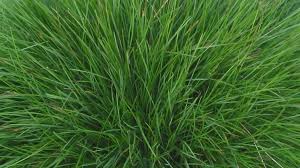
Chewings fescue (Festuca rubra subsp. commutata) is one of the fine fescues, a group of closely related grass species valued for their narrow leaf blades, low maintenance requirements, and tolerance of shade, drought, and poor soils. It is a non-creeping grass that forms tight, upright bunches rather than spreading by rhizomes or stolons, which makes it the most compact of the red fescues and particularly suited to fine ornamental lawns where a uniform, dense sward is the goal. Named after Henry Chewings, a New Zealand seed producer who commercialised the variety in the late nineteenth century, it has been a constituent of quality lawn seed mixes for well over a hundred years.
Chewings fescue is most commonly found as a component of fine lawn and amenity seed mixes alongside creeping red fescue and browntop bent. On its own, it produces a very fine, dense turf capable of being maintained at low mowing heights, which makes it a preferred species on golf approaches, croquet lawns, and ornamental garden lawns where visual quality takes precedence over hard wear. In mixed mixes used for standard domestic lawns, it provides texture and low-input resilience while perennial ryegrass contributes early establishment speed and wear tolerance.
As a subspecies of Festuca rubra, Chewings fescue is botanically close to creeping red fescue, and the two are frequently confused. The defining difference is the growth habit: creeping red fescue extends by rhizomes and short stolons to fill bare ground, whereas Chewings fescue is entirely non-rhizomatous and stays where it is sown. This makes Chewings fescue a predictable, non-invasive addition to a fine lawn mix but limits its ability to self-repair bare areas, a task better left to creeping red fescue or smooth-stalked meadow grass in mixed swards.
Botanical Profile and Identification
The most distinctive feature of Chewings fescue is the leaf blade, which is very fine and bristle-like, typically 0.5 to 1mm in diameter and inrolled in cross-section, giving it a thread-like appearance when viewed close up. The leaves are smooth, mid to dark green, and relatively stiff compared with the softer texture of browntop bent. Tillers are produced densely from the base, and established plants form a compact, upright bunch with no lateral spread at soil level.
The ligule is very short and membranous, typically less than 1mm, and the auricles are absent. At the base of each tiller, a characteristic reddish-pink colouration at the sheath is common and shared with other red fescues, which gives the Festuca rubra group its common name. The plant grows to 20 to 60cm if left unmown, producing narrow, open panicle seed heads from June through August, which are considerably finer than those of perennial ryegrass.
In a managed lawn, Chewings fescue is most easily identified by the very fine, inrolled leaf texture combined with the non-spreading, bunching growth habit. Where it grows alongside creeping red fescue, the two can be separated by looking at the base of the plant: creeping red fescue will show a spreading rhizome network at soil level, whereas Chewings fescue has no horizontal growth and sits as a tight, upright clump.
How It Fits Into Lawn Seed Mixes
Chewings fescue is one of the three core species in fine lawn seed mixes, alongside creeping red fescue and browntop bent. A typical fine or ornamental lawn mix might contain 40 to 60 per cent Chewings fescue, 20 to 30 per cent creeping red fescue, and 10 to 20 per cent browntop bent, with the proportions adjusted depending on the intended use and soil conditions. The Chewings fescue provides the bulk of the sward density and fine texture; the creeping red fescue contributes the rhizomatous self-repair; the browntop bent adds competitive ability at very low mowing heights and on low-fertility soils.
In amenity seed mixes intended for lower-maintenance situations, Chewings fescue may appear alongside perennial ryegrass and smooth-stalked meadow grass at lower inclusion rates of 10 to 20 per cent, where its role is primarily to contribute shade tolerance and drought resilience rather than to define the character of the sward. At these rates, the ryegrass dominates establishment and early appearance, while the Chewings fescue fills in progressively on the finer-textured areas of the lawn over the first two growing seasons.
Seed mix designers use Chewings fescue rather than creeping red fescue when a non-spreading mix is required, for example in narrow border lawns or formal paths where lateral spread into beds and borders is undesirable. The STRI lists a range of approved Chewings fescue cultivars for amenity use, including varieties with improved disease resistance and finer leaf texture compared with older agricultural strains; these improved cultivars establish more predictably and maintain finer texture at low mowing heights than non-selected seed.
When and How to Sow Chewings Fescue
Best Sowing Windows
The best time to sow Chewings fescue is late August through September. Soil temperatures at this point are still warm from summer, weed competition begins to decline, and the cooler, damper conditions of early autumn support steady germination and establishment without the heat stress or weed pressure of a spring sowing. Chewings fescue germinates reliably at soil temperatures between 10 and 20 degrees Celsius; temperatures above 25 degrees Celsius inhibit germination and can cause uneven establishment in a hot early autumn.
Spring sowing from April through May is the second-best option. Soil temperatures in most parts of England and Wales reach 10 degrees Celsius by late April, and the warming conditions through May support progressive establishment. A spring sowing on a fine lawn mix containing Chewings fescue faces stronger weed competition than an autumn sowing, and a post-emergent selective herbicide applied after the first two to three mows is advisable on sites with a history of weed pressure. Avoid sowing in July and August, when high soil temperatures and low rainfall create difficult conditions for fine fescue seedlings.
Where Chewings fescue is being sown as part of a mixed blend containing perennial ryegrass, follow the sowing schedule appropriate for the ryegrass, which is less sensitive to soil temperature variation. The ryegrass will establish first and provide early ground cover; the Chewings fescue seedlings will emerge more slowly and fill in through the first and second growing seasons as the mix develops its long-term character.
Soil Preparation and Sowing Rates
Chewings fescue performs best on well-drained, low to moderate fertility soils with a pH between 5.5 and 6.5. Unlike ryegrass, which benefits from fertile, moisture-retentive soils, Chewings fescue is adapted to leaner conditions and performs less well on rich, heavy soils where ryegrass and annual meadow grass (Poa annua) can outcompete it. If the soil is very fertile, avoid applying a pre-seeding nitrogen fertiliser before sowing a Chewings fescue-based mix; a low-nitrogen starter fertiliser with an NPK ratio around 5-10-10 is preferable to promote rooting without stimulating competing weed growth.
Prepare the seedbed to a fine, firm tilth, removing stones, debris, and any perennial weed roots. Chewings fescue seed is fine and light; a loose, open seedbed leads to uneven seed-to-soil contact and patchy germination. When sowing as part of a mixed blend, the appropriate total sowing rate is 35 to 40 grams per square metre. For a pure Chewings fescue sowing, 20 to 25 grams per square metre is sufficient for a new lawn. When overseeding into an existing sward, use 8 to 12 grams per square metre, applied after light scarification to open the soil surface.
Sow in two passes at right angles for even distribution, then lightly rake the seed into the surface to ensure soil contact. Roll or firm by foot, then keep the seedbed consistently moist until germination is complete. Do not allow the seedbed to dry out between waterings; fine fescue seedlings are small and their root systems shallow in the early weeks, making them more vulnerable to moisture stress than the deeper-rooted ryegrass seedling.
Germination and Early Establishment
At optimal soil temperatures of 15 to 20 degrees Celsius, Chewings fescue germinates within 7 to 14 days. At lower temperatures of 10 to 12 degrees Celsius, expect 14 to 21 days. In a mixed sowing with perennial ryegrass, the ryegrass will be visibly established before the fescue seedlings emerge, which is normal and expected. In a pure Chewings fescue sowing, or a fine lawn mix of fescues and browntop bent without ryegrass, germination is slower and more uniform, and the full emergence of the seedling population takes two to three weeks at autumn temperatures.
The new lawn can receive its first cut when the most advanced seedlings reach 50 to 60mm. Set the mower at its highest setting and ensure the blades are sharp; the fine leaves of Chewings fescue are more susceptible to tearing and bruising from a blunt blade than the broader leaves of ryegrass. Remove no more than one-third of the blade length in the first cut, then progressively reduce the mowing height over the following four to six cuts until the target maintenance height is reached.
Avoid foot traffic on the new lawn beyond what is necessary for mowing for the first 10 to 12 weeks. Chewings fescue seedlings, though relatively quick to establish compared with browntop bent, have shallow root systems in the first season that are vulnerable to compaction from repeated use before the sward fully consolidates.
Mowing Chewings Fescue
Recommended Cutting Heights
Chewings fescue is one of the most tolerant lawn grasses of low mowing heights. On an ornamental or fine lawn maintained for visual quality, a cutting height of 10 to 20mm is achievable with improved cultivars and a sharp, well-maintained mower. For a standard domestic lawn where appearance and light use are balanced, 20 to 35mm suits the species well. Below 10mm, the dense tuft structure of the plant begins to suffer, and the tips of the inrolled leaves are unable to function effectively at photosynthesis, which leads to a yellowing and thinning of the sward over time.
Do not scalp a Chewings fescue lawn. The fine fescues are slower to recover from severe scalping than perennial ryegrass, and because Chewings fescue does not spread by rhizomes or stolons, it cannot fill bare or weakened areas from neighbouring plants in the way that creeping red fescue can. If the lawn has grown long between mowing sessions, reduce the height gradually over two or three cuts rather than dropping to the target height in one pass.
Raising the cutting height to 25 to 35mm through July and August benefits a Chewings fescue lawn during the hottest and driest part of the year. The greater leaf area supports the plant through heat stress and reduced soil moisture, and the denser canopy at a higher cut shades the soil surface, reducing temperature and slowing moisture loss from the shallow root zone.
Mowing Frequency
Chewings fescue grows at a moderate rate through the growing season, slower than perennial ryegrass but similar to creeping red fescue. At maintenance heights of 20 to 35mm, once-weekly mowing from April through June is typically sufficient to maintain the one-third rule. Through July and August, growth slows considerably, and fortnightly mowing is often adequate unless irrigation is applied. The growing season runs from March through October; growth essentially stops below 5 degrees Celsius.
In autumn, mowing frequency reduces naturally as temperature and light levels fall. Continue mowing until growth stops, maintaining the target height rather than allowing the sward to grow tall before winter. A lawn entering winter at its correct maintenance height is less prone to the humid conditions at the base of long grass that favour fusarium patch, which is the most damaging disease of fine fescue lawns through the damp months from October to March.
Feeding Chewings Fescue
Nitrogen Requirements
Chewings fescue has low nitrogen requirements, the lowest of any grass species commonly used in lawn mixes. A lawn dominated by Chewings fescue and the other fine fescues needs no more than two fertiliser applications per year in most situations. Over-feeding with nitrogen is one of the most common mistakes made on fine fescue lawns: excess nitrogen produces soft, lush growth with reduced drought tolerance, thatch accumulation, and increased susceptibility to fusarium patch, leaf spot, and red thread diseases.
In spring, a light application of a balanced fertiliser with an NPK ratio around 6-4-4 at 20 to 25 grams per square metre is sufficient to support the season’s growth. A second application in late May at the same rate sustains growth through early summer. Unlike the maintenance regime for perennial ryegrass, which may include a further light summer feed, a Chewings fescue lawn does not benefit from nitrogen applications after early June. Feeding beyond this point risks disease and weakens the drought hardiness that makes the species useful.
Iron sulphate applied at 35 grams per square metre in late spring and again in early autumn is a more appropriate mid-season treatment for a Chewings fescue lawn than additional nitrogen. Iron deepens the colour of the fine leaves, suppresses moss, and hardens the plant against disease without the soft growth associated with nitrogen. Many fine lawn managers rely on iron sulphate as the primary in-season product, applying nitrogen only in spring and relying on iron for the remainder of the growing season.
Autumn Feed and Winter Preparation
Apply an autumn fertiliser in September with an NPK ratio of 3-0-8 or 4-0-14. The potassium content strengthens cell walls, improves frost hardiness, and supports disease resistance through the damp autumn and winter months when fusarium patch pressure is at its peak on fine fescue lawns. This single autumn application is the most important feed of the year for a lawn managed for long-term quality and disease resistance.
Do not apply nitrogen after September on a Chewings fescue lawn. Soft growth entering winter is the primary risk factor for fusarium patch, and fine fescues are more susceptible to this disease than ryegrass. The RHS notes excess autumn nitrogen as one of the most common preventable causes of fungal disease on fine lawn surfaces. A firm, hardened sward entering winter is far more resistant to disease than one that has received a late nitrogen application and entered the cold months with soft, lush leaf tissue.
Watering Chewings Fescue
Drought Tolerance
Chewings fescue is one of the most drought-tolerant grasses available for lawn use. It handles dry spells significantly better than perennial ryegrass and performs comparably with creeping red fescue in extended dry conditions. In a typical summer, a Chewings fescue lawn or a mix containing a high proportion of fine fescues will maintain colour and growth without supplementary irrigation on most soil types.
In an extended dry spell, Chewings fescue enters dormancy, turning first blue-green then straw-brown as the leaf tissue loses turgor. Dormancy is not damaging; the plant recovers fully when rainfall returns, typically within two to three weeks of consistent moisture. Because Chewings fescue does not produce rhizomes, dormancy recovery is driven entirely by tillering from the crown of each plant rather than regrowth from below-ground storage structures. Recovery is nonetheless reliable on all but very shallow soils.
On free-draining sandy soils or shallow chalk sites where summer drought is most pronounced, Chewings fescue is often the preferred primary species precisely because of its drought hardiness. The combination of low fertility requirement and drought tolerance makes it better suited to these conditions than ryegrass or smooth-stalked meadow grass, both of which perform poorly on very dry, nutrient-poor substrates.
Watering Guidance
Where supplementary irrigation is used, apply 20 to 25mm of water per week. Water in the early morning before 10am; evening or overnight watering on a Chewings fescue lawn prolongs leaf wetness and increases the risk of fusarium patch and red thread diseases, both of which are common on fine fescue lawns through damp periods. A straight-sided container placed on the lawn while the sprinkler runs provides a simple check on application volume.
Chewings fescue does not tolerate prolonged waterlogging. On heavy clay soils or in areas with persistently poor drainage, the fine fescues thin progressively as the anaerobic soil conditions stress the root system. Hollow-tine aeration in autumn followed by top-dressing with a sandy compost mix improves drainage on compacted lawns and extends the growing environment suitable for fine fescues. On persistently wet sites, ryegrass or rough-stalked meadow grass is better suited than Chewings fescue.
Common Diseases and Problems
Red thread (Laetisaria fuciformis) is the most common disease on Chewings fescue lawns and is closely associated with low soil nitrogen. It appears from late summer through autumn as patches of bleached, pinkish-tan grass with distinctive red or pink thread-like fungal strands visible at the tips of affected leaves. Affected patches range from 5 to 30cm in diameter and can coalesce into larger areas in severe outbreaks. A light application of nitrogen, 10 to 15 grams per square metre as a balanced fertiliser, is the most effective treatment; the disease rarely causes permanent damage and the sward recovers within two to three weeks of the nitrogen application and a return of dry weather.
Fusarium patch (Microdochium nivale) is the most damaging disease of fine fescue lawns and is most active from October through March. It appears as circular, orange-brown patches, 2 to 30cm in diameter, with a white or pale mycelial margin visible in humid conditions. Excess nitrogen in autumn, poor drainage, and a thatch layer deeper than 10mm are the primary contributing factors on Chewings fescue lawns. Preventative management, which includes the correct autumn fertiliser programme, autumn aeration and scarifying to manage thatch, and avoiding late nitrogen applications, is significantly more effective than attempting to control active outbreaks with fungicide.
Dollar spot (Clarireedia jacksonii) is less common but occurs on fine fescue lawns in warm, humid conditions, typically June through September. It produces small, bleached spots 2 to 5cm in diameter and is associated with low nitrogen and drought stress. Adequate spring and early summer nitrogen, combined with avoiding prolonged leaf wetness through morning watering only, reduces the risk. Where dollar spot appears regularly in the same areas each year, soil aeration and thatch management in autumn address the underlying conditions rather than the symptom.
Chewings Fescue Frequently Asked Questions
What is Chewings fescue used for?
Chewings fescue is used primarily in fine and ornamental lawn seed mixes, where its narrow, bristle-like leaves produce a dense, high-quality sward at low mowing heights. It appears in golf course approaches and fairways, croquet lawns, ornamental garden lawns, and amenity areas managed for visual quality rather than hard wear. In standard domestic lawn mixes, it contributes shade tolerance and drought hardiness alongside faster-establishing species such as perennial ryegrass.
Is creeping red fescue better than Chewings fescue?
The two species suit different situations. Creeping red fescue spreads by rhizomes and is better at self-repairing bare or worn areas, which makes it the more practical choice for a lawn subject to moderate use or localised damage. Chewings fescue is non-spreading and stays compact, which makes it preferable for fine ornamental lawns where a tighter, more uniform sward is needed and self-repair is less important than texture. Most fine lawn mixes include both species, using them in combination to balance self-repair capability with fine texture.
What is the growth habit of Chewings fescue?
Chewings fescue is a non-creeping, tufted grass. It grows as a tight, upright bunch from a basal crown, producing dense tillers that give established plants a compact, predictable form. It does not produce rhizomes or stolons and has no capacity to spread laterally into adjoining areas of the lawn or into garden beds. This non-spreading habit makes it a contained, predictable component of a lawn mix but means it relies on other species such as creeping red fescue to fill any bare ground that develops.
What are the disadvantages of fescue grass?
The main disadvantages of the fine fescues, including Chewings fescue, are their slow establishment, limited wear tolerance compared with perennial ryegrass, and poor performance on fertile or waterlogged soils. A fine fescue lawn takes longer to reach a usable, consolidated sward than a ryegrass lawn, and it thins under regular heavy foot traffic without the self-repair capacity that rhizomatous species provide. The fine fescues also struggle on heavy clay soils or in persistently wet areas where ryegrass would cope. Red thread disease is a recurring issue on low-nitrogen fine fescue lawns and requires attention through the season to prevent.
How long does it take for Chewings fescue to germinate?
At optimal soil temperatures of 15 to 20 degrees Celsius, Chewings fescue germinates in 7 to 14 days. At lower temperatures of 10 to 12 degrees Celsius, which are typical of early spring and late autumn sowings, germination takes 14 to 21 days. In a mixed sowing with ryegrass, the ryegrass will be visible first; this does not indicate a problem with the fescue, which will emerge progressively as conditions allow. A fully consolidated fine fescue lawn at its target cutting height takes one full growing season from sowing.
Is Chewings fescue a tall fescue?
No. Chewings fescue is a fine fescue (Festuca rubra subsp. commutata), a subspecies of red fescue. Tall fescue (Festuca arundinacea) is a separate, unrelated species with broad, coarse leaves, a significantly taller growth habit, and very different management requirements. Tall fescue is rarely used in standard domestic lawn mixes and is far less common in Britain than in continental Europe and North America. Chewings fescue is one of the finest-leaved lawn grasses available, producing the narrow, bristle-like texture characteristic of the fine fescue group.
Sources
- Royal Horticultural Society. “Lawn Problems: Grass Seed Mixes.” rhs.org.uk
- Sports Turf Research Institute. “Turfgrass Seed: STRI Species and Variety Descriptions.” stri.co.uk
- Emmons, R. D. Turfgrass Science and Management. 4th ed. Delmar Cengage Learning, 2008.
- Christians, N. E., A. J. Patton, and Q. D. Law. Fundamentals of Turfgrass Management. 5th ed. Wiley, 2016.
- Bayer Environmental Science. “Red Thread in Amenity Turf.” Bayer Turf publications.
