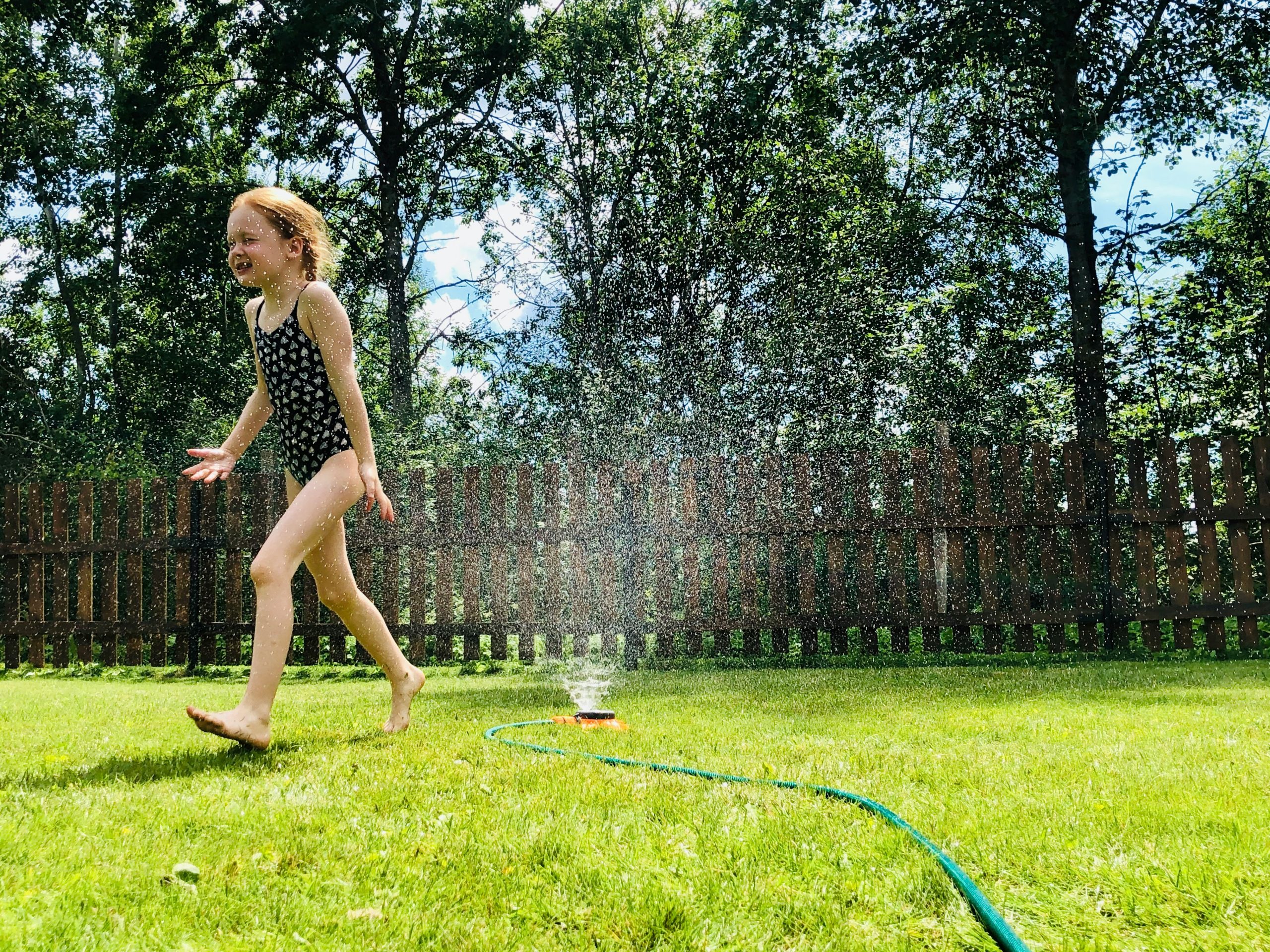
Walk down any UK street on a warm May evening and you will see at least one neighbour with a hose in their hand, sprinkling the lawn for ten minutes after work. Almost every aspect of what they are doing is wrong, and the lawn they are watering is being made worse by every minute the hose runs. If you have started watering your lawn this month or are about to, the difference between doing it well and doing it badly is the difference between a green lawn in August and a brown one in July.
The single biggest watering mistake the average UK home gardener makes is treating the lawn the way you treat a houseplant. A houseplant needs a small amount of water often. A lawn needs a large amount of water occasionally. Mix those up and you actively damage the lawn while feeling like you are looking after it.
How Much Water a UK Lawn Actually Needs
The Royal Horticultural Society guidance, repeated by every commercial groundsman in the country, is 25 to 30 millimetres of water per week including rainfall during the growing season. That figure is your starting point and the number you should write on a piece of paper and stick to the inside of the shed door.
Translated into more useful units: 25mm of water per square metre is 25 litres per square metre. For a typical 50m² UK back garden, that is 1,250 litres a week. For a 100m² lawn, 2,500 litres. If you are watering 5 litres at a time with the can and walking off, you have just delivered less than 0.4 per cent of what the lawn needs that week. The lawn is no better off than if you had not watered at all.
The 25 to 30mm figure includes rainfall, which is what catches most people out in May. Check the Met Office rainfall figures for your postcode (the BBC Weather app shows weekly totals for free). If your area had 12mm of rain in the last 7 days, the lawn needs another 13 to 18mm from you, not the full 25mm. Watering on top of rainfall produces a soggy, disease-prone lawn and wastes mains water that may shortly be rationed.
Why Daily Watering Trains a Worse Lawn
The reason daily light watering is the wrong approach is simple: grass roots grow towards the deepest reliable moisture. If the top 20mm of soil is wet every evening because of your 10-minute sprinkler session, the roots have no reason to grow deeper than 20mm. The lawn ends up with a shallow root system that depends on you for its survival.
Skip a single day in a hot spell and the shallow roots dry out within 24 hours. The same lawn could have been carrying roots 150mm deep, drawing on cooler subsoil moisture and ignoring you altogether, if you had watered it differently.
The right pattern is a single, slow, deep soaking once a week. Twice a week in heatwave conditions. The soaking has to go deep enough to wet the soil at root depth, not just at blade depth, and that is the whole point of the exercise.
The Tuna Tin Test That Tells You When to Stop
The cheapest measuring tool for lawn watering is an empty tuna or sweetcorn tin. Place three empty tins at different points across the lawn before you turn on the sprinkler. Run the sprinkler until each tin has 25mm of water in it. Note the time. That is your watering duration for the position the sprinkler was in.
Then move the sprinkler to the next zone if your lawn is bigger than the sprinkler’s footprint, and run the same time.
Most domestic oscillating sprinklers (Hozelock 2515, £24.99 at B&Q, or the Karcher OS 5.320 at £29.99 at Wickes) cover 40 to 50m² and take 90 minutes to 2 hours to deliver 25mm. Pulsating impact sprinklers (Gardena Pulse 4400, £39.99 at Argos) cover 8 to 12m² and take 75 minutes per position. The actual time varies hugely with water pressure and sprinkler model, so the tuna tin test is the only reliable way to know your specific setup.
The other useful kit is a Hozelock 2715 mechanical timer (£14.99 at Wickes) or the Karcher WT 4 digital timer (£39.99 at B&Q). Both attach between the tap and the hose, and let you set the watering session for 4am so you are not standing in the garden at first light.
When in the Day to Water
The best time is between 4am and 7am. The worst time is between 11am and 4pm.
Early morning watering puts water on the lawn when temperatures are at their daily minimum and evaporation losses are at their lowest. About 5 per cent of the water evaporates before it reaches the soil. The grass then has the rest of the day to dry on top, which keeps fungal diseases at bay.
Midday watering loses 25 to 40 per cent of the water to evaporation. The wet grass blades also act as small lenses that can cause leaf scorch in direct sun, particularly on a hot day above 25°C.
Evening watering loses less to evaporation than midday, but the lawn then sits wet through the night. Fungal diseases like red thread and dollar spot need 12+ hours of leaf wetness to take hold. A lawn watered at 8pm is wet from 8pm until at least 8am the next morning, which is exactly the conditions those diseases need.
If you cannot set a timer for 4am, water as early in the morning as you can manage. 6am with the can is better than 8pm with the sprinkler. The 4am to 7am window is also when the lowest water pressure on the street tends to be best in many areas, which makes any sprinkler-based system more effective at the same setting.
When to Start Watering and When to Stop
You should not be watering a UK lawn in May unless one of three things is true: there has been less than 15mm of rain in the previous two weeks, the soil under the lawn feels dry when you push a screwdriver in 50mm, or the grass blades have started to fold along their length (a stress signal grass shows before it goes brown).
If none of those is true, do not water. May lawns in normal UK conditions should not need any artificial watering. The soil still holds reserves from April’s rain and grass is still actively rooting. Watering when the lawn does not need it is the second worst thing you can do with the hose, after evening watering.
The decision to start regular watering is the moment the lawn fails the screwdriver test (50mm push and the soil clings to the screwdriver tip when you pull it out, indicating moisture, versus crumbles and falls off easily, indicating dryness). For most UK gardens that day is somewhere between late May and mid-June in a typical year.
Watering should stop in late August or early September even if the lawn is brown. Autumn rains are usually enough to revive a dormant lawn within 14 days, and watering into September delays the lawn’s natural transition into winter hardiness.
What to Do During a Hosepipe Ban
If a hosepipe ban is declared in your area (Yorkshire, Sussex and Kent are the highest-risk regions for summer 2026), the rules typically allow watering with a watering can filled from the mains, but not sprinklers or hosepipes. Greywater (bath water, washing-up water, hand-basin water) is usually allowed for any garden use.
The practical approach during a ban is to triage. Pick the 10 to 15m² of lawn you care most about (probably the part visible from the kitchen) and concentrate your watering effort there. A single 10L watering can delivers 1L per square metre over 10m². You need two cans, three times a week, to keep that small zone green. That is 30 minutes of work three times a week.
Let the rest of the lawn go dormant. A dormant UK lawn is alive at the crown and will recover within 14 days of the ban lifting or normal rainfall returning. Do not waste rationed watering can effort trying to save the whole lawn. You will fail to save any of it.
Most household water butts collect 150 to 250 litres in a single moderate rain shower. A 200L Strata Water Butt is £39.99 at Wickes. During a ban, the butt water is your supplementary supply for the part of the lawn you have triaged to keep green.
The Beginner Watering Checklist for May 2026
Check the last 7 days of rainfall in your postcode before any watering. Subtract from 25mm to get this week’s deficit.
If the deficit is more than 10mm, water in one deep session at 4am to 7am using a sprinkler. Use the tuna tin test to calibrate duration.
If the deficit is less than 10mm, do nothing. The lawn does not need help yet.
Never water in the evening. Never water at midday. Never water daily.
Raise the mower to 35mm and leave it there for the summer. Long grass holds water better than short grass.
Buy a timer for £15 to £40 and a water butt for £40. You will recover the cost in the first ban summer.
A lawn that is watered correctly in May develops the root system that carries it through July without any watering at all in most years. A lawn that is watered incorrectly in May goes brown the moment a hot spell arrives. The difference is one good sprinkler session a week, set for the right time of day, and the discipline to not touch the hose in between.