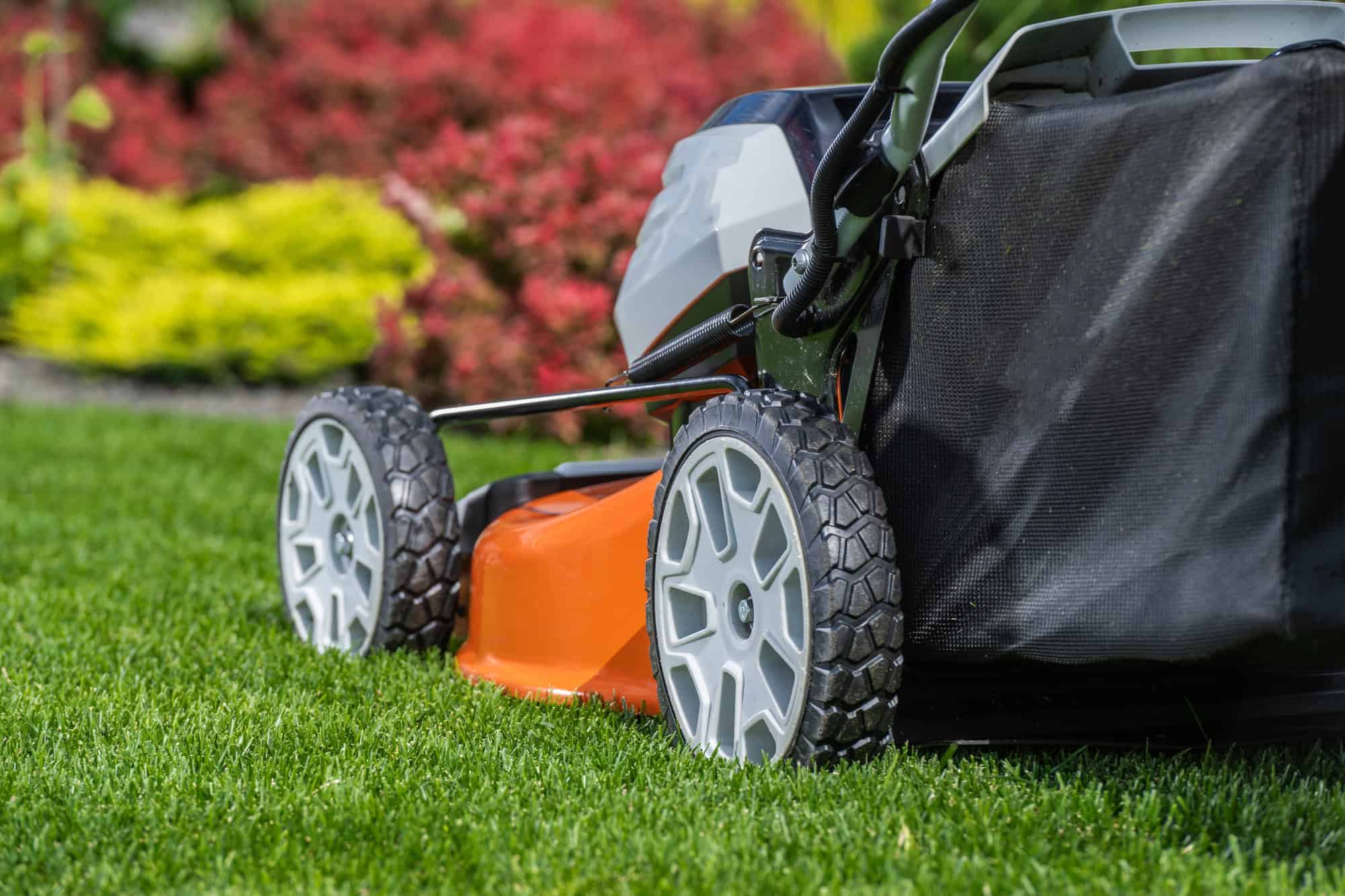
Five years ago, recommending a battery mower for anything bigger than a postage stamp lawn was a stretch. Run times were short, cutting power on long grass was patchy, and the price gap against a similar petrol machine was hard to defend. That argument is over. Battery technology has caught up so completely that for the great majority of gardens in 2026, a cordless mower is the better tool on every measure that counts for a normal user. The petrol mower has not died, but its remaining use case is now narrow enough that most buyers no longer need to consider it.
If you are replacing an ageing mower this year or buying your first machine, this is what the modern battery options actually do, where they earn their keep, and the specific models that consistently deliver in independent testing.
The Numbers That Settled the Argument
The shift came from two changes in battery chemistry. Lithium-ion cells with energy densities above 200 Wh/kg, now standard across Ego, Stihl, Greenworks Pro, Milwaukee, and DeWalt platforms, mean a 5Ah 56-volt pack stores enough energy to cut around 250 to 350m² (2,700 to 3,800 sq ft) on a single charge depending on grass length. Brushless motor design has done the rest, taking peak torque output to within 10 percent of an equivalent petrol motor.
For a typical 100 to 300m² garden, even mid-priced battery machines now complete the full cut on one charge with the second battery sitting unused in the box. For lawns up to 600m², swapping a second pack at the halfway point gets the job done without waiting for a recharge. Only above around 800m² do petrol mowers retain a real run-time advantage, and at that point most home gardeners are looking at ride-ons or robot solutions anyway.
Independent testing from Consumer Reports, Gardeners’ World, and Which? consistently rates the top battery machines as equal to or better than their petrol equivalents on cut quality, with significantly lower noise, no fuel storage hassles, no winter starting problems, and almost zero servicing.
The Practical Advantages Most Buyers Underestimate
Run time and cut quality are now equal. What separates battery from petrol is everything that surrounds them.
Noise sits at around 75 to 80 decibels for a battery mower versus 90 to 100 for petrol. The difference is significant. You can mow before 8am on a Saturday without annoying neighbours, you can have a conversation without shouting, and you can hear birds and traffic well enough to stay safe. For people with anxious pets, the drop in noise alone is often the deciding factor.
Weight is lower across most direct comparisons. A 41cm petrol push mower weighs around 25 to 30kg; an equivalent battery push mower sits between 17 and 22kg. That difference is felt every time you turn the machine, every time you lift it to empty the catcher, and every time you put it back in the shed.
Maintenance disappears almost entirely. There is no spark plug, no oil change, no carburettor that gums up over winter, no petrol that goes stale, no fuel filter to replace. Sharpen the blade once a year, hose down the deck after each mow, and the machine is ready for the next session.
Storage is cleaner. A battery mower can sit on its end in a garage without leaking oil or petrol. Folding handles on most modern models bring the storage footprint down to less than a third of a typical petrol machine.
Starting is one button. The “petrol mower that will not start in spring” is a cliché because it is true. A flat battery can be replaced with a charged spare in five seconds and you are mowing.
The Models That Consistently Win
For a small lawn up to 200m² where price is the priority, the Bosch UniversalRotak 36-550 (around £280/$360) and the Greenworks 48V 41cm (around £250/$320) are the strongest entry points. Both come with a battery and charger included, both fold flat for storage, and both will cut a typical urban back garden on a single charge with capacity to spare.
For a medium lawn between 200 and 500m² where you want a proper professional-grade cut and stripes, the Stihl RMA 448 RV (around £550/$700 with battery) is the perennial benchmark. Self-propelled drive, full rear roller for stripes, Stihl AP system batteries that fit the brand’s hedge trimmer, strimmer, and chainsaw, and a build quality that comfortably matches petrol equivalents at twice the price.
For a similar lawn at a slightly lower price, the Ego LM2122E-SP (around £450/$580) is the closest competitor. Ego’s 56-volt batteries hold their charge through winter better than most rivals, and the brand’s commitment to a single battery platform means you can buy a strimmer, blower, and chainsaw that all share the same packs.
For a larger lawn between 500 and 800m², the Ego Power+ Select Cut LM2156SP (around £750/$950) with a 7.5Ah battery, or the Stihl RMA 765 V (around £1,100/$1,400) for professional-grade use, will complete the cut without a battery swap on most weeks. The Greenworks 60V Pro 21″ self-propelled (around $550 in the US, less common in the UK) is the standout value option for large yards.
For the very rare gardens above 1,000m² where neither battery nor petrol pushes make sense, robot mowers from Husqvarna Automower, Worx Landroid, Stihl iMOW, and Segway Navimow are the better answer than a larger petrol machine.
What Battery Mowers Still Cannot Do
Three use cases still tip the balance towards petrol or towards a different tool altogether.
Very rough grass and meadow management is the first. Cutting a 30cm (12 inch) tall stand of meadow grass is hard on any rotary mower, and battery machines under load will drain a 5Ah pack in fifteen to twenty minutes. For seasonal cuts of orchards, paddocks, or naturalised areas, a petrol mower or a powered scythe such as the Husqvarna 122LK with brushcutter head is the right tool.
Steep slopes above about 25 degrees are the second. Self-propelled drive on battery mowers, particularly mid-priced ones, is geared for flat lawns. The drive will work uphill but you will burn through battery capacity at twice the normal rate. For very steep banks, a lightweight push petrol mower or a remote-control slope mower is safer and more efficient.
Daily commercial use is the third. A landscaper running three lawns a day, six days a week, is putting the kind of hours on a machine that battery platforms still struggle to match without expensive 10Ah or 12Ah packs and multiple chargers. The professional-grade Stihl, Husqvarna, and Honda HRX models on petrol remain the workhorse choices for that user.
For everyone else, including almost every home gardener with a managed lawn between 50 and 800m², a battery mower will do everything the petrol equivalent does, with less noise, less maintenance, and less hassle.
The Battery Platform Counts For More Than the Mower
Buying a battery mower is buying into a tool ecosystem. The pack that powers the mower can often power a strimmer, leaf blower, hedge trimmer, pole pruner, and chainsaw from the same brand. Once you have two or three batteries in rotation, the cost of adding the next tool is just the bare-tool price, which makes the system cheaper to expand than a series of standalone petrol machines.
The three platforms with the strongest tool ranges in 2026 are Ego 56V, Stihl AP/AK, and Greenworks 60V Pro. DeWalt 54V FlexVolt and Milwaukee M18 are strong on construction tools but their garden range is thinner. Bosch’s 18V Power For All system covers smaller tools well but its mowers are limited to small-lawn formats.
The mistake to avoid is buying a cheap mower on a platform you do not intend to expand. If the spare battery alone costs more than the next-up branded mower, you are paying a premium for a closed ecosystem. Check the price of a 5Ah battery and a fast charger as a separate purchase before committing to the brand; that number tells you more about lifetime cost than the mower’s headline price.
Look for at least a 5-year warranty on the tool itself and 3 years on the batteries from a mainstream brand. Both Ego and Stihl meet that standard. Lesser-known brands sometimes match the headline tool warranty but only cover batteries for a year, which is the part that determines whether the machine is still working in 2031.
Cost Over Five Years, Not Five Minutes
The sticker price on a mid-range battery mower is roughly £100 to £200 / $130 to $250 higher than a comparable petrol machine. Over five years, the running cost difference more than reverses that. A petrol mower will get through 30 to 50 litres of fuel over five seasons (£60 to £100 / $80 to $130), at least one annual service at £40 to £80, two or three spark plugs, an air filter, and an oil change every season. A battery mower needs none of that. The only consumable in five years is likely to be a £25 / $35 replacement blade.
The “petrol is cheaper” assumption has not been true since around 2021 for any user mowing less than three lawns a week. For a single-garden owner, the total cost of ownership of a battery mower is now lower than petrol by year four for almost every comparison.
For nearly every garden mower buyer in 2026, the right question is no longer “should I go battery”. It is “which battery platform”. Pick the ecosystem you trust to be around in ten years, buy the machine that matches your lawn size on it, and put the petrol can in the recycling.