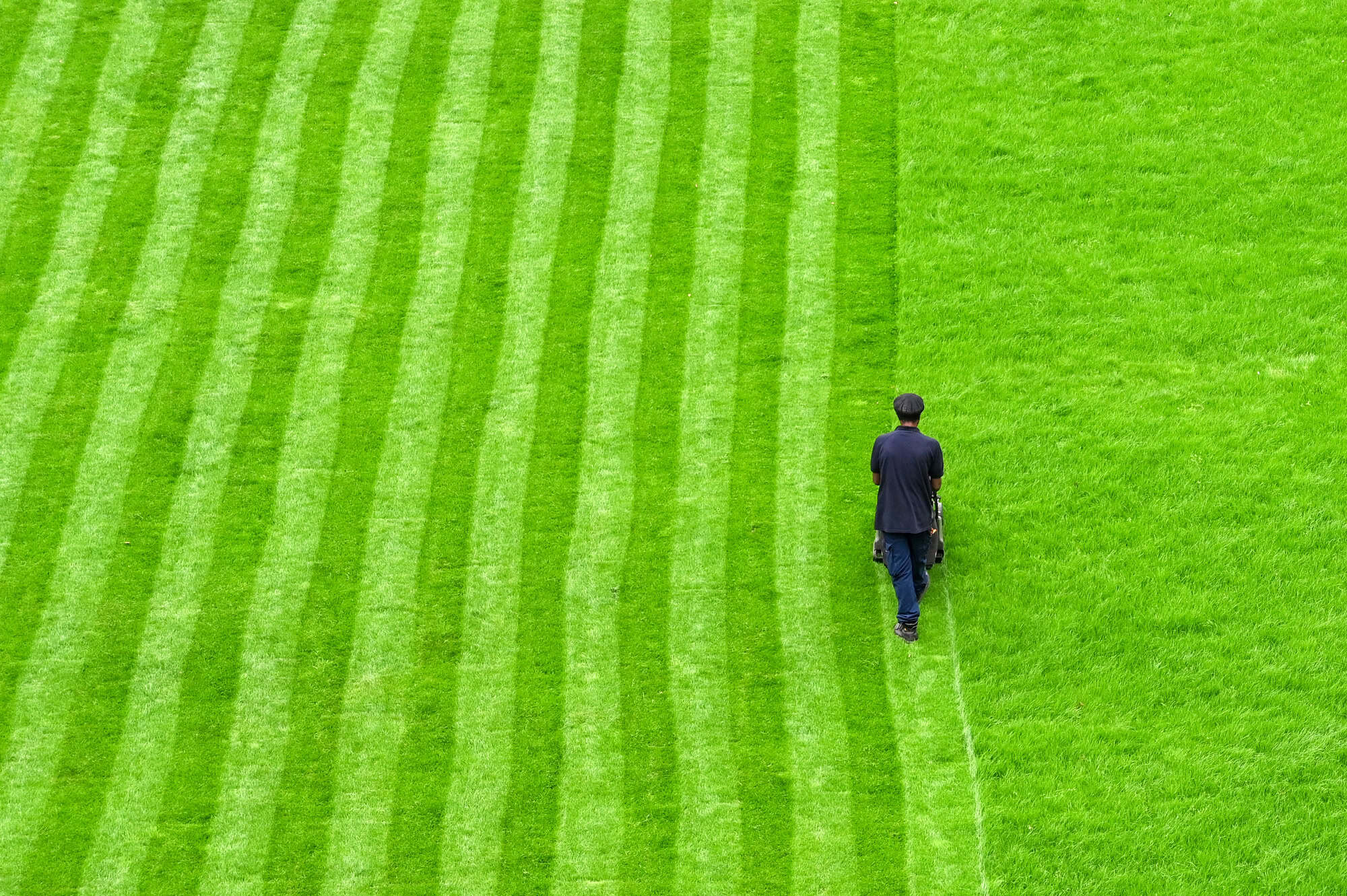
A striped lawn is not a different kind of grass. It is the same grass you already own, with the leaves laid in alternate directions so they catch sunlight differently. Once you see how the trick works, the cricket-pitch finish that looks so out of reach becomes a fifteen-minute job that any rotary mower with a rear roller can produce, and a stripe-kit attachment can give to almost any modern mower regardless of brand. The difference between a lawn that looks ordinary and one that draws comments from every neighbour is technique, not equipment.
Professional groundsmen at cricket grounds, football pitches, and bowling greens follow a few principles that home gardeners can copy almost exactly. The cost is low, the result is dramatic, and the lawn itself benefits because the alternating direction of cut prevents the rutting and grain that develop when you mow the same way every week.
How Stripes Are Actually Made
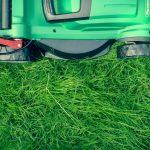
The light and dark bands you see on a striped lawn are not stripes of grass; they are stripes of the same grass bent in opposite directions. When a blade leans away from you, the flat upper surface catches the sun and looks bright; when it leans towards you, you see the shaded underside and the band looks dark. The width of each stripe matches the cutting width of the mower because every adjacent pass goes in opposite directions.
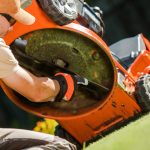
What actually bends the grass is not the cutting blade but the roller that follows it. Cylinder mowers, almost universal in professional turf, have a large heavy rear roller as standard. Modern petrol and battery rotary mowers built for “stripes” have a smaller dedicated rear roller behind the cutting deck. Without a roller, you will get only the faintest hint of a stripe, because spinning rotary blades leave the grass standing upright rather than laying it over.
Grass type also affects the result. Cool-season grasses such as perennial ryegrass, Kentucky bluegrass, and fine fescues show stripes brilliantly because their leaves are long and flexible enough to lay over and stay there until the next cut. Warm-season grasses such as bermuda and zoysia are shorter and stiffer; stripes are still visible but with less contrast. If your lawn is on the short side, around 2cm (under an inch), you will see almost no stripe regardless of equipment. The grass needs length to bend over.
What Equipment You Actually Need
For a lawn smaller than around 300m², a roller mower at the £200 to £450 / $250 to $570 price point will produce strong stripes without any add-on. The Hayter Spirit 41 (around £400/$510) is the entry-level benchmark and gives sharp stripes on small to medium lawns. The Cobra RM43SPC and Webb WERR17SP sit in similar territory. For larger gardens up to about 800m², the Hayter Harrier 48 (around £750/$950) is the perennial favourite among home gardeners who want results close to professional finish.
For mid-sized lawns where you want stripes and the convenience of a battery mower, look at the Stihl RMA 448 RV (around £550/$700 with battery) or the Ego LM2135E-SP self-propelled with the optional rear roller (around £700/$900). Both produce stripes that hold for the full week between mowings on a healthy lawn.
If you already own a rotary mower without a roller, you do not need to buy a new machine. A bolt-on lawn striping kit such as the Toro Lawn Striping System (around $130 for the universal version, around £100 if you can find an importer), the Big League Lawns CheckMate striper, or a generic universal kit from Greenworks or DIY rear-roller add-on from Amazon will give you nearly the same effect for a tenth of the cost of a new mower. Fitting takes about thirty minutes and most kits include adapters for the majority of branded decks.
A walk-behind lawn roller, the heavy drum tool you sometimes see at garden centres, is not the same thing as a striping roller. Those are designed for flattening turf in spring, not for striping every week, and dragging one across a lawn after each cut is far too much effort for the result.
The Mowing Technique That Produces Sharp Stripes
Set the deck higher than you might think. Stripes look strongest when grass is between 6 and 10cm (2.5 to 4 inches) tall at the time of cutting and you take off no more than a third. That usually means cutting at 4 to 5cm (1.5 to 2 inches) on a lawn that has grown back to 7 or 8cm in the past week. Short stripes do not exist; the grass simply cannot bend at less than 3cm.
Start with a full perimeter pass to define the working area. Mow once around the entire edge of the lawn, including around any flower beds, trees, or features. This creates a turning headland where you can manoeuvre at the ends of each pass without leaving partial stripes.
Pick a long straight reference edge such as a fence, path, or driveway and mow your first stripe parallel to it. The most common mistake home gardeners make is starting a stripe pattern by eye rather than to a reference; the further you go, the more your “straight” line curves, and the whole pattern looks crooked from the patio. Sight ahead, not down, and pick a fixed point at the far end of the lawn to aim at.
When you reach the end of the lawn, lift the mower deck (or disengage the blade if it is a battery machine) and turn the full machine through 180 degrees on the headland. Now mow the next stripe right back, hard against the previous one, going in the opposite direction. The roller will lay the new pass towards you and the previous pass away from you, creating the contrast band. Repeat the back-and-forth pattern across the whole lawn.
Finish with another perimeter pass to clean up the headland marks at each end. This last pass goes around the entire lawn at right angles to the stripe direction, which creates the framed-pitch look you see on cricket and football grounds.
How to Get the Sharpest Possible Lines
Three small refinements separate average stripes from striking ones. The first is overlap. Each pass should overlap the previous one by about 5 to 10cm (2 to 4 inches). Less and you get a strip of unmown grass between stripes; more and you waste time and lose stripe definition at the join.
The second is even speed. The roller bends grass more effectively when it moves at a steady walking pace, around 4 to 5 km/h (about 2.5 to 3 mph). Slow and you compact the lawn and leave wheel marks; fast and the roller skips over taller blades without laying them.
The third is rolling direction at the headland. When you turn the mower at the end of a stripe, lift the front of the deck slightly as you pivot so the roller does not scuff the turf. A scuff at the headland leaves a faint scar that ruins the framing pass at the end.
For an extra sharp finish, some gardeners go over the lawn a second time without the blade engaged, pushing the roller alone in the same direction as each stripe. This is the technique used at most county cricket grounds the night before a match.
Patterns Beyond the Basic Stripe
Once you have mastered straight back-and-forth stripes, three other patterns are simple variations. A diagonal stripe runs at 45 degrees to the long edge of the lawn rather than parallel to it, which makes a small garden look longer. Lay out the diagonal with a string line for the first pass, then continue back and forth as normal.
A checkerboard or chessboard pattern is two sets of stripes at right angles, applied a few days apart. Mow stripes north-south one week, then stripes east-west the next. The intersection of the two directions creates squares of light and dark across the lawn. This works best on lawns mowed twice weekly at full season.
A diamond pattern is a checkerboard rotated 45 degrees, so the squares become diamonds. It is the most decorative of the four and the most demanding to lay out, but it produces the look you see on Premier League pitches before a televised match.
Curved stripes around a feature such as a tree or pond can look stunning, but they require either a robot mower with curve-following software or a great deal of patience with a string line.
Why Striping Helps the Lawn, Not Just the Look
Beyond appearance, mowing in alternate directions every week is one of the best things you can do for long-term turf health. When a lawn is always mown in the same direction, the grass develops a slight “grain”, with leaves leaning permanently the same way. That favours one side of the plant over the other, encourages wear lines along the mower wheel tracks, and over a few seasons produces an uneven, rutted surface. Alternating the stripe direction each mow prevents grain from setting in and keeps wear distributed.
The roller itself also helps. Light, regular rolling pushes shallow surface seedlings and any frost heave back into firm contact with the soil, particularly in spring. Bowling greens and ornamental lawns rely on weekly rolling for exactly that reason.
The one caution is on wet ground. A heavy rear roller on saturated soil compacts the surface and squeezes out the air pockets that healthy roots need. If the lawn is so soft that footprints are visible after walking on it, skip the mow that week and wait until the surface firms up. Once the ground is dry enough to walk on without sinking, the roller is doing nothing but good.
A striped lawn is one of those rare gardening jobs where the visible reward is out of proportion to the effort. Twenty extra minutes a week, no new chemicals, no new techniques to learn beyond walking in straight lines, and the lawn looks like the one in a magazine. The first time you finish a clean diamond pattern on your own garden, you will not go back to ordinary mowing.