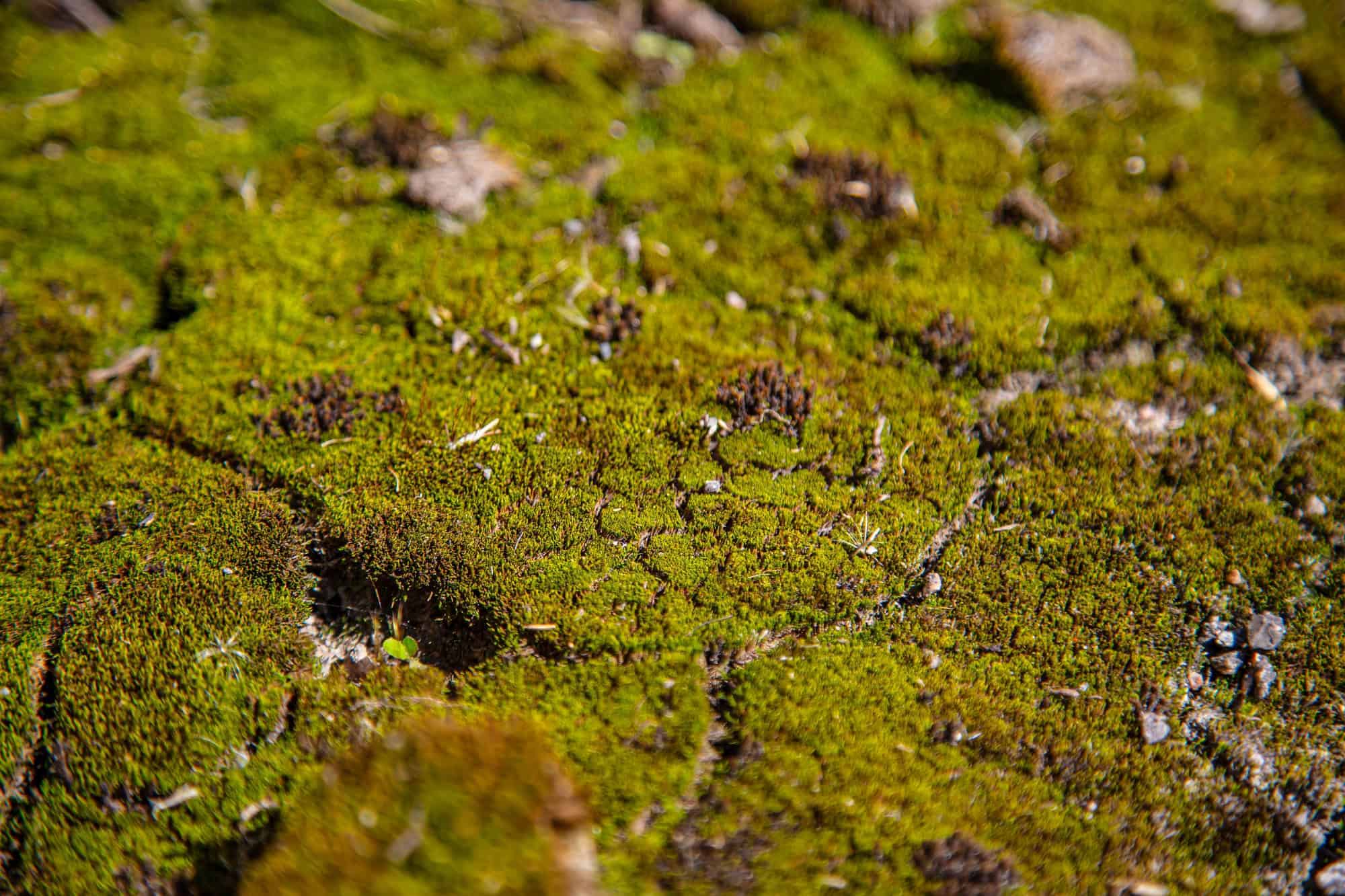
If you keep treating moss every year and it keeps coming back, the problem almost certainly is not the moss. It is the pH of the topsoil underneath. Moss thrives in acidic, compacted, damp soil because grass struggles in those conditions and leaves space for moss to colonise. You can kill the moss with iron sulphate as many times as you like, but until the soil chemistry changes, you are managing the symptom and ignoring the cause. Garden lime is the cause-side fix, and it is the one lawn treatment most gardeners skip because no marketing campaign tells them about it.
The good news is that lime is cheap, it is forgiving, and a single autumn application will keep a lawn out of the moss-friendly pH range for two to three years. The catch is that you need to know what you are dosing for, because applying too much lime is just as harmful as not enough.
Why Soil pH Drives Lawn Health More Than Any Feed You Apply
Grass nutrients only become plant-available within a specific pH window. The optimum for cool-season grasses (perennial ryegrass, fine fescue, smooth-stalked meadow grass, bent) is 6.0 to 6.8. Warm-season grasses (bermuda, zoysia, st augustine) prefer 6.0 to 7.0. Below 5.5, three things go wrong at once. Phosphorus locks into insoluble compounds with iron and aluminium and becomes unavailable to roots. Nitrogen-fixing soil bacteria slow down, so the natural nitrogen cycling that supplements your fertiliser drops off. And the soil becomes hospitable to moss, which prefers a pH around 5.0 to 5.5.
This is why a lawn with chronic moss often shows symptoms of nutrient deficiency at the same time. Pale green colour, slow recovery from mowing, thinning sward despite regular feeding. The fertiliser is going on, but the roots cannot access half of it because the pH is out of range. Raise the pH back into the 6.0 to 6.5 zone and the grass will respond to the feed you have already applied, often dramatically, within four to six weeks.
The reason most lawns drift acidic over time is rainfall. Rainwater is slightly acidic (around pH 5.6 from naturally dissolved carbon dioxide) and it leaches calcium and magnesium ions out of the topsoil season after season. Acidifying fertilisers, especially ammonium sulphate and iron sulphate, accelerate the drop. If you have been using iron sulphate for moss control twice a year for the last decade, your topsoil pH has almost certainly fallen below 5.5.
How to Test Soil pH Before You Apply Anything
Never lime a lawn without testing the soil first. Overliming pushes the pH above 7.0, which causes iron and manganese deficiencies that show up as yellow stripes and slow growth. Testing takes 10 minutes and costs less than a sandwich.
The cheapest accurate option is a digital pH meter with a stainless probe, around £12 to £18/$15 to $23 from Amazon or Screwfix. The Sonkir 3-in-1 (around £15/$19) reads pH, moisture and light, and is accurate enough for lawn use to within 0.2 pH units. Push the probe to a depth of 7cm (about 2.75 inches), wait 60 seconds, and read. Test in five spots across the lawn and average them, because pH can vary by half a point between a shaded corner and a sunny strip.
For higher accuracy, send a sample to a soil testing lab. The RHS soil analysis service (around £36/$46), Lancrop Laboratories, or any university extension service will return a full report on pH, organic matter, and macronutrient levels within two weeks. This is worth doing once every 3 to 5 years and is more reliable than any probe.
Calcitic Lime, Dolomitic Lime, and Which One You Actually Need
There are two types of agricultural lime sold for lawn use, and choosing the right one depends on your soil’s magnesium level. Calcitic lime is calcium carbonate only. Dolomitic lime contains both calcium carbonate and magnesium carbonate, typically in a ratio around 70:30. Magnesium is the central atom in every chlorophyll molecule, so a magnesium-deficient lawn looks pale and tired no matter how much nitrogen you apply.
If your soil test shows magnesium below 50 mg/L, choose dolomitic lime. If magnesium is adequate (above 100 mg/L), use calcitic lime, because excess magnesium can lock out calcium uptake. As a general rule, sandy soils tend to be magnesium-deficient and benefit from dolomitic. Heavy clay soils often have enough magnesium and only need calcitic.
Product availability and pricing: Vitax Garden Lime calcitic (around £8/$10 for 4kg, covers about 40m2), Westland Gro-Sure Lawn Lime (around £15/$19 for 8kg granular, easier to spread), or bulk agricultural dolomitic lime from a builders merchant (around £6/$8 for a 25kg bag, by far the best value but ground finer than garden grade so wear a mask when spreading). Available at B&Q, Wickes, Home Depot, Lowe’s, Amazon, most garden centres and any agricultural feed supplier.
Application Rates and Why You Cannot Just Pour It On
Application rates are not one-size-fits-all because they depend on your starting pH and your soil texture. The standard rule from Oregon State University Extension and the Royal Horticultural Society is that to raise pH by 1.0 unit on a typical loamy soil, apply roughly 200g of ground lime per square metre (about 40 pounds per 1,000 sq ft). For light sandy soils, drop to around 100g/m2 because sand has less buffering capacity. For heavy clay soils, raise to around 300 to 400g/m2 because clay binds the lime and slows the reaction.
If your lawn is at pH 5.0 and you want to get to 6.5, that is a jump of 1.5 pH units, which means around 300g/m2 on a typical loam. Spread it in two or three smaller applications six months apart, rather than one massive dose. Lime is slow to react, and dumping a year’s worth in one go can shock soil bacteria and create a chalky surface crust.
The best time to apply lime is autumn, ideally October or November. Winter rain washes it into the root zone over the dormant months, and by the time the grass starts growing in March the soil chemistry is already corrected. A spring application is the second-best option but you risk timing the lime against a planned spring feed, and lime can interfere with nitrogen uptake for a few weeks after application.
Apply with a drop spreader or a rotary spreader for even coverage. Walking across the lawn with a handful does not work because the rate per square metre will be off by a factor of three between strips. A basic drop spreader costs around £35/$45 from Argos, Amazon or Home Depot and pays for itself the first time you avoid an overlap streak. After spreading, water the lawn lightly to begin the reaction and settle the dust, especially if children or pets will be on the grass.
What to Expect After Liming and How to Tell It Is Working
Lime reacts slowly. A finely ground garden lime starts working within 2 to 4 weeks. Coarser agricultural lime can take 3 to 6 months for full reaction. You will not see overnight changes. What you will see, by the following growing season, is a deeper green colour, slower moss return after iron sulphate treatment, and a noticeably better response to your spring feed.
Retest the pH 6 months after application. If it has risen to within the 6.0 to 6.5 window, you are done for 2 to 3 years. If it is still below 5.8, apply a second dose in the next autumn at the calculated rate to get the rest of the way there. Lime is a long game and the lawn will reward patience.
The mistake most gardeners make is to assume the moss is a moss problem and reach for moss killer year after year. The moss is a symptom of the soil. Fix the soil, and the moss problem fades by itself within two seasons because the grass starts winning the competition for surface space, light, and nutrients. That is the difference between treating a lawn and managing a lawn.