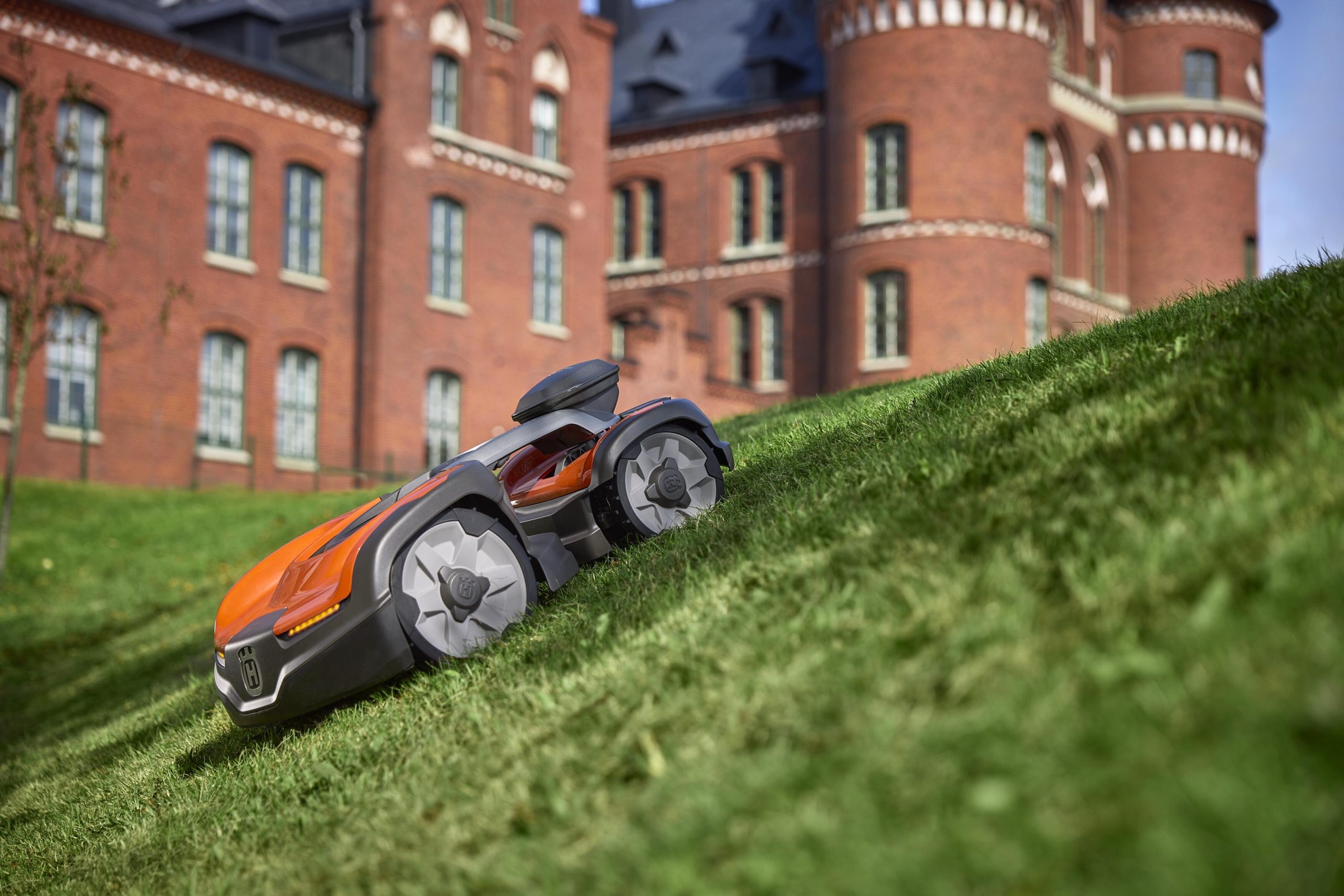
Husqvarna is a Swedish brand most people associate with chainsaws and forestry kit, which is partly why their mowers are quietly the most reliable consumer machines on the market. The same factory engineering culture that goes into professional logging tools also goes into the LC247 walk-behind and the LC353 self-propelled, and it shows in details most buyers never notice until their neighbour’s mower has packed in for the third spring in a row and theirs is still cutting clean.
This guide breaks down which Husqvarna mower is the right choice for your garden size and budget, and explains the engineering decisions that make these machines last so much longer than the price suggests. The short version: buy the smallest model that fits your lawn, and you will still be using it in 15 years.
What Makes a Husqvarna Different From a Supermarket Mower
Three engineering choices set Husqvarna apart and they are worth understanding before you spend the money. The first is the deck. The LC247 range uses what Husqvarna calls an Exclusive Class II PP composite deck. In practical terms that is a high-density polypropylene moulding with internal ribbing that mimics the stiffness of a steel pressing without the corrosion problem. Steel decks rust from the inside where wet grass sits against bare metal after every cut, and within five or six seasons most steel-decked budget mowers have rust holes around the discharge chute. The Husqvarna composite deck cannot rust. It also dampens blade vibration, which is one reason the LC247 is noticeably quieter than a comparable steel-deck mower.
The second is the bearing on the blade shaft. Cheaper mowers use a plain bushing that wears within three or four seasons of heavy use. Husqvarna fits a sealed ball bearing, which is the same component you find on industrial machinery. Sealed bearings cost roughly four times as much as a bushing but they will run for 1,500 to 2,000 hours, which on a domestic mower works out at 20 to 25 seasons.
The third is the engine pairing. The petrol LC247S uses either a Briggs and Stratton 450 Series 125cc engine or a Husqvarna-branded HS139A 139cc engine, both of which are designed for at least 200 running hours before service intervals. By contrast, the small budget engines on supermarket mowers are usually 100 to 110cc with cast-aluminium con rods rather than forged ones, and they start to lose compression after about 80 hours.
Which Model to Buy by Garden Size
Husqvarna sizes their consumer mowers by deck width, which is the number after LC. A 47 means a 47cm (about 18.5 inch) cut, a 53 means a 53cm (about 21 inch) cut. Wider decks finish bigger lawns faster but they are also heavier to push and harder to manoeuvre around shrub beds. The right model depends almost entirely on your lawn size and shape, not on horsepower marketing.
For lawns up to 600m2 (about 6,500 sq ft, or one and a half tennis courts), the LC247 petrol push mower at around £455/$580 is the right choice. It is the lightest in the range, the 47cm deck is easy to steer around obstacles, and the 50-litre grass collector means you can usually finish a typical front and back garden without emptying. Available from Mowdirect, World of Power, Just Lawnmowers and most Husqvarna dealers, often with free delivery in spring.
For lawns from 600 to 1,200m2 (about 6,500 to 13,000 sq ft), the LC247S self-propelled version at around £550 to £600/$700 to $765 is the smarter buy. It uses the same deck and engine but adds a single-speed drive to the rear wheels, which makes a meaningful difference on any slope steeper than about 5 degrees and on long stretches where push fatigue becomes a factor.
For lawns from 1,200 to 2,400m2 (about 13,000 to 26,000 sq ft), the LC353V at around £820/$1,045 is the model worth jumping to. The 53cm deck shaves around 25 percent off mowing time compared to the LC247, the variable drive lets you slow down for thick patches and speed up for the runs, and the 60-litre collector reduces empty trips. It uses a Husqvarna HS166V 166cc engine that is rated for the heavier deck.
The reason it pays to size down rather than up is that an oversized mower turns awkwardly around flower beds and the wider deck scalps more easily on undulating ground. A 47cm deck is more forgiving on a typical bumpy domestic lawn than a 53cm one.
The Battery Range and Why It Is Now the Default Recommendation for Smaller Gardens
Husqvarna’s cordless mowers have closed the performance gap on petrol completely for lawns up to about 500m2 (about 5,400 sq ft). The LC247i and LC247iX use a brushless motor that, in independent tests by BBC Gardeners World and Which, cuts as cleanly as the petrol equivalent and runs about 45 minutes on a single 5Ah battery. The LC247iX adds Bluetooth app connectivity for service reminders and battery status.
Pricing sits at around £550 to £650/$700 to $830 for the mower with one battery and charger, with a second 5Ah battery costing about £180/$230. For most domestic users a second battery is unnecessary because the first one finishes the lawn before it runs down. The reason a battery model is now the right default for smaller gardens is service costs. Petrol mowers need an annual service of around £60 to £90/$77 to $115 for oil, plug, blade balance and fuel stabiliser. A battery mower needs none of that. Over a 10-year lifespan that is £600 to £900/$770 to $1,150 of avoided service costs, which more than pays the price difference at purchase.
The brushless motor is also worth a sentence of explanation. Older battery mowers used brushed motors, which wore out the carbon brushes after a few hundred hours and lost torque. A brushless motor has no contact brushes inside, just electronically switched windings, which means there is nothing to wear out short of the bearings themselves. Husqvarna’s brushless mowers are realistically 15-year machines.
What You Will Pay to Run Each Model Over Five Years
This is where the long-term picture is more revealing than the sticker price. Take an average 40-cut season and compare the LC247 petrol push, the LC247iX battery, and a typical £200/$255 supermarket steel-deck mower.
The LC247 petrol burns about 0.4 litres of fuel per hour at modest load, so a typical 40-minute cut uses about 0.27 litres. Across 40 cuts that is about 10.8 litres of fuel, or roughly £18/$23 per year at current petrol pricing. Add the £75/$96 annual service and that is £93/$119 per year. The LC247iX battery uses about 0.5 kWh of mains electricity per charge, around 2 to 3 pence/cents per cut, so under £2/$2.50 in electricity per year, no service required. The £200 supermarket mower costs nothing to service because it tends to get replaced rather than repaired, which is the false economy. Buy it three times in 15 years and you have spent £600/$765, plus disposal hassle, plus fuel for whichever ones were petrol.
The takeaway is that the Husqvarna premium is real, around £150 to £250/$190 to $320 more than a budget equivalent, but the cost-per-year over 15 years is lower because the machine does not need replacing.
What to Check Before You Buy and the Two Common Buyer Mistakes
Before you commit, check three specifications on the model you are looking at. First, confirm it has a sealed bearing on the blade shaft, not a bushing. The Husqvarna dealer catalogue will confirm this. Second, check the cutting height range. The LC247 series adjusts from 25 to 75mm (about 1 to 3 inches) in nine steps via a single lever, which is what you want. Some budget mowers only adjust at each wheel separately, which is an annoyance every time the seasons change. Third, confirm the warranty. Husqvarna offers a 2-year domestic warranty as standard, and a 5-year warranty if you register the mower within 30 days of purchase. Most owners never register and lose three years of cover for the sake of a 60-second online form.
The two most common buyer mistakes are buying too big and buying too cheap within the range. Too big means a 53cm deck on a garden with multiple flower beds and a fruit tree, where the wider machine becomes a chore to steer. Too cheap means picking the LC141 entry model, which has the smaller engine and a steel deck and is not built to the same standard as the LC247 family. The LC247 is the model the brand is built around. Start there.
Available at Husqvarna dealers, Mowdirect, World of Power, Amazon, Robert Kee Garden Machinery, and on the Husqvarna website with delivery to most postal codes. Check for spring promotions in March and April, when dealers typically discount last year’s stock by around 10 percent to clear floor space.