Every dog owner with a back garden knows the look. Round yellow circles, sometimes ringed with darker green growth, scattered across the lawn where the dog goes. Three months of careful feeding and the patches keep coming. Caging off the lawn solves it but ruins the garden. The fix is simpler than most articles suggest, and it does not involve changing the dog’s diet, adding supplements to their water, or sprinkling baking soda where they pee.
This article explains exactly what is happening at the chemical level, why most home remedies fail, and the three steps that genuinely stop yellow spots without changing how the dog uses the garden.
The Real Chemistry of a Yellow Patch
Dog urine is not acidic enough to scorch grass directly. The McGill Office for Science and Society makes this point clearly in its analysis: the pH of dog urine is normally between 6.0 and 7.5, which is within the range grass tolerates comfortably. What causes the damage is the concentration of nitrogen compounds and salts.
When a dog urinates, it deposits roughly 20-40ml (about 1-1.5 fluid ounces) of liquid containing concentrated urea (the body’s main nitrogen waste). On a 30cm by 30cm patch of grass, that translates to a nitrogen dose roughly 10-20 times higher than what a granular lawn feed would deliver per square metre. Grass treats this as a massive shot of fertiliser. The shot is so concentrated that it pulls water out of plant cells by osmosis (the same way salt kills slugs), and the cells dehydrate and die. That is the yellow centre of the patch.
The darker green ring around the yellow centre is the same nitrogen at a more dilute level, where the grass gets a feed rather than a scorch. The same dose that kills the centre fertilises the edge. This is also why male dogs that cock their leg rarely cause yellow patches on the lawn (the urine hits a vertical surface) while female dogs and large breeds that squat produce the worst damage (the urine pools in one concentrated spot).
The volume of the dog has more bearing than the breed. A 30kg Labrador produces roughly the same single-dose volume as a 30kg Greyhound. The variable is how much the dog drinks. A well-hydrated dog produces more dilute urine that scorches less.
The Three Things That Actually Stop Patches
Forget supplements, dietary changes, and grass paint. The three interventions that work, in order of effectiveness, are: dilution, soil chemistry correction, and species selection.
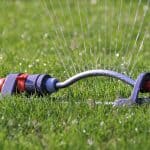
The first is immediate dilution. Within 10 seconds of the dog urinating, pour 2-3 litres (about half a gallon to a gallon) of water on the spot. This is the single most effective intervention by a wide margin. The water dilutes the nitrogen concentration below the osmotic threshold that kills grass cells, and the area gets fertilised rather than burned. A watering can left near the back door is the simple practical solution. A 9-litre Hozelock can refilled twice a day covers a typical small-garden dog.
This works because the burn is concentration-dependent. The chemistry has been studied repeatedly by veterinary and turfgrass researchers, and the consistent finding is that the nitrogen dose, not the urine itself, is the issue. Dilute it by a factor of 100 and the spot becomes a feed event rather than a scorch event.
The second is soil chemistry. Gypsum (calcium sulphate) does not neutralise urine in the chemical sense, but it does help damaged spots recover by improving drainage and binding excess salts so they wash out of the root zone. The product you want is pure garden gypsum (around £8 or $10 for 4kg, available at B&Q, Home Depot, Lowe’s, Amazon and most garden centres). Apply 100g per affected square metre to existing yellow patches, water in well, wait three to four weeks for recovery. Do not apply preemptively across the whole lawn (it is not a preventive treatment).
Some specialist products combine gypsum with grass seed and a salt-neutralising additive. Scotts EZ Seed Dog Spot Repair (around £15 or $18 for 900g, treats up to 100 spots, available at Amazon, Home Depot, Lowe’s) is the most widely stocked of these. The mulch in the mix expands with water and protects the seed, while the gypsum component helps flush salts from the soil. It is more effective on existing patches than on prevention.
The third is grass species selection. Tall fescue (Festuca arundinacea) tolerates concentrated nitrogen and salt much better than the perennial ryegrass and Kentucky bluegrass that fill most domestic seed mixes. A patch of tall fescue around the dog’s preferred spot shows almost no damage where a ryegrass patch would yellow. Barenbrug RPR tall fescue blend or Boston Seeds Hard Wearing mix (around £25 or $30 for 1kg, treats 35m2) are both strong tall-fescue-led products. Overseeding the worst-affected zones with tall fescue in autumn is the long-term fix.
The Things That Do Not Work
Most internet remedies for dog urine spots fail, and several actively make the problem worse.
Adding salt-neutralising tablets to the dog’s food does not work and is not recommended by veterinary nutritionists. Products that claim to “balance urine pH” treat the wrong variable. The damage is not pH, it is concentration of nitrogen and salts.
Switching to a low-protein diet reduces nitrogen output but at the cost of the dog’s protein nutrition. The McGill Office for Science and Society is clear that this is a poor trade-off: dogs need their protein, and the saving in lawn damage is modest.
Tomato juice and apple cider vinegar are folklore. There is no evidence either changes urine concentration enough to prevent burn, and apple cider vinegar in the food bowl can cause gastrointestinal upset.
Baking soda sprinkled on the spot after the dog pees is a popular Reddit suggestion. It does not work because sodium bicarbonate adds sodium to the spot, which is itself a salt that damages roots. The Reddit thread that started this myth has been thoroughly debunked by university extension services.
Mowing higher in the dog’s favourite zone (raising the deck to 50mm or 2 inches in that section) does measurably reduce visible damage because longer grass shows yellow tips less obviously, but it is masking, not solving.
The Practical Routine That Stops Patches Inside a Month
Day one. Walk the lawn and mark every active yellow patch with a stick or a piece of garden cane. Look at the pattern. Most dogs have two or three favourite spots, and 80 percent of damage is concentrated there. The rest of the lawn is rarely affected.
Day two. Apply gypsum at 100g per square metre to every marked patch and water in deeply. The salt flush starts immediately and accelerates over the next 10 days.
Day three. Position a watering can near every door the dog uses to access the garden. A 9-litre can with a long spout is ideal. Brief everyone in the household on the routine: dog pees, water poured within 10 seconds.
Day seven. Reseed the patches with a tall-fescue-led mix and rake lightly into the loosened soil. Water daily for the first 10 days until seedlings establish.
Day 28. Yellow patches should now show green regrowth from the edges. New seedlings are 3-5cm tall. Routine dilution has stopped any new patches forming.
This is a four-week routine with no behaviour change asked of the dog. It works because it addresses the chemistry directly rather than dancing around the symptoms.
When to Accept a Designated Area Is the Right Answer
If the dog is a large breed (40kg or more) and uses a small garden (under 80m2), the dilution routine becomes hard to keep up with. In that case, a designated relief area covered with bark mulch, pea gravel or artificial turf in one corner of the garden is often the right choice. Train the dog to use the area with consistent positive reinforcement over two to three weeks. The remaining lawn recovers within a month.
For everyone else, dilution plus gypsum plus tall fescue overseeding handles the problem without changing how the garden gets used. The dog stays welcome, the lawn stays green, and the watering can by the back door becomes a small daily habit that pays back constantly.