If patches of your lawn are yellowing and thinning, the turf feels loose underfoot, and birds have started tearing at the grass at dawn, the cause may be living an inch below the surface. Leatherjackets are the grey-brown grubs of the crane fly, the long-legged insect often called a daddy-long-legs, and they spend months feeding on grass roots out of sight. By late spring they are fully grown and at their most destructive before they pupate into the adult flies you see in late summer. Knowing how to read the damage now, and when the one effective treatment actually works, is the difference between a lawn that recovers and one that gets steadily worse each year.
How to Know It Is Leatherjackets and Not Drought
Leatherjacket damage is easy to mistake for dry weather or disease, because all three turn the grass yellow-brown in patches. The way to tell them apart is to look at the roots and the visitors. Leatherjackets eat the roots and the base of the grass stems, so the turf above loses its anchor. Take hold of a yellowing patch and pull gently. If the grass lifts away like a loose rug or a piece of carpet, with little or no root holding it down, something has eaten the roots, and that points to grubs rather than drought, because drought-stressed grass stays firmly rooted even when it browns. Our guide on telling lawn disease from drought damage is worth a read if you want to rule those out first.
The second clue arrives with the birds. Starlings, rooks, crows and magpies hunt leatherjackets, and they will work over an infested lawn methodically at first light, leaving small holes and tufts of pulled grass where they have probed for grubs. Badgers and foxes do the same on a bigger scale, sometimes rolling back whole sections of turf overnight to get at a heavy population. If you wake to find your lawn looking as though it has been pecked and scratched apart, the birds are not the problem, they are telling you what is. To confirm it yourself, water a suspect patch in the evening and lay a sheet of black plastic or an old compost bag over it overnight. In the morning, lift the sheet and the grubs, driven up by the moisture and trapped under the cover, will be sitting on the surface where you can count them.
The Crane Fly Life Cycle and Why Timing Decides Everything
To beat leatherjackets you have to understand their year, because the treatment only works at one stage of it. Adult crane flies emerge and lay their eggs in the lawn in late summer and early autumn, usually around August and September. The eggs hatch within a couple of weeks into tiny leatherjackets, and through autumn and the mild parts of winter those young grubs feed on roots near the surface. They keep growing through the cooler months and reach full size, around 3 to 4cm (1.5 inches), by early spring, which is when feeding is heaviest and lawn damage peaks. Then, in late spring and early summer, the fully grown grubs stop feeding and pupate in the soil, before climbing to the surface as the next generation of adult flies to start the cycle again.
That life cycle explains why spring damage is the worst and also why spring is a poor time to treat. By the time you see the heaviest harm, the grubs are large, leathery and tough, and they are about to pupate, at which stage they stop eating and become almost impossible to kill. The treatment that works needs to reach the grubs while they are small, soft and feeding, and that means the real window is autumn, soon after the eggs have hatched. If you find damage now, the practical plan is to help the lawn recover over summer and mark your calendar to treat in early autumn when the new generation is young and vulnerable.
The Treatment That Works and How to Apply It
The one genuinely effective home treatment is biological, using microscopic worms called nematodes. The species sold for this job, Steinernema feltiae, are watered into the lawn, where they seek out the leatherjackets, enter their bodies and release a bacterium that kills the grub within a few days. They are harmless to people, pets, birds and earthworms, which is why they have become the standard control now that the old chemical options are no longer available to home gardeners. A pack treating around 100 square metres (about 1,075 square feet) costs roughly £13 to £20/$16 to $25 and is sold by mail order, because the nematodes are alive and perishable and need to go into the lawn soon after they arrive.
Two conditions decide whether nematodes succeed or fail, and both come down to the soil. First, soil temperature must be above about 12 degrees C (54 degrees F), because the nematodes are inactive in cold ground, which is another reason early to mid autumn beats a cold late-autumn or winter application. Second, the soil must be moist before, during and for at least two weeks after you apply, because nematodes swim through the film of water around soil particles to reach their prey and they die in dry ground. Water the lawn well before applying, put the nematodes down on a dull or overcast day or in the evening so they are not killed by sunlight, then keep the lawn damp afterwards. Applied correctly in autumn at the right soil temperature, nematodes give around 60 to 80 percent control, enough to stop a damaging population in its tracks. Treat in spring instead and the cold-soil risk and the toughness of the older grubs mean you need a double-strength dose for a far less reliable result.
While you wait for the autumn treatment window, give the lawn every chance to grow through the damage. Keep it watered through dry spells so the surviving grass can put down fresh roots, raise the mowing height to reduce stress, and overseed the worst bare patches once the weather cools so new grass can establish. A vigorous, well-fed lawn shrugs off a light leatherjacket population far better than a thin, hungry one, so good general care is part of the defence. Spot the grubs now, resist the urge to attack them in the wrong season, and hit the next generation while it is young in autumn, and you break the cycle instead of fighting the same battle every spring.
Reducing the Next Generation Without Chemicals
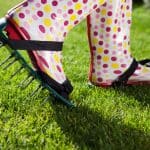
Beyond the autumn nematode treatment, a few habits make your lawn a less welcoming nursery for the next batch of grubs. Adult crane flies lay their eggs in late summer and prefer damp, soft turf to drop them into, so a lawn kept on the drier side through the egg-laying weeks of August and September is less attractive to them than one that is constantly watered and waterlogged. Improving drainage on a heavy, soggy lawn through aeration removes the standing moisture that both the adults and the young grubs depend on, since leatherjackets cannot survive in soil that dries out properly between waterings.
It also pays to work with the birds rather than against them. The starlings and rooks that scratch up an infested lawn are removing grubs for free, and a lawn that recovers its vigour will easily outgrow the small holes they leave. Encouraging birds into the garden through the year means a standing patrol that keeps light populations in check before they ever build into the kind of outbreak that strips a lawn. A thick, deep-rooted, well-fed lawn is the best defence of all, because it can lose a share of its roots to grubs and still grow through the damage, while a thin and hungry one cannot. Tolerate a few grubs, keep the turf strong, and you rarely need to reach for a treatment at all.