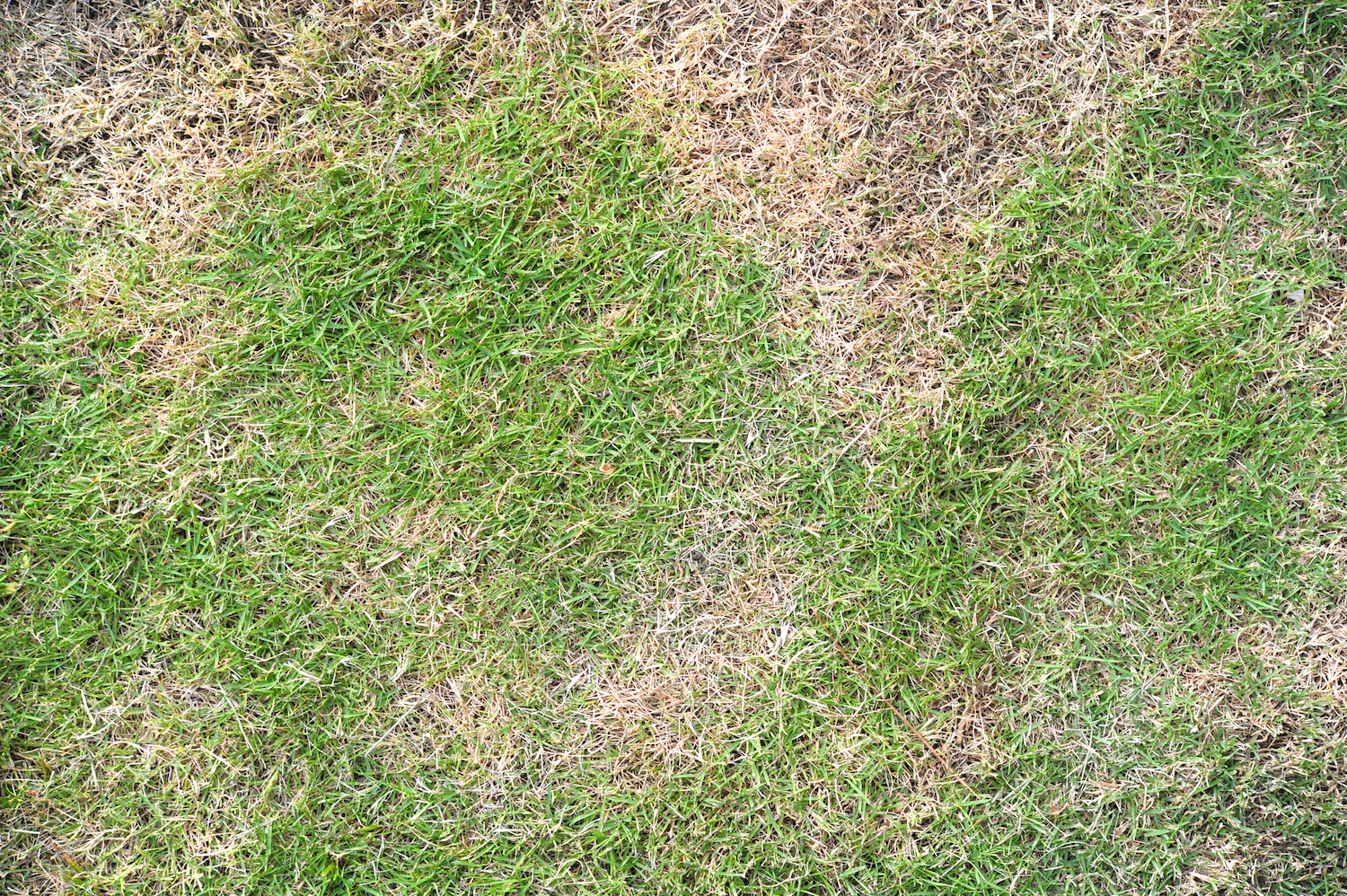
When a dry spell sets in, the brown rarely starts in the middle of the lawn. It creeps in from the edges first, the strips running alongside the path, the driveway and the patio, while the centre of the lawn still looks green. If you have ever watered faithfully and watched those border strips scorch anyway, the problem is not your watering schedule. It is what lies a few centimetres under the grass at the edge, and the heat radiating off the hard surface next to it. Once you see why edges fail first, the fixes, both the quick rescue and the permanent cure, make immediate sense.
Why the Edges Cook Before the Middle
Two things gang up on a lawn edge, and the first is the soil beneath it. When a path, drive or patio is laid, the ground right up to its border is usually built up with a layer of compacted hardcore or crushed stone to support the slabs or tarmac. The turf laid over that often sits on as little as 2.5cm (1 inch) of soil before it hits rock. Grass roots cannot grow into the stone, so the plants along the edge have a tiny reservoir of soil to draw moisture from compared with the deep, open ground in the middle of the lawn. A shallow root zone holds far less water and dries out in hours rather than days, which is why the edge is thirsty long before the centre.
The second factor is heat, and paving makes plenty of it. A stone or concrete path absorbs sunlight all day and radiates that heat back into the air and soil around it, while the pale surface also bounces light and warmth sideways onto the grass beside it. The strip of lawn along a sun-baked drive can sit several degrees hotter than open turf, and that extra heat drives moisture out of both the soil and the leaves faster than anywhere else on the lawn. Combine a shallow, fast-draining root zone with a constant side-on blast of reflected and radiated heat, and the edge becomes, in effect, a long narrow oven. The grass there loses water quicker and has less to lose, so it browns first every time.
Heat stress then makes the problem feed on itself. When grass struggles in the heat it puts out shorter, shallower roots, sometimes pulling back to just 2 to 5cm (1 to 2 inches) deep, exactly the wrong response in soil that was already shallow. The edge plants end up with the smallest root systems on the lawn in the spot that dries fastest, which is why these strips can go from green to crisp in a single hot weekend.
The Quick Fixes That Keep Edges Alive Through a Heatwave
The most common reason edges die even on a watered lawn is that the sprinkler never really reaches them. Most sprinklers throw the bulk of their water toward the centre of their arc and taper off at the limits, and the edge of the lawn usually sits right at that tapering limit or beyond it, where a fraction of the water lands. Worse, water that does reach the very edge often runs straight off onto the path. The cure is to water the edges separately and by hand. Take a hose or watering can along the borders every couple of days in hot weather and give them a slow, deliberate soak, letting the water sink in rather than run off, so the shallow soil actually fills. Five extra minutes on the edges does more than another half hour on the whole lawn.
You can also blunt the heat itself. A band of bark mulch, gravel or planted border between the lawn and a south-facing wall or drive absorbs and re-radiates less heat onto the grass than bare paving does, and even a row of low plants along the edge casts a little shade and shelter. If the browning follows a particular hot strip every summer, that is the place to break up the run of reflective hard surface. In the short term, raising your mowing height on the edges helps too. Longer grass shades its own roots and the soil surface, slowing evaporation, so leave the border strips a notch higher than the rest of the lawn through the hottest weeks.
The Permanent Cure for a Hot, Shallow Edge
If the same strip browns out year after year, the lasting answer is to give the edge the soil depth it never had. In autumn, when the weather cools and grass recovers well, lift the turf along the problem strip and dig out the shallow soil and any hardcore beneath it to a depth of about 30cm (1 foot), working outward 30 to 60cm (1 to 2 feet) from the hard edge. Fill the trench with good quality topsoil, firm it down, and either relay the lifted turf if it is still healthy or sow fresh seed. With a proper depth of soil to root into and hold moisture, that strip will hold its colour through summer like the rest of the lawn, because you have removed the shallow-soil half of the problem entirely.
Grass choice helps with the heat half. When you reseed an edge, use a hard-wearing, drought-tolerant blend with a high proportion of tall fescue, which sends roots much deeper than fine ryegrass or bent and copes far better with hot, dry strips. Deeper roots reach moisture the surface has lost, and a fescue-rich edge stays green through conditions that would crisp a standard lawn seed mix. Pair the deeper soil and the tougher grass with a routine of deep, infrequent watering, around 25mm (1 inch) a week soaked in over one or two sessions rather than daily sprinkles, and the edges train their roots downward instead of clinging to a drying surface.
Mistakes That Make Edge Browning Worse
The first mistake is mowing the edges too short. It is tempting to scalp right up to the path for a tidy line, but cutting the border strip shorter than the rest of the lawn strips away the very leaf that shades the roots, and on the hottest, shallowest soil that is where the grass can least afford it. Keep the edges at least as long as the main lawn, longer in a heatwave, and save the close tidy-up for autumn. The second mistake is assuming a browned edge is dead and digging it up in the middle of summer. Like the rest of a dormant lawn, an edge that has gone brown usually still has living crowns at the base of the plants and greens up again after rain or a good soak, so hold off on drastic action until the weather cools.
The third mistake is watering the edges lightly and often in the belief that frequent sprinkling helps. Shallow daily watering wets only the top centimetre, encourages the roots to stay near the hot surface, and evaporates almost as fast as it lands on a heat-soaked edge. A thorough soak every couple of days, aimed by hand at the borders and given time to sink in, does far more good. Read the edges the same way you read the rest of the lawn, watch for the strips next to paving going dull and grey before they brown, and treat those borders as the thirstiest, hottest part of the garden, because that is exactly what they are.
It is worth being sure the edge is browning from heat and shallow soil rather than something that wears the same disguise. Edge strips also suffer from petrol or oil dripped while filling the mower over the path, from de-icing salt washed off paths in winter that lingers into summer, and from a strimmer scalping the grass to the soil along the border. Heat-and-soil browning has a giveaway pattern: it follows the sunniest, hottest edges, fades during cool or wet spells, and recovers when you hand-water that strip. If a brown edge sits on a shaded north side, appears in sharp spots rather than an even band, or refuses to respond to a good soak, look instead for a spill, a salt source or a scalped line, because the cure for those is different from the cure for a hot, shallow border.