
Worx has built its reputation on cordless tools that cost less than the big garden-machinery names while sharing batteries across an entire range, and its mowers fall into two distinct camps that suit very different gardens. On one side sit the push and self-propelled walk-behind mowers built around the 20V Power Share battery platform. On the other sits the Landroid, one of the longest-running robot mower lines on the market. Picking the right one comes down to the size and shape of your lawn, how much of the work you want to do yourself, and how much you are willing to spend up front to never push a mower again. Here is how the range breaks down and which model fits which garden.
The Walk-Behind Mowers and the Battery System
The thing that defines Worx walk-behind mowers is the Power Share battery. The mowers run on two 20V batteries working together to deliver 40V of cutting power, and crucially those same 20V batteries fit Worx strimmers, blowers, hedge trimmers, and drills. If you already own Worx tools, a mower means one more machine but no new battery ecosystem, which is where a lot of the real-world value sits.
At the small end is the WG779, a 34cm (14 inch) cutting width push mower with a steel deck and six cutting-height positions. It comes with two 20V 4.0Ah batteries and a charger, and will cut up to around 460 square metres (about 5,500 square feet, roughly an eighth of an acre) on a charge. For a small city garden or courtyard lawn, this is the model that makes sense. It is light, quiet, easy to store on its end, and you are not paying for power you will never use on a fifteen-minute job. Expect to pay around £200 to £270 ($250 to $340) depending on the deal.
Stepping up, the WG743 widens the cut to 43cm (17 inches) and ships with two 4.0Ah batteries, which suits a medium lawn where the wider deck means fewer passes and the larger battery pairing gives more runtime. Above that, the Nitro range introduces brushless motors. A brushless motor has no carbon brushes to wear and generates more torque from the same battery, which translates into more runtime and the ability to power through thicker or slightly damp grass without bogging down. Models such as the Nitro 53cm (21 inch) self-propelled mowers are aimed at larger or rougher lawns where you want gas-like pulling power and a drive system so you are steering rather than pushing. The trade-off is weight and price, with Nitro self-propelled models running from around £400 to £600 ($500 to $760).
The choice between standard and Nitro comes down to your grass, not prestige. A standard motor is fine for a tidy, regularly cut lawn of modest size. The brushless Nitro earns its premium only if your lawn is large, grows thick, or you let it get long between cuts, because that is when the extra torque and runtime stop the cheaper motor from straining. Buying Nitro power for a small flat lawn is money spent on capability you will not call on.
The Landroid Robot Mowers
The Landroid is Worx’s answer to the question of never mowing again, and it has matured a great deal over its life. The classic Landroid models, sold by lawn-size rating such as the WR140 for up to a quarter-acre and larger variants up to half an acre, work the traditional robot-mower way: you lay a perimeter boundary wire around the lawn once at setup, and the robot mows inside it on a schedule, returning to its charging base when the battery runs low or rain is detected. These run on the same 20V Power Share batteries as the walk-behind tools, which is a neat touch. Prices for the wired Landroid models sit broadly in the £600 to £1,200 ($760 to $1,500) range depending on lawn size and accessories.
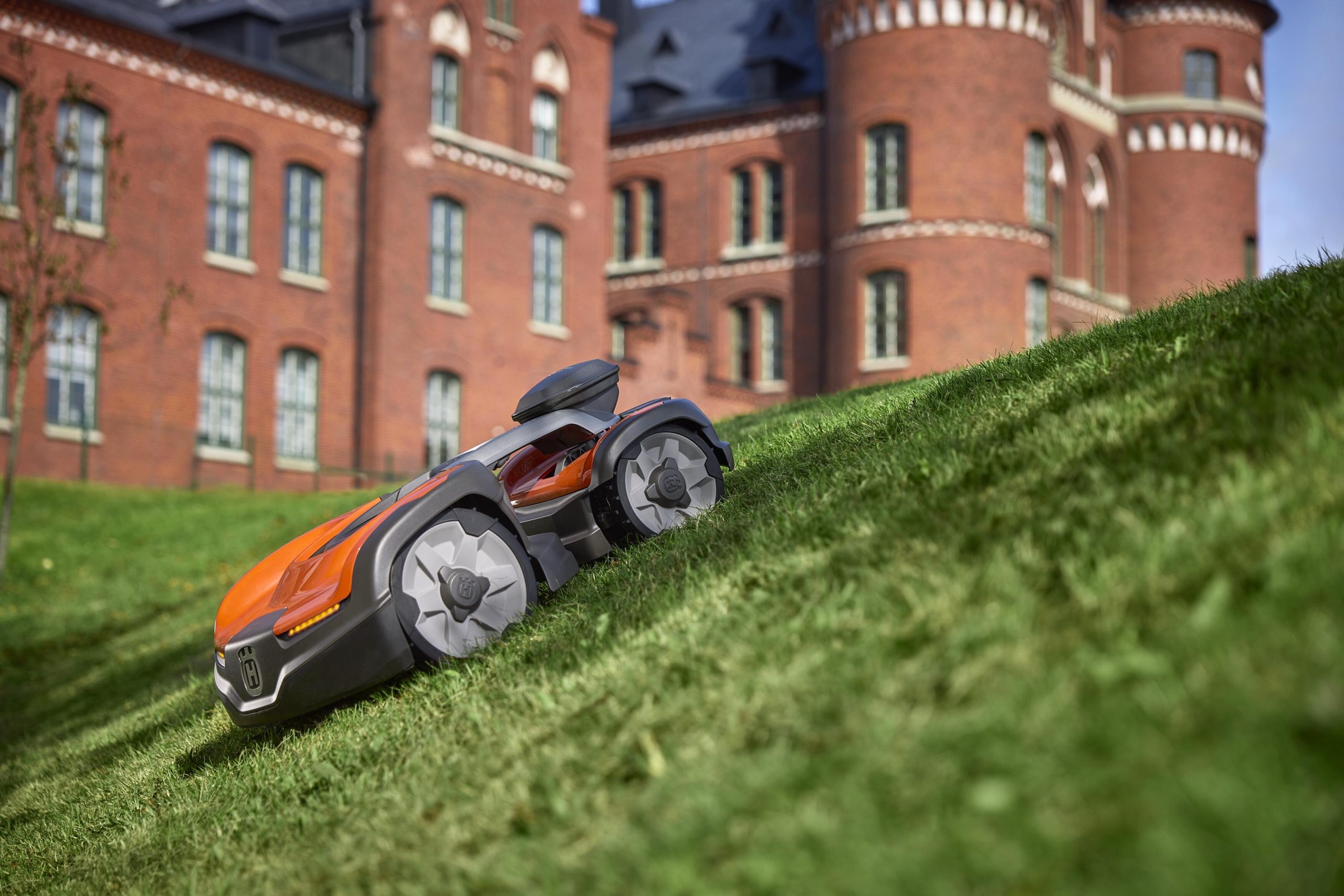
The newer Landroid Vision Cloud line removes the boundary wire entirely. Instead of a buried cable, it uses dual stereo cameras and cloud-based RTK positioning to understand where the lawn ends and to find its way around, and the AI can recognise obstacles such as garden furniture, pet toys, shoes, and small animals and route around them in real time. The top 4WD model, the WR344 Vision Cloud, is rated for lawns up to a full acre and can climb slopes as steep as 84 percent grade, around 40 degrees. These sit at the premium end, with 2026 standard Vision Cloud models around $2,070 and the 4WD around $2,400 at list, though they are frequently discounted to well under $1,900 in promotions. In sterling that places the wire-free models broadly in the £1,600 to £1,900 bracket.
A robot mower changes the lawn rather than just cutting it. Because it cuts a tiny amount every day and drops the microscopic clippings back into the sward, it mulch-feeds the lawn constantly and keeps the grass at an even height, which tends to produce a denser, more even surface over a season. The catch is setup and suitability. Wired models need that perimeter cable installed correctly, which takes an afternoon and rewards care, and very complex lawns with narrow passages or many separate areas can confuse cheaper robots. The wire-free Vision models solve much of that but cost considerably more.
Which Worx Mower Suits Your Garden
For a small lawn under about an eighth of an acre, the WG779 push mower is the sensible pick, especially if you own other Worx tools and can share batteries. For a medium lawn you cut regularly, the WG743 or a standard 40V model gives you a wider deck without paying for brushless power. For a large or thick lawn where pushing is a chore, a Nitro self-propelled model is the one that will not strain. If your priority is to stop mowing altogether and you have a fairly simple lawn up to a quarter or half an acre, a wired Landroid is the value choice, while a complex or large lawn, or a desire to skip the boundary wire, pushes you towards the pricier Vision Cloud range.
It is worth weighing Worx against the names it sits between on price. Compared with budget cordless mowers from supermarket and own-brand ranges, Worx generally offers a better-built deck, a proper battery platform you can expand into other tools, and a robot option that the cheapest brands do not have at all. Compared with premium names such as Ego, Stihl, and Husqvarna, Worx walk-behind mowers usually cost less and the 20V Power Share batteries carry a little less raw grunt than the 56V or 36V systems those brands use, so on very large or heavy lawns the premium machines pull ahead. The Worx sweet spot is the household that wants solid cordless performance on a small to medium lawn without paying flagship prices, and that already owns or plans to own other Worx garden tools.
A few ownership points apply across the range and are worth knowing before you buy. Lithium batteries last longest when they are not left fully flat or fully charged in a freezing or baking shed over winter, so store them indoors at a partial charge and they will hold capacity for far more seasons. Keep a spare charged battery if your lawn is near the edge of a single charge’s coverage, because swapping batteries is faster than waiting an hour for a recharge mid-cut. And as with any mower, keep the blade sharp, since a battery mower drains noticeably faster when a blunt blade forces the motor to work harder for the same cut. Looked after this way, a Worx mower is a low-fuss machine that asks for petrol-free, pull-cord-free starts every time.
One practical buying note across the whole range: check exactly which batteries are included, because Worx sometimes sells the same machine as a bare tool or as a kit with batteries and charger, and the price gap is large. A mower body without batteries is no use on day one, so confirm you are comparing like for like. Whichever you choose, the shared Power Share battery platform means a Worx mower rarely sits alone in the shed for long, and that interchangeability is the quiet reason the range holds its value for households that buy into it.