
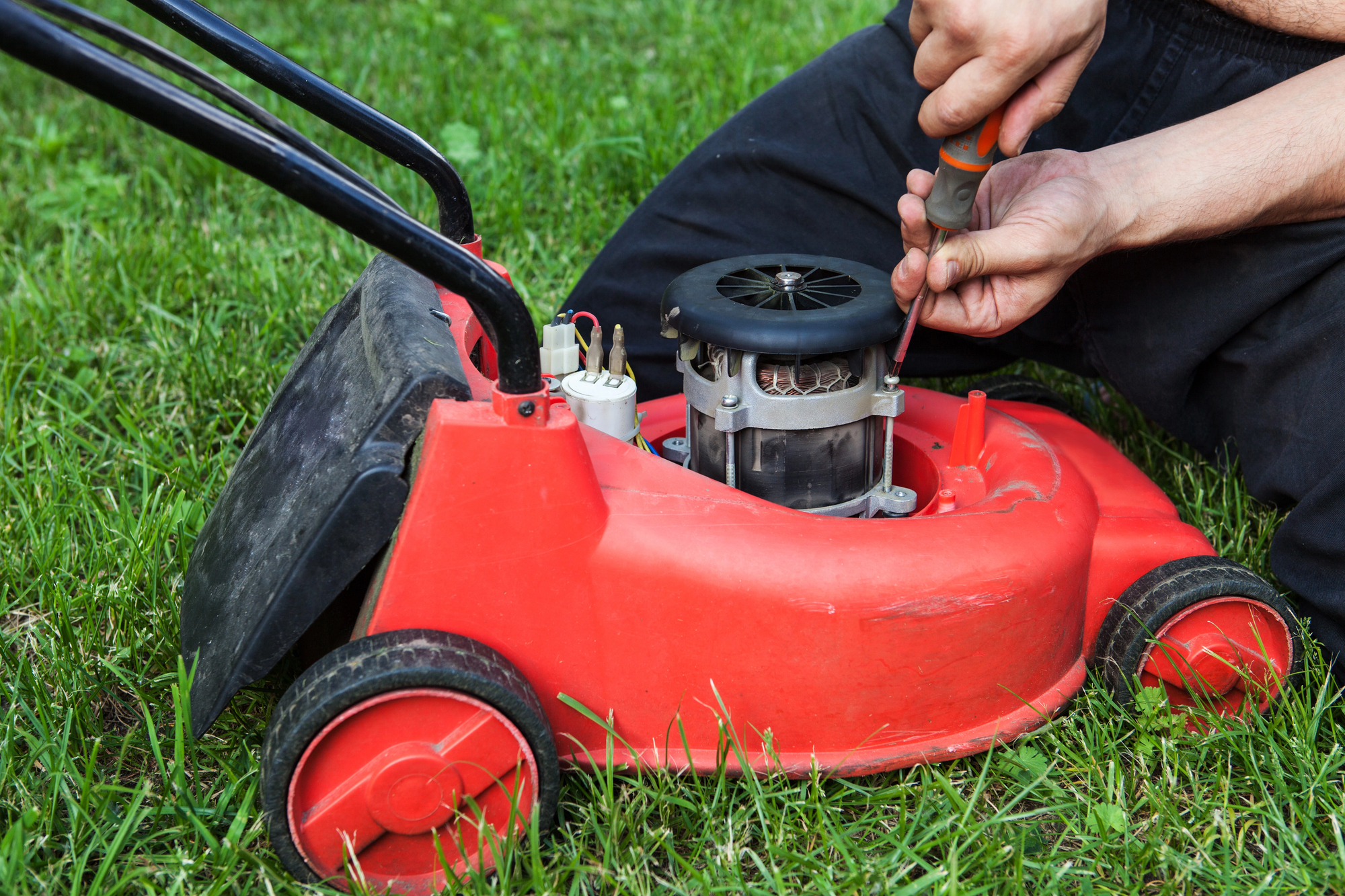
You give the mower one last tug, the pull cord snaps, and the frayed end whips back into the housing and vanishes. It is one of the most common faults on a petrol mower, and one of the easiest to put right yourself. A replacement starter rope costs only a few pounds, the job takes under an hour with basic hand tools, and doing it at home saves the £30 to £50 ($40 to $60) a repair shop would charge to thread a new cord. The only part that changes this is the recoil spring, and that fails rarely. Everything else is well within reach of anyone with a screwdriver and a little patience.
Broken or Just Stuck?
Before you buy anything, confirm the cord has actually snapped rather than jammed. A cord that will not pull at all is often not broken. Most walk-behind mowers have a safety bar, the dead man’s handle, that has to be held against the handlebar before the engine will turn over, so check you are holding it down. Next, look under the deck with the spark plug lead pulled off and clear any packed grass or debris locking the blade, as a seized blade stops the cord dead. Cordless and electric mowers have no starter rope at all, so this fault belongs to petrol machines with a pull start. If the rope still will not move once the brake is released and the blade is clear, open the recoil unit and look inside. A cord that is intact but stuck points to a fault in the recoil mechanism itself; a cord that has parted needs replacing.
It helps to know what you are working with. A recoil starter is a simple mechanism: the rope wraps around a pulley, the pulley sits on top of a flat coiled spring, and a set of small pawls, sometimes called dogs, flick out as you pull and grip the engine flywheel to spin it. When you let go, the spring rewinds the rope and the pawls retract. A parted rope is the fault you can see. If the rope is whole but the pull feels loose, snaps back weakly or fails to grip, the trouble sits in the spring or the pawls instead, and that is worth confirming before you spend money on cord. Spin the pulley by hand with the assembly off: it should turn against clear spring resistance and snap back smartly. A pulley that flops round with no return has lost its spring, which is the one repair better left to a service centre.
Disconnect the Spark Plug First
Pull the rubber boot off the spark plug before you touch anything else. This does two jobs. It removes any chance of the engine firing while your hands are near the blade, and with the plug lead off there is no compression fighting you as you turn the pulley over while making the repair. Work with the mower on a bench or tipped up with the air filter and carburettor side facing upward, so no fuel or oil weeps into the filter. A pair of leather gloves protects your hands from the sharp edge of the metal shroud and from the recoil spring, which is under tension and can nip.
Tools and the Right Replacement Rope
The tool list is short: a four-in-one screwdriver at around £6 to £10 ($8 to $13), a nut driver, a pair of needle-nose pliers at about £6 to £12 ($8 to $15), and the leather gloves. The one part that repays a moment of thought is the rope itself. Starter cord comes in different thicknesses, and the diameter counts. Too thin a rope will fray and part again within a season, so match the new cord to the old one. The easiest route is to take the broken piece to a hardware shop and buy the same gauge, or pick up a universal starter rope pack, around £6 to £10 ($8 to $13), which includes several metres of nylon cord you cut to length along with spare handles. Common sizes run from about 3mm to 4mm.
To free the old rope, take the recoil starter assembly off the mower. It is normally held on by three or more screws, though the exact layout varies by model. Some mowers hide it under a shroud, so you will have to remove the screws holding that in place first. A few units are riveted rather than screwed; if that is what you find, drill the rivets out and refit with bolts and locknuts afterward. With the assembly off, flip it over, find the knotted end of the old rope inside, grip it with the needle-nose pliers and pull it free. The same hole is where the new cord threads through.
Winding the Spring and Threading the Cord
This is the step most people get wrong, and it comes down to the flat coiled spring inside the recoil. That spring is what drags the rope back in after every pull, and it needs winding up before the new rope goes on. Turn the rope pulley in the same direction it travels when you pull the cord. It grows harder to turn as the spring tightens. Keep going until it will not turn easily, then let it back off about half a turn to a full turn until the hole in the pulley lines up with the hole in the housing. Wedge a screwdriver against the pulley to hold the spring wound while you thread.
With leather gloves on, melt the tip of the new rope with a match and give it a quick twist while the nylon is soft, forming a firm point that feeds through the holes far more easily than a frayed end. Push it through the pulley and housing, tie a knot in the end, then heat the knot briefly and pull it tight so it cannot work loose. Slip the screwdriver out while you keep a finger on the pulley, and let the spring wind the rope gently onto the wheel. Thread the free end through the handle, and if any surplus rope is left you can trim it once everything is back together.
Setting the Tension and Stopping It Happening Again
Getting the tension right is what makes the repair last. Fit the handle and tie the final knot so there is a slight pull on the rope when you let the handle go, which keeps it seated against the housing rather than dangling loose. Too little tension and the cord droops and drags where it should not; too much and the spring sits under constant strain and can bind. Let the pulley draw the rope back in, refit the recoil unit and any shroud you took off, reconnect the spark plug lead, and give it a test pull. It should draw out smoothly and snap back cleanly.
A new rope that frays again quickly is usually telling you something. Cords wear at the eyelet where they leave the housing, so a sharp or rough guide saws through them; a jerky sideways yank grinds the rope against that edge far harder than a straight pull. Draw the cord out in line with the starter, not at an angle, and never rip it to the very end of its travel, where the sudden stop shocks both rope and spring. If the engine itself is hard to turn over from old fuel, a gummed carburettor or a seized blade, a fresh rope will only snap as fast as the last one, so fix the underlying drag first. On the rare occasion the recoil spring breaks rather than the rope, the repair is much fiddlier, and it is worth handing the mower to a service centre. Replace a tired, frayed cord as part of your annual service and you avoid the whole problem starting in the first place.