
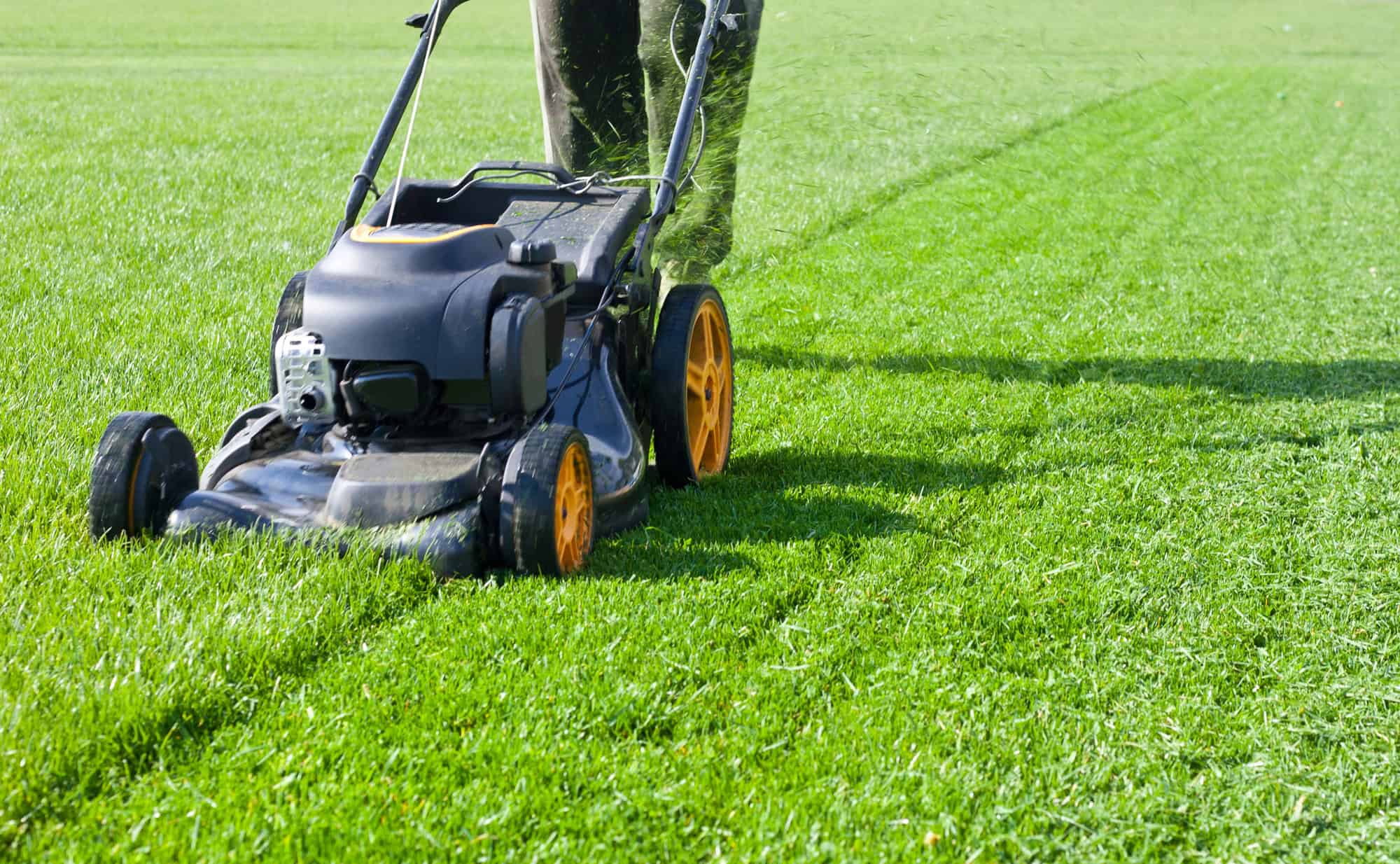
For a small, flat lawn of fine grass, a manual push reel mower can give a cleaner cut than a powered rotary costing three times as much, with no petrol, no battery, no cord, and almost no maintenance. The catch is that a reel mower rewards regular cutting and punishes neglect, so it suits the owner who is happy to mow little and often rather than letting the grass grow long between sessions. If that describes your lawn, a reel mower is one of the cheapest ways to get a high-quality finish, which is why they are quietly returning to garden sheds after years out of fashion.
This guide explains how a reel mower works, why its cut is mechanically better than a budget rotary, where it performs and where it does not, and how to choose and set one up so it keeps that clean finish year after year.
What a Push Reel Mower Actually Is
A reel mower, also called a cylinder mower, cuts with a scissor action rather than an impact. A set of helical blades is mounted on a cylinder that spins as you push, and those blades sweep past a fixed horizontal bar at the base called the bottom blade or cutting bar. Each blade of grass is caught between the spinning reel and the fixed bar and sheared cleanly in two, exactly as a pair of scissors cuts paper. The wheels drive the cylinder through a simple gear, so the faster you walk the faster the reel spins, and there is no engine or motor involved at all.
This is the opposite of how a rotary mower works. A rotary spins a single blade in a horizontal circle at high speed and cuts by impact, knocking the top off each blade of grass. A reel mower’s scissor action is gentler and more precise, and on many models a rear roller follows behind the cylinder, flattening the grass into the light and dark bands that give a striped finish. Most manual reel mowers weigh only a few kilograms, fold or stand compactly for storage, and make almost no noise beyond the soft whirr of the cylinder.
Why They Cut Better Than a Cheap Rotary
The quality difference comes down to the wound left on each blade of grass. A sharp reel mower shears the leaf cleanly, leaving a flat, narrow cut that seals over quickly. A rotary, especially one with a blade that has gone even slightly blunt, tears and bruises the leaf tip, leaving a ragged, frayed wound with far more exposed surface area. That ragged cut has two consequences. It loses more moisture, so a rotary-cut lawn browns at the tips faster in dry weather, and the larger wound is an easier entry point for the fungal spores behind lawn diseases such as red thread. A clean scissor cut keeps the grass tips greener and reduces the openings disease can exploit.
You can see the difference within a day of mowing. A lawn cut with a blunt rotary develops a faint whitish or tan haze across the surface, which is the light catching thousands of frayed, drying leaf tips. A lawn cut with a sharp reel keeps an even green tone because the cuts are clean and tight. This is the same reason groundskeepers use cylinder mowers on bowling greens, cricket squares, and fine ornamental lawns where appearance and grass health both count. For a fuller comparison of the two cutting systems, see our guide on why a cylinder mower cuts better than a rotary.
Where a Reel Mower Shines, and Where It Struggles
A push reel mower is at its best on a small to medium lawn, up to roughly 250 square metres (about 2,700 square feet), that is reasonably flat and made up of fine grasses kept at a sensible height. On that kind of lawn it is a pleasure to use: quiet enough for early mornings, light enough for anyone to push, and capable of a finish that flatters the grass. It costs nothing to run, produces no fumes, and stores in a corner of a shed.
It does have clear limits, and knowing them prevents disappointment:
- Long grass defeats it. Because the cylinder relies on your push for power, tall, dense growth bogs it down and the grass folds under the bar instead of being cut. A reel mower wants to take a little off the top regularly, never a big reduction at once.
- Coarse, wiry grass and weed stems such as ribwort plantain stalks slip past the blades and stand up uncut, so it suits fine lawns far better than rough grass.
- Twigs, stones, and acorns can jam between the reel and the bottom blade, so a reel mower is happier on a tidy lawn than one strewn with debris under trees.
- Uneven, bumpy ground throws the cylinder up and down and gives a patchy cut, so it performs best on a level surface.
None of this is a flaw so much as a trade-off. The same lightness and simplicity that make a reel mower cheap, quiet, and clean-cutting are what make it unsuited to long, rough, or littered grass.
Choosing and Setting Up a Reel Mower
Prices span a wide range. A basic budget reel mower costs around £40 to £60 (about $50 to $80), a well-built model such as a Bosch AHM around £80 to £100 (about $105 to $130), and a premium Fiskars StaySharp, which uses an inertia drive so the reel never actually touches the bottom blade, around £150 to £180 (about $200 to $240). Brands to look at include Bosch, Webb, Einhell, Gardena, and Fiskars, and they are stocked at B&Q, Argos, Home Depot, Lowe’s, and Amazon. For a wider lawn, choose a 38cm (15 inch) or 40cm (16 inch) cutting width to reduce the number of passes.
Set the cutting height first, raising or lowering the rear roller or wheels to leave fine grass at around 2.5 to 4cm (about 1 to 1.6 inches). The setting that makes or breaks a reel mower is the contact between the cylinder and the bottom blade. On most models you adjust this with small screws at each end, and the test is to hold a strip of paper across the bottom blade and turn the cylinder by hand. Correctly set, the reel should shear the paper cleanly at every point along its length. Too tight and the mower is hard to push and wears quickly, too loose and it folds the grass over instead of cutting it.
Keeping the Cut Clean
A reel mower needs very little maintenance, but the little it needs has a big effect on the finish. Mow when the grass is dry, because wet grass clumps and slides past the blades rather than being cut, and mow often enough that you are only ever removing the top of the leaf. Sticking to the one-third rule, never taking off more than a third of the blade in one cut, keeps the workload light and the finish even. Brush or rinse the cylinder clean after use so grass does not dry and cake between the blades, and check the contact setting once or twice a season.
When the cut finally starts to drag or fold rather than shear, the blades need attention. Most reel mowers can be sharpened at home by backlapping, which means running a fine abrasive paste between the reel and bottom blade while turning the cylinder backwards, and a backlapping kit is inexpensive. Looked after this way, a manual reel mower can run for decades, which is part of its appeal in an age of disposable tools. If you would rather have the same clean cut without the regular, little-and-often discipline a reel mower demands, our guide on why battery mowers have become the best choice for most gardens covers the powered alternative. For the right lawn, though, a push reel mower remains the simplest route to a fine, healthy, striped finish.