Lift a paddling pool, a trampoline base or a heavy garden table after a few warm days and you find the same thing underneath: a pale, sickly yellow shape stamped into the grass. The good news is that in most cases the lawn is not dead. It has been starved of light, air and movement for long enough to shut down, and with the right steps it usually recovers in two to three weeks. The trick is knowing why it happens, acting before the patch tips from yellow into brown, and moving heavy items often enough that the mark never forms in the first place.
Why grass turns yellow under anything left on the lawn
Grass is green because of chlorophyll, the pigment that captures light for photosynthesis. The plant constantly builds and breaks down chlorophyll, and it only keeps making more while it is receiving light. Cover the grass with a solid pool liner or a furniture base and you cut off that light supply completely. Within a day the plant stops topping up its chlorophyll, the existing pigment breaks down, and the yellow and pale tones underneath start to show through. Gardening experts note that it can take just one day of a pool sitting on grass for the first signs of yellowing to appear, because the plant can no longer photosynthesise, breathe freely or move water and air through the soil surface.
Three things are working against the grass at once. First, the lack of light halts food production, so the plant lives off stored reserves. Second, the weight compresses the soil and squeezes air out of it, so the roots struggle to take up oxygen, water and nutrients. Third, and this is the part many people miss, the space under a sheet of pool plastic or a solid table top heats up. That trapped warmth speeds up the plant’s respiration, burning through its reserves faster, while the humidity beneath can encourage fungal growth that leaves the blades soft and slimy. If the pool is then emptied across the same patch, a slug of chlorinated water can add a chemical scorch on top of everything else.
The same principle explains the worn yellow ring around a trampoline, the dark dead line under a hosepipe left coiled on the grass, and the rectangle beneath a storage box. Anything that blocks light and presses on the soil will mark the lawn given enough time, and the heavier and more airtight the object, the faster the damage appears.
The timeline: how long before yellow becomes dead
The damage follows a fairly predictable pattern, and knowing it tells you how worried to be. On day one the grass begins to pale. By days two to three the lack of light, air and movement pushes the grass into a dormant, survival state, and the patch looks distinctly yellow. This stage is almost always recoverable. The plant is alive at the crown, the growing point at the base, and is simply waiting for conditions to improve.
Leave the object in place and the picture changes. After roughly two weeks of cover, especially in warm weather, the grass plants exhaust their reserves and begin to die rather than simply rest. That is the line between a patch that greens up on its own and one that needs reseeding. The single most important habit, then, is time: a paddling pool or a piece of furniture moved every day or two will leave a patch that recovers almost immediately, while the same item left in one spot for a fortnight can kill the grass outright. If you can only do one thing differently this summer, move the pool daily.
How to tell if the patch is dead or just dormant
Before you decide whether to wait or reseed, do two quick checks. Part the grass with your fingers and look at the base of the plants right down at soil level. If the crowns are still firm and show any trace of pale green or cream-coloured living tissue, the plant is dormant and will recover. If the crowns are brown, dry and brittle all the way down, that section has died. Second, give a small tuft a gentle tug. Dormant grass stays anchored by its roots and resists the pull, while dead grass lifts away easily with no resistance because the roots have rotted or dried out.
Yellow on its own is a good sign, because true yellowing means chlorophyll loss in living tissue. A patch that has gone grey, slimy and flattened, or crisp brown and papery, has usually crossed into dead ground and will need reseeding rather than patience. Most paddling-pool marks fall into the first, recoverable group, which is why the standard advice is to clear the patch, water it and wait a week before reaching for the seed box.
How to revive a yellow patch step by step
Once the pool or furniture comes off, start by giving the patch light and air immediately. Rake firmly back and forth across the area with a spring-tine or scarifying rake to lift out any dead, flattened or slimy material and to scratch the surface open. A decent spring-tine rake costs around 12 to 18 pounds (about 15 to 23 dollars) and is available at most garden centres, B&Q, Home Depot, Argos or Amazon. This clears the way for light to reach the living crowns and relieves some of the surface compaction.
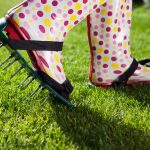
Next, ease the compaction underneath. Push a garden fork straight down to a depth of about 10cm (4 inches) every 10cm or so across the patch and gently rock it back and forth to open up channels for air and water. This is the same hollow-tine principle the professionals use, scaled down to a single patch and a single tool. Then water the area thoroughly, soaking the top 10 to 15cm (4 to 6 inches) of soil to rehydrate the stressed roots and flush away any pool chemicals.
If the grass was only yellow rather than fully dead, this is often all it needs, and you will see fresh green growth within a week, with the patch blending back in over two to three weeks. Where bare or clearly dead areas remain, scatter a hard-wearing lawn seed at around 35 grams per square metre, rake it lightly into the surface, and keep it damp. A 1kg box of quality lawn seed costs roughly 10 to 16 pounds (about 13 to 20 dollars). A light topdressing of sieved compost or lawn soil brushed over the seed holds moisture and improves contact. Hold off on heavy feeding until the new grass is established and the weather is not at its hottest, because a strong feed on stressed turf can do more harm than good.
Preventing the marks in the first place
Prevention costs nothing but a little thought. Move a paddling pool to a fresh patch of lawn every day, or every other day at most, so no single area is starved for long. Tip the water out gradually across a wide area, or use it on borders and pots rather than dumping a chlorinated load onto one strip of grass. If you treat pool water with chlorine, let it stand for a day or two before draining so the level drops, and spread it thinly rather than in one flood. For garden furniture, choose pieces with slatted tops and open bases that let light and rain filter through to the grass, and shift tables, planters and storage boxes every week or two rather than leaving them in one position all season.
If part of the lawn is permanently committed to a pool or a trampoline through the summer, accept that the grass there will struggle and plan to reseed that area in early autumn, when cooler, moister conditions give new grass the best start. The common mistake is to leave everything where it lands for the whole of the warm season, then act surprised in September at the yellow rectangles and worn rings across the lawn. Treat heavy items as things that move, give any pale patch light, air and water the moment it is uncovered, and a summer of garden fun need not cost you the lawn underneath it.